Sunwoda Power's capital increase to 14.5 billion yuan: second-tier battery makers stay alive on financing amid overcapacity and a price war, while pressure builds from spin-off listing bet agreements.
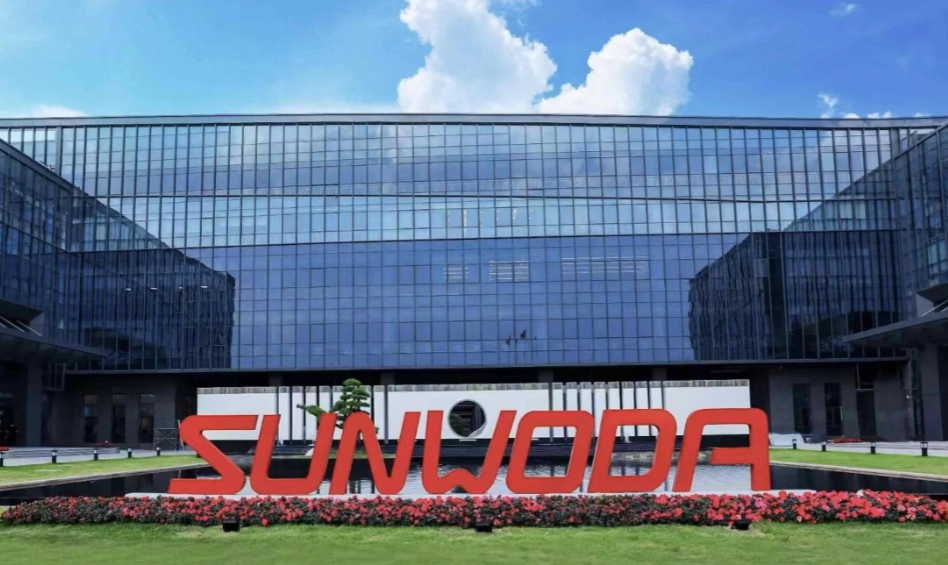
When the registered capital of Sunwoda Power Technology Co., Ltd., the power battery unicorn under Sunwoda, quietly jumped from approximately RMB 14.09 billion to RMB 14.52 billion, treating it as merely an ordinary small capital increase of several hundred million yuan would overlook the brutal reality currently facing the entire power battery industry: severe overcapacity and a comprehensive bloodletting and shakeout across the second-tier echelon. Under the pincer attack of industry leader CATL, which has built a deep moat through economies of scale and high overseas gross margins, and BYD, which relies on vertical integration for full self-sufficiency, a power battery entity whose registered capital has already swelled to nearly RMB 15 billion still needs to continuously bring in external capital to replenish ammunition at this critical juncture. What this exposes is not only the anxiety of second-tier battery makers bleeding out in the quagmire of heavy-asset R&D and capacity ramp-up, but also their survival deadlock of having to carry heavy equity valuation adjustment mechanisms and keep sprinting forward as the window for a spin-off independent listing narrows.
The power battery industry has long bid farewell to the era of barbaric growth in which "having capacity meant winning an OEM designation." As the average price of power battery systems has been halved to an extreme slashing range of RMB 0.3 to RMB 0.4 per watt-hour, automakers, in order to cut costs for their own price wars, have subjected second-tier battery suppliers to near bone-scraping price pressure and demands for longer payment terms. For Sunwoda, although the consumer lithium batteries on which it originally built its business have abundant cash flow, their ceiling is visible to the naked eye;
the company has bet all its future imagination on the power battery track, especially wagering frantically on 4C/5C ultra-fast charging, hybrid PHEV batteries, and high-voltage ternary lithium batteries. However, the R&D investment, pilot-line depreciation, and construction of ten-thousand-ton-scale production lines for such high-end power batteries are all incinerators of capital expenditure running into tens of billions of yuan at every turn. If it relied solely on the thin profits of its parent Sunwoda for continuous blood transfusions, the listed company's income statement would long ago have been pierced through by losses in the power battery segment.
Following the underlying commercial records to penetrate the equity structure of this giant entity, the complex strategic investment alliance it built across multiple financing rounds is fully revealed in Tianyancha data. Tianyancha business registration data shows that Sunwoda Power Technology Co., Ltd. was established in October 2014, with Wang Mingwang, founder of Sunwoda, as its legal representative, and its registered capital has officially been changed to approximately RMB 14.52 billion.
In the shareholder list penetrated by Tianyancha, in addition to controlling shareholder Sunwoda Huizhou New Energy Co., Ltd., a series of limited partnerships bearing the imprints of external industrial capital and well-known institutions, such as Jiaxing Qichen and Qingdao Xinwang, stand side by side.
From being incubated internally by the parent company several years ago to now having registered capital expanded to nearly RMB 15 billion and assembling a massive strategic investment lineup including Li Auto, NIO, XPeng, Dongfeng, and various national-level guidance funds, this high-density equity decentralization process is a classic playbook for second-tier battery makers to bind downstream customer orders.
Automakers take equity stakes in exchange for supply guarantee agreements and low-price procurement, while financial investors enter the game to pursue high valuation returns from a listing. However, the core fulcrum for the smooth operation of this capital flywheel is that the company must deliver an independent IPO within the agreed timeframe and achieve sustained high gross margins from volume growth on the business side.
But reality has placed heavy shackles on this giant ship in two core dimensions.
On the one hand is the long standby period for a spin-off independent listing. Previously, Sunwoda publicly promoted the independent spin-off listing of Sunwoda Power, and even the parent company simultaneously sought a Hong Kong listing to broaden its capital depth. However, against the backdrop of a substantially raised bar for listing reviews of unprofitable hard-tech, heavy-asset enterprises in the current capital market, the pace of advancing the spin-off listing is far less smooth than early investors expected.
The increase in registered capital from RMB 14.09 billion to RMB 14.52 billion reflects that, before achieving IPO-driven self-blood-making, the company still needs to rely on capital increases and share expansion to inject liquidity and maintain high-load operation of its production lines. Moreover, the previous multiple financing agreements often contained strict exit valuation adjustment mechanisms regarding the listing time window. Once the listing channel is blocked, the repurchase payment pressure and accumulated interest behind this massive RMB 14.5 billion equity base will instantly transform from capital assistance into a Sword of Damocles hanging over management's head.
On the other hand is the insurmountable cost gap of the second-tier echelon.
Although Sunwoda Power, by virtue of its agile positioning in the extended-range and plug-in hybrid battery sectors, has secured designations for a large number of hit models, in the slaughter between violent fluctuations in upstream lithium carbonate prices and downstream automakers trading price cuts for sales volume, second-tier battery makers, whose self-sufficiency rates in self-built mines and integrated cathode-anode industrial chains are far below those of top oligarchs, still cannot close the gap in comprehensive per-watt-hour manufacturing costs with leading enterprises.
The awkward situation of revenue growing without profit growing, or even the heavier depreciation and working capital occupation as delivery volume increases, directly erodes their self-blood-making capability.
This increase in registered capital occurring in late autumn releases the most authentic practical lesson to the entire power battery and new energy industry chain: the continuous expansion of capital scale does not equal the true strengthening of a commercial moat. When capacity piled up by tens of billions in registered capital encounters a sea of blood from price wars across the entire industry, the window for maintaining cash flow through external financing and equity expansion is rapidly narrowing. Only those who can first tear off their dependence on capital blood transfusions in this protracted second-tier elimination race and cross the break-even line with genuine process yield and extreme manufacturing costs will avoid becoming abandoned children of the era of heavy-asset overcapacity when the bell of final-round reshuffling tolls.