Step by Step High Camp Heavy Reload, New Company with 10 Million Yuan Set in Real Estate and Engineering Tracks
Step by Step set up a new 10-million-yuan company in Xiangtan, focusing on real estate development and construction projects, aiming to integrate its own property resources and promote the renovation and revitalization of existing commercial properties.
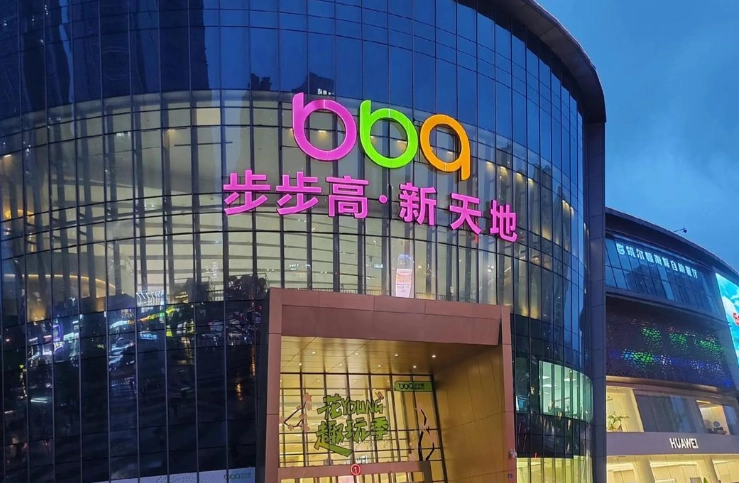
After a deep round of restructuring and business boundary reshaping, Hunan's local retail giantBetter Life (002251) has made another new capital move in its core stronghold of Xiangtan.
According to the latest corporate registration information disclosed by the Tianyancha App, Xiangtan Daxin Jingdi Technology Development Co., Ltd. has been officially incorporated in recent days. The newly established company has a registered capital of up to 10 million RMB, with Liu Jun serving as its legal representative. In its business scope, which has drawn significant external attention, the company is precisely positioned in core heavy-asset, highly cyclical sectors including real estate development and operation, construction engineering construction, and construction engineering design. The equity penetration chart clearly shows that this entity is wholly owned by Better Life Commercial Chain Share Co., Ltd.
Industry observers who are accustomed to evaluating Better Life through the traditional supermarket lens may find this move surprising—at a time when the retail industry widely advocates for asset-light operations, why is this established giant increasing its investment in real estate and construction engineering in the opposite direction?
To fully understand the profit chain and underlying logic behind this counter-cyclical layout, it must be considered within the broader context of Better Life's asset revitalization and physical retail recovery over the past two years. As a retail powerhouse with a large portfolio of self-owned commercial real estate and commercial complexes (Better Life Xintiandi) in South China and Central China, a significant portion of Better Life's underlying assets consists of a "heavy-asset portfolio" made up of real estate properties such as properties and shops. During the current industry transition period, how to efficiently renovate, upgrade, and redevelop these existing commercial properties has become the core driver determining whether the company can completely turn things around.
The establishment of the new company is essentially a reloaded structural reorganization of Better Life's internal governance and asset operations. By setting up a dedicated ten-million-yuan-level construction and real estate development entity, Better Life can not only integrate scattered construction projects across its retail divisions—such as self-owned property construction, store decoration, and commercial street renovation—into a unified system to reduce outsourcing costs, but also enter the urban renewal and asset securitization operations of existing commercial real estate with a more professional posture.
This deep root-taking in its Xiangtan stronghold also signals Better Life's strategic resolve in stabilizing its local foundation and optimizing its core balance sheet. As this platform continues to operate, how this retail veteran will leverage the new company's engineering and development functions to inject fresh traffic and hardware vitality into its offline commercial scenarios will serve as a highly benchmark-worthy observation case in the second half of online-offline retail integration.