ST Sanmu's equity frozen over a 7.6M dispute; 83.76M in small claims devour nearly 70% of net assets, liquidity depletion nears delisting red line.
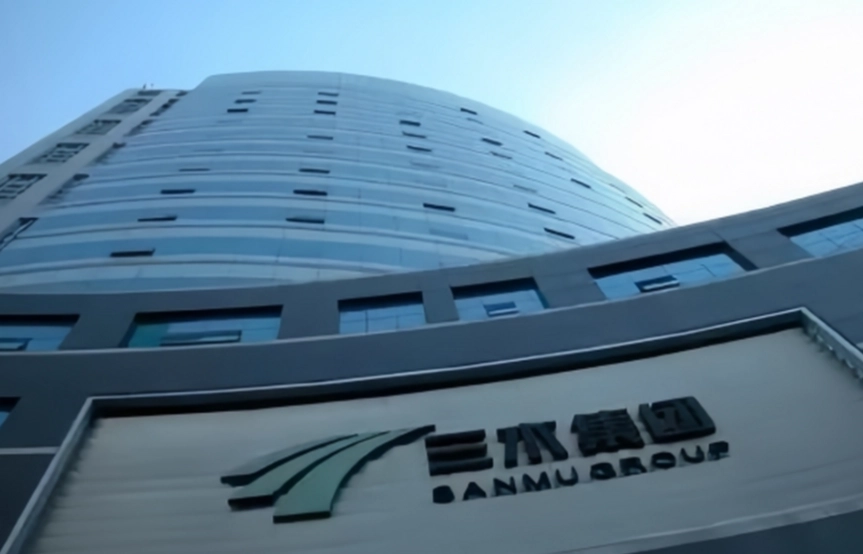
When ST Sanmu, a veteran real estate developer that once flew the banner of developing Fuzhou Mawei, issued a litigation announcement involving a mere 7.6072 million yuan, the capital market had long grown accustomed to such "micro lawsuits." Yet when the folds of this judicial document are pulled open, the most glaring alarm is not the dispute over debt management service fees that has yet to go to trial, but the chain reaction it has triggered: 7.0982 million yuan worth of equity held by the listed company in Yingke Huijin (Qingdao) Private Equity Fund Management Co., Ltd. has been frozen outright by a court for a full three years, with the freeze period locked down until August 2029;
More fatal still, the announcement incidentally exposes the tip of a hidden iceberg—other scattered small claims and arbitrations that did not meet the threshold for separate disclosure have accumulated to 83.7691 million yuan, equivalent to directly wiping out 69.43% of the company's net assets as audited in the most recent period.On the surface, this is a routine preservation measure triggered by a service fee of just over 7 million yuan, but under the current delisting rules and the capital market's extreme clearing out of shell resources,what it tears open is the brutal reality of a veteran listed company with more than three decades of history—after its core business collapsed and its cash flow dried up—being dragged step by step into the abyss of zero net assets by endless "ant-moving-house-style" debt disputes.
The Suffocating Feeling of Small Claims: The Credit Performance System Is on the Verge of Collapse
In the traditional script of large real estate developers blowing up, the market tends to fixate on tens of billions or even hundreds of billions of yuan in public bond defaults and trust extensions. However, for Sanmu Group, whose market value has long hovered at low levels and which has already been branded with the ST label, the real suffocating feeling comes precisely from these small claims that appear not to hurt the bones but in fact seep in everywhere. Because the trade business the company laid out in its early years had extremely thin gross margins and was highly prone to bad debts, and because real estate development and sales have fallen into a complete freeze, the cash on the parent company's books that could once have been shuffled around has long been stretched to the limit.
When even a creditor owed just a few million yuan in payables has to apply to a court to freeze its long-term equity investment, it means its credit performance system in the eyes of financial institutions and partners is on the verge of collapse, and any small overdue payment will quickly turn into a hard landing of judicial preservation.
The Evolutionary Foundation of a Veteran Fujian Real Estate Developer of More Than Three Decades
Following the traces left at the underlying commercial level to penetrate the evolutionary foundation of this veteran Fujian listed entity, its historical accumulation and current capital status are clearly presented in Tianyancha records. Tianyancha industrial and commercial data show that Fujian Sanmu Group Co., Ltd. was established in December 1992, with Zhu Min as its legal representative, registered capital of approximately 466 million yuan, and a registration status of surviving. As a veteran listed company that landed on the Shenzhen Stock Exchange as early as 1996, Sanmu Group once spanned import and export trade, comprehensive real estate development, and urban infrastructure construction, deeply participating in the early wave of city-building in Fujian and multiple coastal regions.
However, the equity map and judicial risk records penetrated by Tianyancha bear witness to the long ordeal after its halo faded.
The Frozen Equity in Yingke Huijin: An Iron Lock on the Wound of Asset Liquidity
The frozen target this time, Yingke Huijin (Qingdao) Private Equity Fund Management Co., Ltd., was originally a key piece in ST Sanmu's attempts in recent years to cut into private equity investment and position itself in new-quality assets.Although the 7.0982 million yuan equity contribution is hardly a pillar on the statements, having the equity frozen by judicial order until 2029 directly seals off any liquidity possibility for pledge financing, equity transfer, or self-rescue monetization of this asset over the next three to four years.
Although the freeze does not strip away the shareholding ratio or shareholder status, it is equivalent to welding a rusty iron lock directly onto the wound of the listed company's asset liquidity.
The 83.7691 Million Yuan "Collection of Small Lawsuits": An Undercurrent Devouring Net Assets
The more dangerous and fatal undercurrent is hidden directly within that "collection of small lawsuits" amounting to as much as 83.7691 million yuan.
According to securities regulatory rules, if a listed company's single litigation amount reaches a certain proportion of net assets, it must immediately be disclosed on a temporary basis as a major event. In the past, many companies on the brink of delisting took advantage of this vacuum in information disclosure to cleverly break defaulted debts into dozens of private lending, construction final payments, or supplier procurement disputes involving millions or hundreds of thousands of yuan, thereby maintaining the illusion on the surface that the statements were calm.
However, when these small disputes densely gather in the shadows of the courtroom and conspicuously devour nearly 70% of net assets, this hidden blood loss completely evolves into an undeniable poison for the statements.
A volume of small litigation approaching 70% of net assets means that once these cases successively enter the mediation and enforcement stage, or the plaintiffs comprehensively seal up its project land parcels, unsold properties, basic bank accounts, or dividend rights in affiliated companies before or during litigation, ST Sanmu will not only face rigid repayment of principal, but will also bear staggering overdue interest, compound interest, penalties, and high legal litigation costs.
Under the cruel reality that the company's main business cannot contribute positive net profit, as long as these litigation judgments and settlement agreements accrue estimated liabilities at period-end, they are highly likely to directly pierce the already extremely weak audited net assets into negative territory, thereby precisely detonating the delisting red line at the financial level.
Zheshang Asset Management Enters the Scene: A Debt Resolver Mutates into a Debt Collector
The opposing party in this lawsuit, Zheshang Asset Management, is even more intriguing.
As a local AMC giant skilled in distressed asset disposal and special opportunity investment, Zheshang Asset Management this time brought both Sanmu Yingxiu and the listed company's parent entity to the defendant's seat over "debt management service fees," reflecting that an external professional institution originally brought in to help the listed company resolve debt risks or dispose of bad debts not only failed to recover consideration as scheduled after a long service cycle, but instead itself mutated into a debt collector forced to preserve assets through litigation.
This absurd inversion of "a debt resolver becoming a debt collector" reflects the extreme sluggishness of ST Sanmu's asset revitalization progress and the severe malnutrition of its underlying projects.
An Ant Hole Breaching the Dike: The Only Lifesaving Straw Under the Delisting Alarm
This 7.6 million yuan litigation storm in late autumn releases the most blunt realistic scrutiny to the entire group of low-market-cap listed real estate developers and shell-preservation sectors mired deep in the mud:In the deep-water zone of the capital market's elimination of the false and retention of the true, what destroys a listed company is often not some earth-shattering giant thunderclap, but hundreds or thousands of seemingly insignificant small defaults that, like ant holes breaching a dike, frantically gnaw away at net assets in the shadows.
When financial institutions no longer believe oral extension promises, and when every small arrears turns into an enforcement order and freeze notice in court, the trick of relying purely on delay and robbing Peter to pay Paul has long lost the soil to survive.How to truly cut losses, strip out bad debts, and bring in capable industrial capital to restructure core assets before net assets are completely exhausted by these tens of millions of yuan in litigation is the only lifesaving straw this veteran entity of more than three decades can still grasp before the delisting alarm countdown ends.