ST Longyuan's low-price tender offer reached only 0.46%, effectively a shell-preservation game that uses the inverted price gap to prop up the share price and avert delisting.
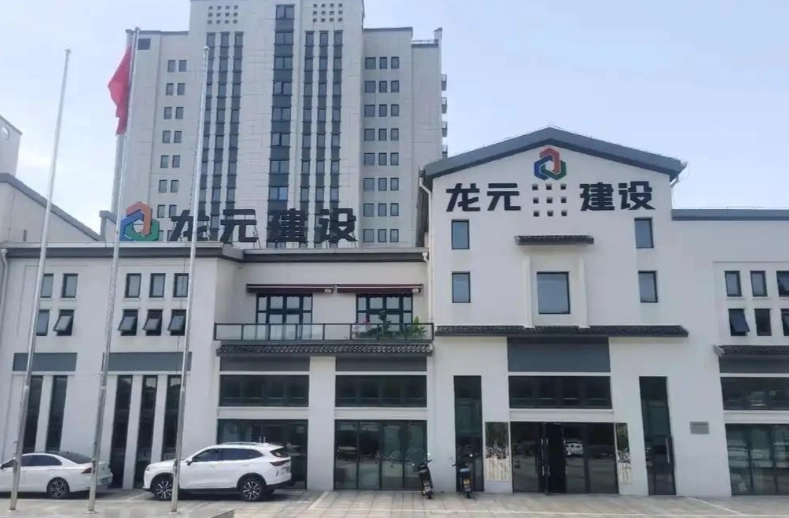
When the tender offer period expired for Ningbo Kaihai Investment's originally planned acquisition of a 6% stake in ST Longyuan at 1.25 yuan per share, in the end only 42 shareholder accounts pre-accepted, with a total of 418,699 shares delivered. The actual acquisition volume was even less than 0.5% of the planned scale, and the A-share merger and reorganization market staged an extremely absurd yet entirely logical scene. If this acquisition, with a completion rate of only 0.46%, were simply regarded as the capital side's fundraising failure, it would completely misread the tactical truth of a low-price tender offer in the specific context of shell preservation: this was not a contest for equity determined to win, but a probing game that precisely exploited the inverted price gap in the secondary market to leverage a stock price increase with minimal capital cost and fend off the crisis of delisting due to par value.
Against the backdrop of a cooling traditional infrastructure cycle and deep adjustments in the real estate chain, private construction giants are generally mired in liquidity tightening and difficulties in order payments and collections. Longyuan Construction once expanded rapidly through the PPP model and large-scale public construction projects, but under the dual squeeze of PPP project standardization and cleanup and the clearing of real estate debt, the company suffered severe operational cash drain. After being placed under ST warning, its stock price once slid to the life-or-death cliff edge of delisting at a par value of 1 yuan.
Earlier attempts by Hangzhou state capital (Hangzhou Communications Investment) to take control ultimately failed to fully quench the thirst due to various objective obstacles, leaving the listed company's control expectations and credit endorsement in a long vacuum period. At a time when new delisting rules impose extreme pressure on low-priced stocks, how to interrupt the spiral of continuous stock price decline has become the top priority for all interested parties.
Following the commercial historical foundation to penetrate the equity structure of this established private infrastructure company, its capital scale accumulated over many years is clearly visible in the Tianyancha archives. Tianyancha business registration data shows that Longyuan Construction Group Co., Ltd. was established in 1995, with Lai Zhaohui as the legal representative, and registered capital of as much as approximately 1.530 billion yuan. It is a typical established A-share listed private infrastructure leader.
In the evolution of equity over the years as penetrated by Tianyancha, although the Lai family has long maintained actual control, under the heavy pressure of tens of billions in liabilities and restricted assets, it no longer has sufficient incremental liquidity to provide strong support in the secondary market.
It was precisely under the dual pressure of a control vacuum and the delisting cliff that Ningbo Kaihai Investment launched a partial tender offer plan to acquire 91.786 million shares (6% of total share capital) at 1.25 yuan per share.
From the moment this plan was introduced, it carried a highly dramatic commercial calculation.
According to estimates in the tender offer report, if the 6% equity stake were fully delivered, Kaihai Investment would need to use up to approximately 115 million yuan in cash. However, after the tender offer news was announced, the secondary market quickly produced positive resonance under the stimulus of local capital entry and shell-preservation restructuring expectations. ST Longyuan's stock price rose rapidly during the tender offer period, climbing all the way to 1.50 yuan and even above 1.60 yuan.
At this point, the cold rules of market trading completely undermined investors' motivation to pre-accept.
In the stock trading market, as long as retail investors and institutions directly sell in the secondary market at prices of 1.50 yuan to 1.60 yuan, they can immediately lock in current-price gains; if they choose to tender their shares to the acquirer, they can only receive the fixed consideration of 1.25 yuan,白白 sacrificing more than 20% profit per share. Faced with such a huge inverted gap, the vast majority of shareholders naturally voted with their feet.
In the end, only 42 accounts declared pre-acceptance, with a transaction amount of only about 520,000 yuan. Rather than calling it a rational decision by investors, it is more accurate to call it an extreme exception caused by a very small number of people who did not notice the market price gap or who made operational oversights.
However, for the acquirer initiating the tender offer, this did not mean failure. Instead, at the tactical level, it achieved the effect of using a small effort to move a heavy load.
Kaihai Investment spent only hundreds of thousands of yuan in actual transfer costs to complete a stress test on the market. It not only publicly demonstrated local industrial capital's attention to Longyuan's assets, but also in substance built a psychological support line of 1.25 yuan for the company's stock price, temporarily pulling the listed company back from the edge of the abyss of delisting at a par value of 1 yuan. If Kaihai Investment had truly intended to aggressively accumulate shares and enter at that time, it could completely have revised the acquisition premium upward during the tender offer period;
its remaining inactive and allowing the tender offer period to expire precisely confirms the defensive mentality of all parties under the current price level and financial condition, not being in a hurry to bear the consolidation of hundreds of millions of yuan in heavy assets and deep debt backstopping.
This symbolic tender offer, with only 0.0274% in completed transactions, demonstrated to the entire distressed asset restructuring market an extremely real game logic. Under the high-pressure regulation of normalized par-value delisting, any form of capital operation can become a short-term barrier against the cold wave of delisting. But when the tide of stock price premium triggered by the low-price tender offer recedes, what lies before ST Longyuan is still the massive resolution of existing debt behind more than 1 billion yuan in registered capital, provisions for accounts receivable, and comprehensive restoration of the main business's ability to generate cash.
If it cannot welcome a substantive white knight in real infrastructure orders and control governance, then a breathing window leveraged purely by capital techniques will ultimately find it difficult to resist the objective gravity of cyclical clearing.