Sino Wealth Electronic sets up a Zhuhai subsidiary for RMB 20.05 million, leveraging the Greater Bay Area ecosystem to break through in automotive-grade MCUs and counter cutthroat competition in home appliances.
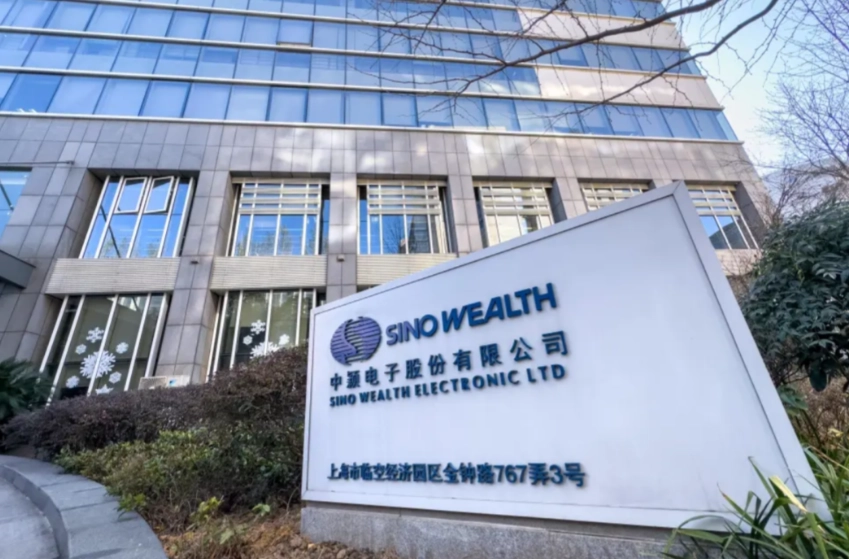
When Sino Wealth Electronic quietly established Zhuhai Sino Wealth Electronics Co., Ltd. near Zhuhai Hengqin through a wholly owned subsidiary and registered capital of RMB 20.05 million, if viewed purely in terms of capital scale, this routine outbound investment of several tens of millions of yuan is not particularly conspicuous within the portfolio of a listed chip design company. However, when the observational coordinate axis is extended to the brutal price war that has lasted for several quarters in the domestic home appliance and industrial control MCU track, and when the special industrial ecosystem of Zhuhai in the integrated circuit design landscape of the Greater Bay Area is examined, it becomes clear: this wholly owned move is by no means a simple expansion through an out-of-town branch, but a defensive breakout by this veteran chip design giant, which has deeply cultivated white goods MCU for thirty years, under the double strangulation of saturated home appliance stock and low-price involution, leveraging the mature automotive semiconductor industry soil and talent highland of the Greater Bay Area to launch a technological leap toward high-gross-margin automotive-grade MCUs and power battery management chips (BMS).
The Stock Dilemma and Price War Strangulation of a Veteran Home Appliance Main Control MCU Manufacturer
As one of the earliest veteran Fabless manufacturers in China to achieve import substitution for home appliance main control MCUs, Sino Wealth Electronic has long relied on its ties with white goods giants such as Midea, Gree, and Haier to establish a solid foundation in the microcontroller market. However, this once extremely stable cash flow machine of "home appliance main control plus small home appliance chips" has suffered unprecedented upstream and downstream squeezing over the past two years.
On the one hand, the deep adjustment of the domestic real estate completion cycle has directly weakened the incremental replacement demand for major home appliances, and terminal consumption has shown a long-term weak recovery trend of trade-ins. On the other hand, in order to digest excess wafer inventory, domestic second- and third-tier MCU startups have launched cost-ignoring price cuts in the general-purpose MCU field.Gross margins for home appliance chips have gradually been flattened, forcing Sino Wealth Electronic to withdraw from the low-barrier consumer and industrial control red ocean and fully attack high-barrier categories such as automotive-grade main control, body domain control chips, and high-string power battery management BMS chips.
Wholly Owned Holding Structure: The Pure R&D Positioning of Zhuhai Sino Wealth
Following the underlying commercial registration traces to penetrate the control chain of this newly established entity, its parent company's strategic intent of wholly owned holding is clearly presented in the Tianyancha archives. Tianyancha business registration data shows that Zhuhai Sino Wealth Electronics Co., Ltd. is directly wholly owned 100% by Sino Wealth Electronic Co., Ltd., the legal representative is Yang Xiaoyong, and the registered capital is RMB 20.05 million. In the business scope penetrated by Tianyancha, the Zhuhai entity is extremely purely limited to front-end R&D and commercialization links such as "integrated circuit design, integrated circuit chip design and services, and integrated circuit and chip product sales."
With no external minority shareholders and wholly owned by the parent company, it indicates that Zhuhai Sino Wealth is positioned as a direct extension of core R&D functions, rather than a capital operation shell platform for external interest binding.
Close-Range Positioning in the Greater Bay Area Automotive Electronics Industry Ecosystem
The underlying logic for choosing to establish an independent design entity in Zhuhai lies in close-range positioning within the core automotive electronics industry ecosystem of the Greater Bay Area.
Over the past several years, through policy support and industrial clustering, Zhuhai has quietly grown into one of the townships with the highest density of integrated circuit design in South China. It has not only cultivated a series of well-known listed chip design echelons such as Allwinner Technology, Jieli Technology, and Actions Technology, but has also gathered a large number of automotive parts Tier 1 suppliers, smart cockpit supply chains, and battery management system solution providers in the surrounding area.For Sino Wealth Electronic, headquartered in Shanghai, the cycle for automotive-grade chips from tape-out trial production to mass production designation is as long as two to three years, and the R&D side must conduct high-frequency software and hardware joint debugging with OEMs and body electronics system manufacturers.
Directly placing the front-end design team at the bridgehead of the Greater Bay Area can significantly shorten the engineering delivery delay to South China new energy vehicle OEMs such as BYD and GAC and their first-tier supporting suppliers.
Locking In High-Level Automotive-Grade R&D Talent
A deeper practical demand lies in the localized locking of high-level automotive-grade R&D talent.
The R&D of high-reliability automotive-grade MCUs and analog front-end BMS chips imposes almost stringent requirements on digital-analog mixed-signal design, high-voltage isolation processes, and functional safety standards (ISO 26262). System architects and analog engineers with successful automotive-grade mass production experience are in perennial scarcity in the industry. Relying only on the R&D team at Shanghai headquarters not only faces highly aggressive talent poaching from peers in the Yangtze River Delta, but also cannot directly reach the deep pool of mid- and senior-level engineering talent in the South China electronic information industry belt.
By establishing a wholly owned entity in Zhuhai and leveraging Zhuhai and Hengqin's special preferences for high-end integrated circuit talent in areas such as personal income tax incentives and R&D subsidies, Sino Wealth Electronic can build a special R&D force with local operational capabilities on site at a more attractive comprehensive cost.
Heavy Reefs in the Automotive-Grade Market: Certification Barriers and Counterattacks by International Giants
However, this seemingly logical technological leap still faces heavy reefs in the commercial realization chain.
The competition rules of the automotive-grade market are completely different from traditional home appliances. In the white goods field, Sino Wealth can build a moat through high cost performance and timely response; but in the automotive supply chain, OEMs are extremely demanding regarding chip safety redundancy, zero-defect rate (PPM), and continuous supply commitments lasting ten to fifteen years.
At present, international semiconductor giants such as NXP, Infineon, and Renesas still control more than 80% of the global market share of high-end automotive-grade MCUs, and are counterattacking by reducing costs through orders placed with local Chinese foundries; among domestic echelons, peers such as AutoChips, GigaDevice, and Flagchip are also accelerating their share of body and chassis control.If the automotive-grade and industrial R&D pipeline carried by the new Zhuhai company cannot quickly run through the mass production and vehicle installation closed loop of mainstream OEMs after stringent automotive AEC-Q100 certification, the initial tens of millions of yuan in R&D expenses and tape-out costs also face the risk of being dragged into a loss quagmire by the lengthy certification cycle.
Conclusion: The Automotive-Grade Death Match and the Next-Generation Admission Ticket Under Stock Reshuffling
This wholly owned RMB 20.05 million move occurring in early summer and early autumn reveals the most sober industrial law to the entire domestic chip design sector: the era of making easy money from home appliances and general-purpose consumer-grade MCUs has completely ended. When the gross margin of the traditional stock market is cut through by price wars, relying solely on old advantages and staying in a corner leaves only suffocation as a way out. Only chip veterans who dare to deeply root their R&D tentacles into high-value-added industrial highlands and use the most agile structure to directly approach real automotive operating conditions and relentlessly tackle hard technical indicators can truly hold the admission ticket for the next generation of industrial main control in this stock reshuffling from consumer downgrading to automotive-grade death match.