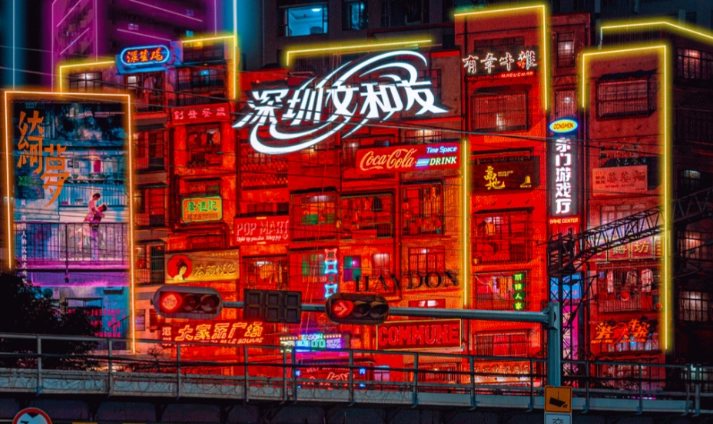
Shenzhen Wenheyou's Quiet Exit Exposes Long-Term Bleeding of Influencer Restaurants
Shenzhen Wenheyou's exit reveals that influencer restaurants relying on scene gimmicks are unsustainable and face debt and asset liquidation crises.
When a top-tier brand that once became a national phenomenon by "recreating street-life nostalgia," drawing tens of thousands of Shenzhen residents to queue for hours on Luohu's streets, confirmed a full-scale exit through its CEO, its content-driven dining empire—built on sensory stimulation, retro scenes, and queue-based hype—is now facing its most brutal asset liquidation and model invalidation.
Recently, the quiet closure of Shenzhen Wenheyou has thrust this Changsha-based restaurant giant into the spotlight of failed cross-regional expansion.
Casual observers tend to post on social media about the disappearance of a viral landmark or chalk it up to the practical, fast-paced consumption habits of Shenzhen's young people. Such surface-level observations greatly underestimate the systemic asset collapse unfolding internally for a content-dining giant as it confronts cultural rejection in new markets and the backlash from its core operation's cash-generation capacity. Behind any seemingly abrupt exit, the root cause often lies in the towering debt mountains buried on the backend financial statements.
The CEO's online response is just a layer of polite veneer. To deconstruct the severe damage this street-food dining giant has sustained in deep water, one must use Tianyancha to peer through its vast and frequently alarming legal and corporate landscape.
Peering Through the Legal and Corporate Landscape
Tianyancha App corporate data clearly shows that Wenheyou's Shenzhen affiliate, Wenheyou Investment Management (Shenzhen) Co., Ltd., was established in December 2015, with legal representative Liu Jiping and a registered capital of approximately 5.263 million RMB, wholly owned by Changsha Jicheng Enterprise Management Co., Ltd. However, beneath this seemingly streamlined regional entity, the rigid enforcement actions revealed in Tianyancha's legal litigation records are glaring: In June of this year, the company was added as a party subject to enforcement, with an execution amount exceeding 9.32 million RMB, and the enforcing court precisely pinpointed its home turf—Shenzhen's Luohu District People's Court.
Even more devastating than the large-scale enforcement is the trace of hollowed-out assets visible on Tianyancha.
Hollow Assets and Survival via Restructuring
Tianyancha data on controlled enterprises and branch offices shows that all enterprises currently under this Shenzhen company's control have been deregistered, and its extensive branch network has been reduced to just a single surviving entity, with all other offshoots severed and cleaned out. This high-frequency deregistration trail, combined with the multimillion-yuan enforcement red flags, openly reveals the extreme "survival via restructuring" and debt-settlement tactics Wenheyou has adopted in Shenzhen after facing a full liquidity drought.
Back then, Shenzhen Wenheyou tried to forcibly replace Changsha's crayfish narrative with an "oyster culture," attempting to buy Shenzhen residents' nostalgia with industrial-style, decaying residential buildings. Yet this ultra-asset-heavy, long-payback-period scenery-making business was essentially a slow-traffic venture heavily dependent on high average order values and high table turnover. Once the novelty faded, retro scenery failed to convert into high-frequency, necessity-driven repeat purchases. Mounting property depreciation, cross-regional management friction, and hollow dining content quickly twisted this once-glossy street-life maze into a bottomless black hole devouring the parent company's health.
When massive debts couldn't be cleared through normal revenue, contract disputes once papered over began multiplying into lawsuits and enforcement actions on Tianyancha.
Over ten million RMB in enforcement pressure and the full-line deregistration of subsidiaries starkly reveal the systemic fragility in Wenheyou's local credit chain and asset structure in Shenzhen. To carve a cleaner line on the books for its Changsha headquarters, Wenheyou was forced to strip away this already bleeding, asset-heavy shell in Shenzhen, welding the losses shut within physical boundaries through corporate deregistration.
An Industry Shift Warning
The story of viral dining brands has entered its second half, far removed from the reckless model of relying on nostalgic storytelling and crude land grabs to chase venture capital funds.
Feng Bin's candid admission to the media is a jarring warning of an industry shift: In the latter half of the scenographic dining war, any player who continues to try to monopolize consumers' mindshare with cold visual accumulation will see any wall built on foam-based discourse power mercilessly smashed into the abyss of destruction in the face of a highly sober local market shakeout and cross-period debt pressure.