One person controls both the production and sales ends; all 19 batches of lubricant failed sampling inspections, 18 batches have already entered the market, shifting industrial safety risks downstream.
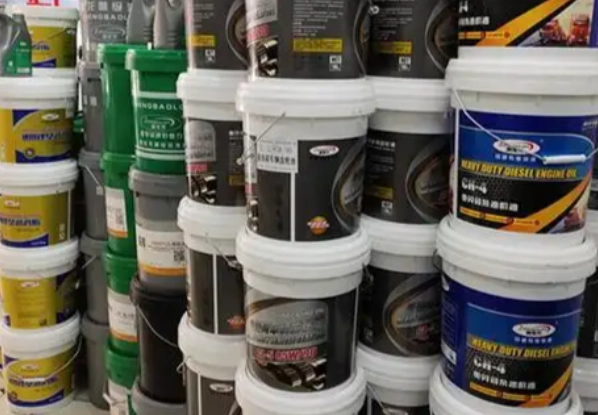
When a typical case notification from the market regulatory authorities judged all 19 batches of products produced by Anhui Beifeng Lubricant Co., Ltd. under commission for Shanghai Shengbaolong Lubricant Co., Ltd. as failing to meet mandatory national standards, and when 18 of those batches had already entered the market with only a mere 10 barrels intercepted on the spot, the chill felt by the industrial maintenance and automotive aftermarket sectors by no means stemmed from the trivial scale of the more than 70,000 yuan in goods value involved and nearly 80,000 yuan in confiscation and fines.
What truly shocked the industry was the shockingly low pass rate of "zero" in spot checks, and, beneath the seemingly compliant commercial mask of "commissioned OEM production," a hidden industrial counterfeiting duet orchestrated by the same natural person playing both sides.
Lubricants: Mechanical Blood and Black Gold Soil
In the automotive aftermarket and industrial equipment maintenance fields, lubricants are often regarded as the blood of mechanical operation. Their mandatory national standards for anti-wear performance, kinematic viscosity, and low-temperature dynamic viscosity directly determine the service life of engines and precision machine tools.Once inferior or non-compliant lubricants are used, the consequences range from intensified mechanical carbon buildup and wear to cylinder scoring, bearing seizure, and even the catastrophic paralysis of an entire industrial production line.
However, precisely because lubricants are a closed, filled liquid standardized product whose physical and chemical indicators are extremely difficult for end-user word of mouth and end users to identify with the naked eye, and because there is a huge cost gap between base oil and additive formulations, inferior blended oils have year after year bred stubborn black gold soil in lower-tier auto repair shops and tiny agricultural machinery workshops.
Equity Penetration: A One-Man Closed-Loop Duet Structure
Following the traces left in the industrial and commercial registry to penetrate the equity foundation of the commissioning party and the OEM party, this so-called "external OEM" firewall instantly collapsed in the Tianyancha records.Tianyancha business registration data shows that the commissioning brand owner, Shanghai Shengbaolong Lubricant Co., Ltd., is 100% wholly owned by Tong Chun as an individual, with Tong Chun also serving as the legal representative, and its business scope is strictly limited to lubricant sales;
while the factory undertaking production, Anhui Beifeng Lubricant Co., Ltd., still has Tong Chun as its legal representative, with his personal shareholding ratio as high as 90%, and it possesses the qualifications for the production and processing of industrial lubricants.In the related-party paths penetrated by Tianyancha, an absolute closed loop composed of "Shanghai Shengbaolong—Tong Chun—Anhui Beifeng" clearly surfaced.
This tightly sealed closed loop, in which one person absolutely controls both ends of production and sales, completely shattered the exoneration rhetoric commonly used by brand owners in traditional quality inspection notifications, namely that "the OEM factory cut corners and the commissioning party was unaware."
In conventional industrial division of labor, when a brand owner outsources orders to a third-party manufacturer, the two sides engage in genuine commercial bargaining and quality acceptance checks. Even if the brand owner occasionally fails to supervise properly, it can still shift the fault to the OEM side's breach of contract. But in the Shengbaolong case, a shell sales company was set up in Shanghai, using the commercial registered address of an international metropolis to gild the brand with compliance; the production base retreated to the hinterland of Anhui, using relatively relaxed local land and factory conditions for low-cost blending and filling.
Tong Chun placed orders in the name of the brand owner with his left hand, and arranged blending and labeling in the name of the factory's actual controller with his right hand, with the entire production process completely under the absolute dominion of the same brain.
Total Wipeout: Institutionalized Counterfeiting and Market Penetration
The total wipeout of all 19 batches in spot checks, with a time span of as long as two to three years, further exposed an almost open disregard for mandatory national standards on the production end.
A pass rate of zero means that this was by no means an accidental batch tolerance or process fluctuation on the production line, but rather institutionalized downgrading and counterfeiting starting from the very source at the stage of base oil selection and additive proportioning.To compress costs to the extreme, the factory may have used extremely low-grade base oil or even recycled reclaimed oil, supplemented with cheap thickeners for blending, and then directly filled and shipped the product as long as it presented an oily luster in physical appearance.
Continuous supply over several years and the smooth sell-through of 18 batches show that this set of inferior products had long penetrated through hidden offline hardware channels, small auto parts shops, or regional wholesale markets into the bellies of end-user machinery and equipment, and the hidden wear and mechanical safety hazards they caused had long far exceeded the tens of thousands of yuan in goods value on the books.
Fractured Responsibility: Confiscation Costs and Shifted Risks
Even more intriguing is the fracture between administrative liability and civil risk.
The 79,800 yuan in confiscation and fines imposed by the market regulatory authorities, judged by the statutory maximum standard, had already completed the compliance loop at the administrative level.But for such closed-loop workshops controlled by the same controller, a confiscation and fine cost of less than 100,000 yuan appears extremely fragile in its deterrent elasticity compared with the excess windfall profits earned over several years from inferior blended oil.A more serious problem lies in the fact that the 18 batches of non-compliant lubricants that flowed to all parts of the country had long been poured by mechanics into engines or gearboxes, and the end parties harmed simply cannot, after the fact, precisely anchor the cause of mechanical failure to a particular oil change, so that the illegal gains are firmly locked in individual pockets, while industrial wear and safety risks are entirely shifted to the entire downstream industry.
Conclusion: Penetrate the Duet, Lock Down the Retreat
This serial non-compliance case involving lubricants in midsummer sounded an alarm for the entire industrial goods supply chain and specialty consumables market. When small and micro workshops attempt to use false OEM relationships to sever quality responsibility and legal risk by setting up sales and production shell companies in different locations, penetrating industrial and commercial and judicial review will ultimately strip away the duet mask completely.But in the face of strict mandatory industrial national standards, how to raise the cost for violators to shed their shells from dimensions such as end-point traceability, punitive damages for quality, and industry bans for loss of credit is the most critical chain for cutting off the hidden circulation chain of inferior industrial consumables.