Rescue Governance Amid Low Revenue and Spending: The Micro-Profit Trap and Inventory Clearance Behind Bringing Property Management to Old Communities
Bringing property management to old communities is caught in low revenue and spending, forcing the industry to seek solutions in existing inventory, facing micro-profit traps and clearance risks.
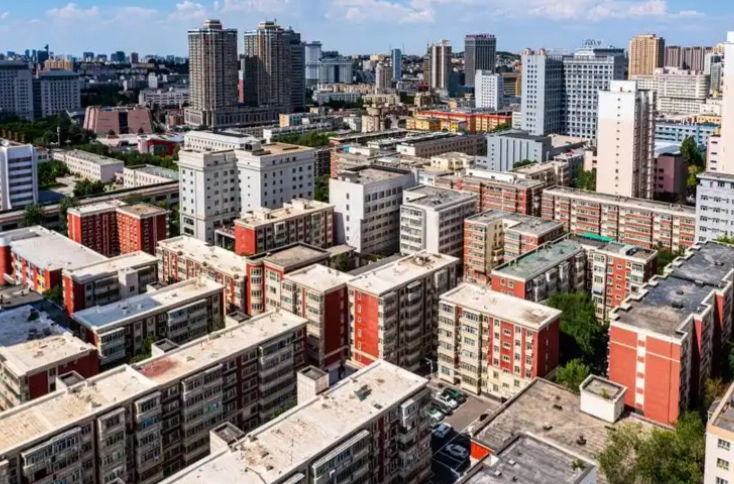
Bringing professional property management into old residential communities, achieving gated management and environmental upgrades, appears on the surface to be a community quality improvement that aligns with residents' wishes, but in essence, it represents a reluctant choice by the property management industry, after the closing chapter of the real estate incremental development era, to be forced into searching for residual niches in the deep waters of the existing stock.
For a long time, the reason old residential communities became "unmanaged wastelands" without professional property coverage was rooted in an extremely cold commercial logic: the numbers simply didn't add up. The housing facilities in old communities are severely aged, the cost of repairing underground pipelines and public areas is exorbitant, residents' willingness to pay property fees is extremely low, and the high proportion of elderly residents all combine to form a cost black hole that property companies actively avoid.
Now this situation has been upended, driven primarily by the collision between the pressure on local street-level governance to manage these issues and the property industry's own overcapacity.
Local street offices push for property management entry through door-to-door consultations and owners' committee meetings, ostensibly helping residents find a caretaker, but in reality, this is a compliant transfer of public governance costs—previously borne by grassroots administrative forces but difficult to maintain at a fine-grained level—onto market-based entities. For the many property companies that have lost the nourishment of new housing delivery areas, even though old communities are tough bones with little fat to extract, they have no choice but to descend into this market and compete for scraps in order to keep management area and cash flow on their balance sheets.
This intense urge to "beg for food" from existing stock has completely erased the industry threshold. Data from Tianyancha shows that China currently has over 4.03 million property-related enterprises in active or surviving status, with 268,000 newly registered this year alone, and 2025 has hit a five-year registration peak. In the regional distribution map disclosed by Tianyancha, economically developed regions such as Guangdong, Jiangsu, Shandong, and Beijing-Shanghai account for more than 30% of the national enterprise share.
Behind this massive array of enterprises, the vast majority are not brand-name property giants with standardized service delivery capabilities, but rather a host of local micro-entities and tier-two shell companies under urban investment platforms, created specifically to capture special renovation funds for old communities and government service procurement.
However, the fleeting harmony built on administrative impetus and initial renovation subsidies cannot possibly conceal the inherent disconnect in commercial logic.
24-hour maintenance response, regulated parking, and environmental cleanliness carry extremely stringent fixed financial costs. The aging of facilities in old communities is accelerating, and over time, the costs of secondary repairs and equipment replacement will rise exponentially. If residents become accustomed to low or even token fee levels, then when initial renovation subsidies phase out and public facilities enter a major maintenance cycle, property companies will inevitably fall into a vicious cycle of "cutting services to break even—residents refusing to pay due to worsening experience—full service collapse."
The second half of property management reform in old residential communities is by no means a viable business model based on collecting a few dollars in cleaning fees. The companies that can survive this intense competition over existing stock must transform old communities—this low-price traffic pool—into gateways for high-margin services like neighborhood housekeeping, community elderly care, and value-added parking. If they fail to build this kind of cross-boundary self-sustaining capability on the back end, the millions of micro property companies squeezed into this track will ultimately be ruthlessly washed out by high operational costs and the harsh reality of low willingness to pay.