Under the Umbrella of Public Welfare, the Restructuring of Per-Student Pricing in Summer Care and the Countdown to Market Clearing
Public welfare care squeezes commercial institutions; 1.23 million practitioners compete for high premiums, and niche services become a lifeline as the industry faces a shakeout.
While more than 18,000 summer care sites nationwide tout themselves as multifaceted growth camps with personalized profiles, the public, immersed in this warm narrative, can easily overlook the fundamental pressure this publicly led expansion of affordable services is placing on the private childcare sector. The so-called upgrades at commercial childcare centers—now aggressively marketing STEM camps, intangible cultural heritage workshops, and the like—are not driven by any educational philosophy shift. Rather, they are a desperate scramble for survival by traditional tutoring institutions, which, after the industry's major upheaval, are frantically trying to rebuild per-customer revenue.
Beneath the surface-level boom, the congestion in this sector is suffocating. A look at industry data from Tianyancha reveals that the number of registered childcare-related businesses currently operating in China has surpassed 1.231 million. Within this vast landscape—whether looking at existing operations or the over 100,000 new registrations this year—the vast majority are the product of former academic tutoring institutions hastily rebranding under regulatory pressure.
The steady rise in registrations over the past five years, peaking in 2025, represents not just a frantic flight of capital following the tutoring industry's retreat, but also a vivid portrayal of a million industry workers and idle commercial real estate desperately seeking alternative revenue streams outside the academic sector.
This explosive overflow of capacity shows a strong geographic dependence on population and competition. Shandong, Guangdong, and Anhui provinces have captured a staggering share of new registrations, a reflection of their exceptionally large school-age populations and the deeply ingrained educational investment habits of local families. However, the traditional childcare business model is extremely fragile.
If a provider merely offers a lunch and basic supervision, the meager fees charged cannot possibly cover the high costs of commercial rent and staffing.
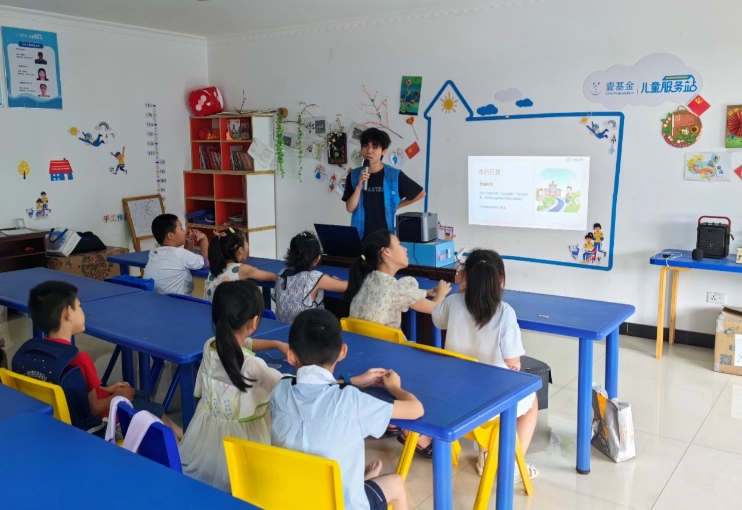
The most critical shift is this: as street-level governments, schools, and community organizations begin to coordinate and provide basic care for dual-income families, new employment groups, and disaster-relief shelters using low-cost or even free public resources, the fundamental source of customers that commercial providers once relied on is being completely drained away. Public services now cover the baseline of "basic care," forcing market-driven players into a hyper-competitive struggle to find higher-value propositions.
As a result, we see a dizzying array of specialty courses being crammed into childcare schedules. From robotics programming to high-priced sandplay therapy, and even specialized rehabilitation classes for children with autism, these seemingly tailored services are, in essence, carefully crafted commercial tools designed to raise the price point and offset the loss of basic customer traffic. Without these flashy "quality education" and "professional care" labels, these institutions cannot persuade middle-class parents—now stripped of the anxiety-inducing drive for test score improvements—to part with multiples of the cost of ordinary supervision.
The second half of the summer childcare battle is a fierce contest for survival, squeezed into a narrow space while competing against public welfare services. With basic care stripped out of the high-profit zone, the remaining 1.2 million-plus commercial entities face an extremely demanding test of operational costs. Those rebranded players who fail to build a formidable moat through niche quality education or intensive professional care will ultimately face an unavoidable market purge, crushed by dwindling enrollment and heavy asset burdens.