Precision Ambush of a Violent Cycle: The Chip Game Behind Demingli's 30-Billion-Yuan Myth
The Demingli couple bet on the bottom of the memory chip cycle, and with the surge in AI demand, they achieved a 30-billion-yuan fortune, which is essentially a precise conspiracy of capital and technology nodes.
In five months, personal stock holdings surged by more than 32 billion yuan, with the company's market value roaring toward the 100-billion-yuan threshold. Recently, Shenzhen couple Li Hu and Tian Hua, who pulled off this stunning arbitrage by aggressively stockpiling memory chips ahead of the curve, have instantly become the most legendary rags-to-riches story in A-shares amid the wave of intelligent transformation. In the rumor-driven corners of the internet, this has been chalked up to a lottery-like stroke of speculative luck. But in the brutally unforgiving semiconductor memory industry, where reputations are shredded in an instant, fortune never falls from thin air. At its core, this wealth creation myth is a high-stakes gamble that staked the company's very survival on a technological inflection point in the chip cycle—and a precisely calibrated convergence of capital and industrial demand.
The Chemical Reaction Between Cyclical Reckoning and the AI Spark
To truly understand the deeper drivers behind Demingli's staggering windfall, one must confront the "meat-grinder cycle" unique to memory chips. As the most standardized and most cyclical category in the semiconductor industry, every dramatic surge and collapse in memory chip prices has been accompanied by the blowup of giants and a wholesale industry reshuffle. Over the past two years, persistently weak demand for global smartphones and personal computers plunged the major memory wafer giants into historic losses, with prices cratering to rock bottom. At that point, conventional business wisdom dictated panicked production cuts and inventory liquidation in a bid for survival.
What actually became the driving force behind this profit chain, however, was the sudden explosion of AI computing power. Training and inference of large models demand not only an almost insatiable appetite for GPUs, but also impose high-density technical pressure on high-performance, high-capacity storage systems. As high-bandwidth memory capacity was swept clean by giants like Nvidia, that scarcity began to propagate down the supply chain, and enterprise-grade and consumer-grade memory chip prices staged a violent rebound overnight. Demingli's shrewdness lay in its contrarian move to aggressively hoard inventory at the very bottom of the industry's most desperate cycle. This was far from blind herd following—it was a precise calculation of the technological inflection point where physical hardware would inevitably face compensatory shortages on the eve of intelligent application deployment.
The Real Muscle Behind the Tianyancha Data Map: More Than a Speculative Trader
If Demingli is dismissed as nothing more than a buy-low-sell-high chip middleman, that misses the surface-level nature of capital speculation. By examining the commercial and rights confirmation data map revealed by Tianyancha, we can precisely reconstruct the company's true capabilities and industrial fortifications behind the frenzy.
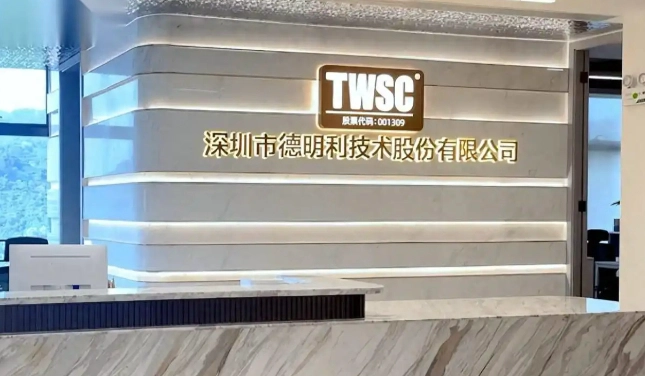
According to the Tianyancha App, Shenzhen Demingli Technology Co., Ltd. was rooted in Shenzhen as early as 2008, with legal representative Li Hu, and its business scope covers deep research and development of computer networking software and application software, technical consulting, and more. Stretching the company's historical growth trajectory, the most telling data is hidden in its change records and workforce expansion. Tianyancha information shows that the company's registered capital recently completed a stunning leap from 80 million yuan to approximately 230 million yuan, a gain of nearly double. Meanwhile, its number of insured employees surged from 272 in 2021 to 660 in 2024, a twofold increase.
In the chip control domain, which is heavily dependent on hardcore engineering R&D and supply chain coordination, the massive expansion of registered capital and the exponential growth of the R&D service team send a chilling signal: what Demingli stockpiled at the cycle bottom was not merely dead inventory, but the production factors needed to advance its own controller chip development and firmware algorithm upgrades. They used their expanded team to absorb and process those hoarded wafers, transforming them into branded memory modules commanding premium pricing.
Rejecting the Bubble Consensus: A Defensive Wall Built on a Multi-Entity Matrix
The industry's prevailing superficial view holds that memory chip speculation comes and goes quickly—once prices peak, such wealth engines are swiftly deflated back to reality. But that consensus ignores the deeper ecological defenses built by Demingli's founder.
According to Tianyancha's associated path analysis, founder Li Hu precisely controls six enterprises under his name, five of which remain active, including not only the Demingli entity itself, but also vertical entities such as Jiaminli Optoelectronics and Zhiyang Storage, where he serves as chairman or legal representative. This matrix-style industrial layout, anchored in the memory core business and extended into optoelectronic technology and specialized storage, is in fact the ecological Great Wall Li Hu has constructed within Shenzhen's broader electronics landscape. Affiliated sister companies like Zhiyang Storage can seamlessly execute interest stitching and risk transfer with Demingli across wafer procurement, distribution channels, and end-use application scenarios.
The endgame of commercial competition has never acknowledged pure luck. In mid-2026, when data, financial reports, and algorithms define the truth, the high-frequency capital increases and the steeply rising insured employee curve left by Demingli on Tianyancha constitute a genuine bill of industrial ambition. Stockpiling inventory is merely the means; using doubled capital and doubled talent to establish localized voice in memory control is the true talisman that shields them from falling in the next cyclical reckoning. When this round of AI-driven memory dividends is fully exhausted by the capital markets, those opportunistic white-label speculators merely riding the concept will ultimately pay the most expensive bill amid the ruins. As for Demingli, which has already locked in its technical core and industrial matrix well in advance, it may have only just secured its long-term ticket to the hardcore chip club.