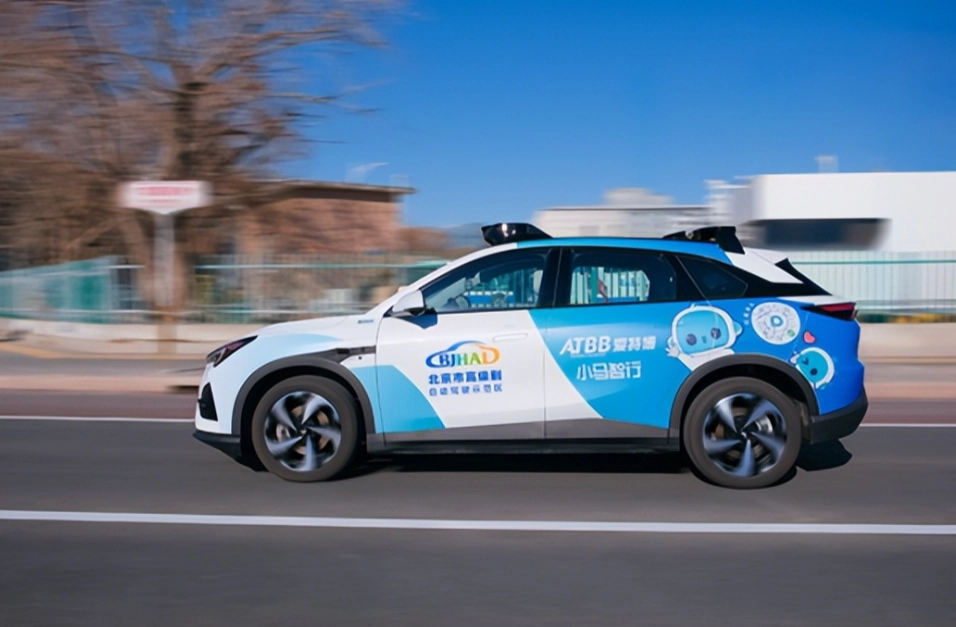
Pony.ai sets up a subsidiary in Foshan to cut costs, secure policy support, and pivot to an asset-heavy strategy amid the commercialization hurdles of L4 autonomous driving.
When a self-driving unicorn accustomed to discussing future mobility in Silicon Valley boardrooms and Beijing-Shanghai-Guangzhou-Shenzhen CBDs quietly plants its new physical foothold in Shishan Town, Foshan — a place better known for hardware, auto parts, and traditional manufacturing — the stark geographic contrast rips open the most closely guarded survival playbook of the L4 autonomous driving track. Guangzhou-based Pony.ai injecting 20 million yuan in registered capital to move south into Foshan is hardly just about grabbing another testing permit in the Pearl River Delta.
Behind this seemingly unremarkable corporate expansion lies a cold, calculated trade-off: high-level autonomous driving companies, squeezed by the capital winter, are bending over backward to compromise with local heavy-industry capacity just to pry open a crack in commercialization.
For years, the autonomous driving narrative has been trapped in closed test tracks and glossy pitch decks. But as the primary market's tolerance for endless cash burn hits rock bottom, L4 companies that cannot generate their own revenue are facing a funding famine. The asset-light model of peddling pure software and algorithm licenses stands zero chance against the brutal vehicle price wars and the wave of democratized high-level driver assistance.
To survive the second half of the game, unicorns must stuff their ethereal code into real steel bodies and go head-to-head with heavy-asset operators in lower-tier markets.
Corporate Trail and Strategic Intent
Following the underlying corporate trail recorded by Tianyancha to examine the skeleton of this new entity, the tactical intent becomes unmistakable. The newly established Foshan Pony.ai Technology Co., Ltd. is not only wholly owned by the Guangzhou parent company, but its registered address is pinpointed with precision to Shishan Town, Nanhai District, Foshan. This is no financial hub — it is the leading automotive and parts manufacturing stronghold in South China, home to giants like FAW-Volkswagen and a vast network of upstream and downstream suppliers.
Pony.ai's reach into this region is first and foremost about extreme cost reduction. For autonomous driving to scale, it must shed expensive retrofitting and move toward factory-installed mass production. Being close to Shishan's massive automotive supply chain lets Pony.ai secure lower manufacturing costs and faster engineering turnaround for core hardware like LiDAR and computing platforms.
On the other hand, the "leasing services" and "technical services" deliberately carved out in the new company's business scope reveal its real business loop for the local market. Securing leasing credentials means Pony.ai is highly likely to deploy robotaxi fleets or freight logistics networks in Foshan, forcing technology into booked revenue by directly operating as a heavy-asset fleet operator.
Government-Business Dynamics and the Downward Logic
This move into non-first-tier cities also involves a finely tuned game between government and business. In Beijing, Shanghai, Guangzhou, and Shenzhen, the clustering of autonomous driving companies has long diminished the marginal returns of local policy incentives. But Foshan — a manufacturing powerhouse hungry for industrial upgrading — has an intense appetite for exactly this kind of anchor enterprise that can drive its local smart-transformation push.
The 20 million yuan in paid-in capital reads more like a heavy pledge of allegiance from Pony.ai to the local government, in exchange for more relaxed open-road rights, a broader slate of testing permits, and even exclusive smart-city procurement contracts.
Abandoning the lofty geek superiority complex and crawling into the manufacturing heartland, thick with the smell of motor oil and assembly lines, is the inevitable path during the industry's de-bubbling phase. When the myth of high valuations collapses, what determines a self-driving company's survival is no longer the flashy stunts in test-drive videos, but who can build cars at the lowest cost and plug them into the most grounded profit-and-loss model. The Foshan move is a heavy, asset-heavy gamble — betting that before cash flow dries up completely, an algorithm company can still bear real, tangible returns from the soil of traditional manufacturing.