Pony.ai Bets 30 Million on Mountain City, Using Full Robotaxi Licenses to Encircle Southwest China
Pony.ai has invested 30 million yuan to establish a wholly-owned subsidiary in Chongqing, secured a ride-hailing license, and will operate Robotaxis itself, leveraging the mountain city's complex road conditions to accelerate commercialization.
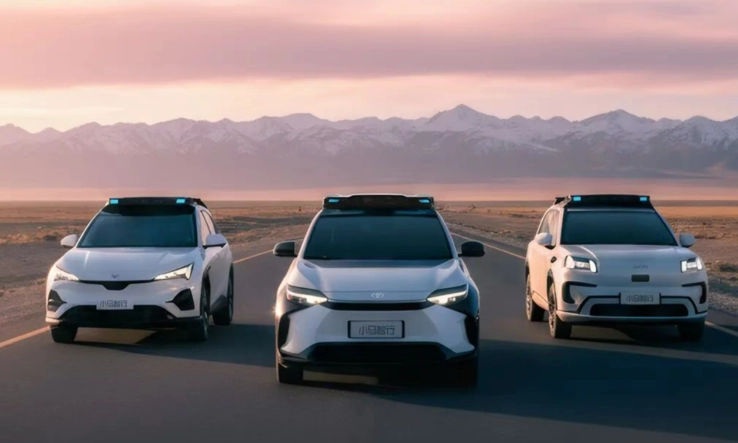
China's leading autonomous driving unicorn is launching high-frequency charges along the dual red lines of geography and policy in its siege on capital and operational scenarios.Recently, Chongqing Xiaoma Zhixing Technology Co., Ltd. was officially established, with a registered capital of a full 30 million yuan. The rapid deployment of this eight-figure investment not only signals that Pony.ai, after successively breaking into the four first-tier cities of Beijing, Shanghai, Guangzhou, and Shenzhen, is now forcibly extending its latest strategic tentacles into the southwest hinterland, but also marks this intelligent driving upstart's attempt to leverage Chongqing's extraordinarily complex, mind-bending road conditions to complete the most daring leap in its commercialization loop. Many observers, accustomed to viewing autonomous driving through the lens of pure technical algorithms and road-test mileage, tend to dismiss this move as a routine regional branch office setup. Such a superficial reading completely underestimates the intricate interest restructuring Pony.ai is undertaking to secure local Robotaxi (driverless taxi) franchise rights in the face of close-quarters competition from Baidu's Apollo Go and WeRide.
To see through the underlying drivers behind that 30 million yuan in cash, one must use Tianyancha to penetrate the operational framework and equity foundation of this new company. This newly established Chongqing entity is 100% wholly owned by Beijing Xiaoma Yixing Technology Co., Ltd., with its legal representative being Zhang Ning, Vice President of Pony.ai and Head of China Operations. In the business scope disclosed by Tianyancha, traditional intelligent driving technology credentials such as AI foundational software development and intelligent vehicle equipment manufacturing go hand in hand. Most striking is the conspicuous inclusion of "online ride-hailing operation services" and "sales of new energy vehicles as complete units." These highly impactful, asset-heavy license tags plainly signal that Pony.ai's presence in Chongqing is far from that of a mere technology supplier—it intends to personally dive into heavy operations and sell services.
The autonomous driving industry has long faced an extremely brutal reckoning: the asset-light path of purely selling algorithms and systems cannot achieve a closed commercial loop—car manufacturers refuse to hand over their souls, while ride-hailing platforms are unwilling to pay for costly long-tail hardware.To break this deadlock, major intelligent driving players must transform into "self-operated fleet operators." By swiftly securing the compliant ride-hailing operation license in Chongqing, Pony.ai is essentially looking to field its own driverless fleet locally, circumventing the layers of exploitation by traditional taxi companies and directly collecting every kilometer of ride revenue from C-end consumers.
And the deeper reasoning behind choosing Chongqing as the strategic stronghold in the rear lies in the mountain city's unparalleled complex terrain. Chongqing boasts staggered overpasses, ultra-long tunnel clusters that severely test GPS and LiDAR, and a maze of frequently intertwined, surreal slopes. For deep learning algorithms in autonomous driving, every kilometer of road here offers data granularity and long-tail corner cases far more valuable than those on plains cities. Whoever can first complete fully driverless commercial licensed operations in the mountain city will effectively hold a golden pass to replicate their technology in any city nationwide. Additionally, Chongqing's robust new energy vehicle manufacturing cluster can provide the most immediate, localized support for its future "intelligent vehicle equipment manufacturing" and supply chain cost optimization.
As the capital myth of intelligent driving bids farewell to the romanticism of PowerPoint pitches, the true test of a unicorn's mettle is no longer lab benchmarks but the speed of compliant deployment within local public transportation systems. The 30 million yuan in initial ammunition is Pony.ai's vanguard for restructuring the ride-hailing value chain in the southwest. In this struggle for entrenched dominance shaped by policy dividends and asset-heavy supply chains, Pony.ai's push into the mountain city is a clear industry signal of a gear shift: the Robotaxi land grab has fully moved past the pilot-testing era. A dimensionality-reducing strike centered on local license sovereignty and heavy fleet operations is now reshaping the long-term flow of wealth in the ride-hailing market.