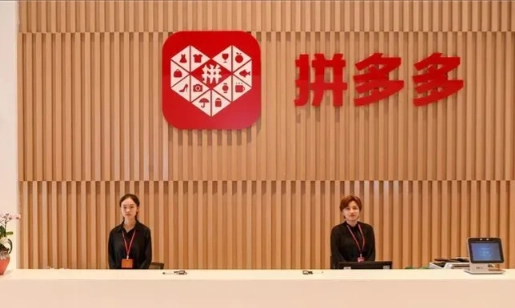
Pinduoduo Makes a $70 Million Bet on Xiong'an: The National-Level Tug-of-War in E-commerce Restructuring
Pinduoduo has swiftly relocated 600 employees to Xiong'an New Area, purchased an entire office building, and registered a subsidiary with 500 million yuan ($70 million) in capital, aiming to seize policy dividends and low-cost data operations advantages in an e-commerce geographic reshuffle.
Spending 500 Million, Buying an Entire Building, Relocating 600 People: Pinduoduo's Lightning Strike on Xiong'an — A National-Level Scramble Amid the E-Commerce Restructuring Wave
In a complex cycle where the growth dividend of the overall e-commerce market has receded, overseas expansion spans North Africa and Latin America, and domestic supply chains face extreme cost control, every major geopolitical capital move by a trillion-dollar giant is a high-frequency charge—using real money—toward future policy dividends and new public infrastructure. Recently, media reports revealed a blockbuster piece of news that turned heads across the internet industry: Pinduoduo's employee count in Xiong'an New Area has rapidly surpassed 600 in a short period, making it not only the largest internet private enterprise in the new area by headcount, but also setting the stage for the full relocation of its workforce into the office building it purchased outright in Xiong'an, slated for the end of July. This hard-edged narrative of "buying an entire building and moving in completely" has instantly thrust the capital stake the e-commerce giant drove in two months ago onto the front line of China's digital economy geopolitical restructuring.
Many industry observers accustomed to evaluating Pinduoduo through the lens of app-wide low prices, its "slash-a-knife" marketing tactics, or Temu's overseas sales figures tend to dismiss this relocation and building purchase as a routine cost-cutting measure or a perfunctory nod to policy. This superficial view completely underestimates the deep causal strategizing underway by Colin Huang and Abu (Gu Pingping) at Pinduoduo—facing both the hefty operational bandwidth depreciation of traditional coastal first- and second-tier cities and the pre-dawn eruption of digital industry clusters in a new national-level city.
Tianyancha Penetrates the Capital Skeleton: 500 Million in Registered Capital and an Entire Building
To understand the underlying interest drivers behind this 600-person main force lightning strike on Xiong'an, one must use Tianyancha to pierce through the skeleton of its capital foundation. Tianyancha business registration information clearly shows that Pinduoduo's Xiong'an-affiliated company—Pinduoduo Information Technology Services (Xiong'an) Co., Ltd. was formally established in May 2026. This super-subsidiary, 100% wholly owned by Pinduoduo's parent entity, Shanghai Xunmeng Information Technology Co., Ltd., lists Yang Qingyong as its legal representative, with registered capital reaching a weighty 500 million RMB as recorded in the Tianyancha system.
Looking at its business scope, IT consulting services, data processing services, and cloud-platform-based business outsourcing services are mutually reinforcing. This makes it plain that Pinduoduo's presence in Xiong'an is by no means merely an administrative back-office office—it is systematically sinking and welding the group's most core data hub and outsourcing ecosystem, which consume the most computing bandwidth and human bandwidth, onto this policy-rich ground.
Core Interest Chain: Digital City Dividends and Cost Precision
Why would a super-platform holding massive cash flow and fighting tooth and nail in the global cross-border e-commerce track choose this moment for heavy capital injection into Xiong'an? The core interest chain is hidden in the technological inflection point of Xiong'an New Area as the "underlying brain of the future digital city", combined with extreme platform cost-control precision. From its initial planning stages, Xiong'an New Area was positioned as a digital twin city, boasting unparalleled ahead-of-its-time 5G/6G network infrastructure, low-cost clean energy power supply, and an efficient government-enterprise clearance environment built around AI and cloud computing data centers.
For an e-commerce machine that processes hundreds of millions of orders daily and relies heavily on big-data recommendation algorithms plus massive outsourced networks for customer service and content moderation, the cost-control precision that Xiong'an can offer through "cloud-platform-based business outsourcing" and "data processing" is something Shanghai and other coastal megacities simply cannot match. As the internet leaves behind rough expansion and enters a surviving internal war of squeezing profits out of every last cent, whoever can push back-end technology and data operation costs to the floor will be able to unleash more devastating strikes in front-end price wars.
Strategic Intent: Locking In Policy Dividends and Settlement Leverage
The 500 million RMB capital skeleton, plus the heavy-asset commitment of an entire office building, is Pinduoduo's breakthrough vanguard for forcibly buying itself a front-row seat in the distribution of benefits within Xiong'an New Area. At a juncture where traditional internet giants are moving slowly due to outdated organizational structures and heavy coastal asset baggage, Pinduoduo has chosen the lightning speed of a direct-operated system to rapidly stake out territory in Xiong'an, quickly consolidate accounts, and form a core industrial cluster of over a hundred people. This not only allows it to fully absorb the first wave of super policy dividends and tax rebates released by the new area, while optimizing its long-term financial return on equity (ROE), but also locks in the most solid settlement leverage for its future full-scale restructuring of logistics data and supply-chain finance centers across northern China and even cross-border e-commerce.
Conclusion: A Signal of Industry Gear-Shifting
As the PR myths of the internet fade, what tests the vitality of a super-platform is no longer flashy earnings numbers at press conferences, but its ultimate ability to deploy capital granularity across space and geopolitics. The 500 million RMB new foundation Pinduoduo has written into Tianyancha is a jarring signal of industry gear-shifting: the civil war in the second half of e-commerce has long left behind the romanticism of fighting positional warfare from traditional home bases. Whoever can complete an unalterable deep binding of their core profit-generating hub with national-level strategic infrastructure first will be the one who truly stabilizes the enduring premium of their entire balance sheet in the industry's coming great reshuffle.