Pien Tze Huang's 760-yuan high price has failed, inventory has surged 265%, and earnings have declined for consecutive periods as its financial attribute recedes and the 'Pharma Moutai' myth unravels.
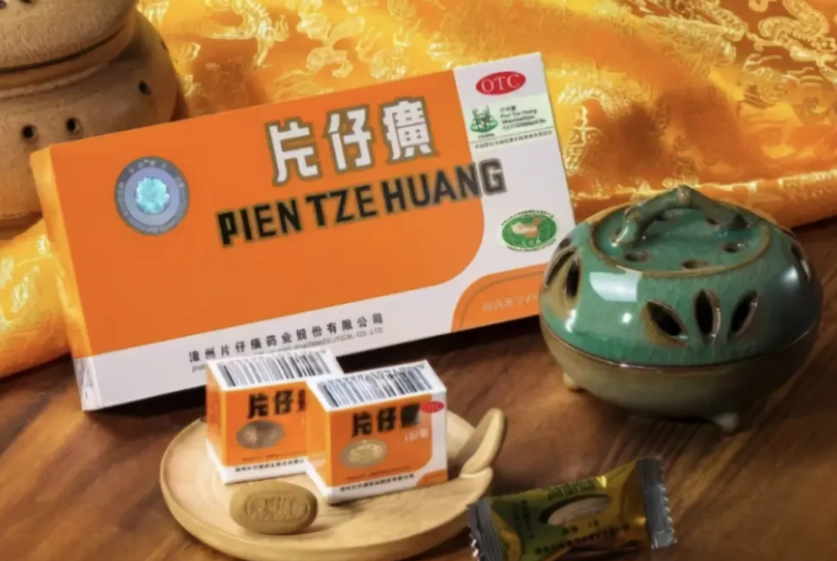
When the topic "Pien Tze Huang can't sell at 760 yuan a pill" rapidly shot to the top of the internet's trending searches in early autumn, forming a stark resonance with its dismal interim report for the first half of 2026—revenue down 14.98% year-on-year and net profit plunging 24.22% year-on-year—the capital market finally witnessed the most decisive disillusionment with the years-long wealth-creation myth surrounding this "Chinese miracle drug." In the secondary market, its stock price has fallen all the way to just over 120 yuan, and its total market value has dropped from a peak of nearly 300 billion yuan in 2021 to just over 70 billion yuan, with more than 200 billion yuan in market value evaporating in just a few short years.
If this bottomless adjustment were simply attributed to weak macroeconomic consumption, it would completely obscure the truth behind the collapse of Pien Tze Huang's core business logic: This is not merely a downward cycle in pharmaceutical sales, but a systemic implosion of an expansion game that long relied on artificially manufactured scarcity and continuous price hikes to sustain the illusion of a financial investment product—triggered by peak terminal demand and the backlash of high channel inventory pressure.
From "Moutai of Medicines" to Failed Price Hikes: A Positive-Feedback Game of Passing the Buck
In the valuation narrative of traditional tonic products and time-honored Chinese medicine brands, Pien Tze Huang was once hailed by institutions as the "Moutai of Medicines" with unlimited pricing power, thanks to its national top-secret formula and monopoly on natural musk and natural cow bezoar quotas. Nearly twenty price increases since listing not only failed to curb market demand, but instead attracted large numbers of scalpers, private capital, and middlemen to hoard and corner the market in bulk, with the price per pill once absurdly speculated to over 1,600 yuan on the black market.
However, this positive-feedback mechanism of "the more it rises, the more people buy; the more people buy, the more they hoard" was essentially built on the premise that resale expectations could keep the game of passing the buck going indefinitely. In May 2023, management raised the domestic retail guide price from 590 yuan by nearly 30% to 760 yuan in one stroke, attempting once again to use aggressive price hikes to offset upstream cost pressures and accelerate earnings. But the move ultimately overshot the mark, directly piercing the defense line of mass consumer psychology and triggering a liquidity stampede in reverse.
Business Landscape and Governance Fabric: Pien Tze Huang's Ecosystem Matrix Through Tianyancha's Lens
Tracing the commercial history to penetrate the governance fabric of this time-honored state-owned pharmaceutical enterprise, its business extensions and diversification attempts are clearly visible in Tianyancha archives. Tianyancha business registration data shows that Zhangzhou Pien Tze Huang Pharmaceutical Co., Ltd. was established in December 1999, with Lin Zhihui as its legal representative and registered capital of approximately 603 million yuan. In the corporate map penetrated by Tianyancha, the industrial territory bearing the golden招牌 of "Pien Tze Huang" is extremely vast: Fujian Pien Tze Huang Cosmetics Co., Ltd. with registered capital of 360 million yuan, and Zhangzhou Pien Tze Huang Guoyaotang Pharmaceutical Chain Co., Ltd. with registered capital of 15 million yuan, together forming an ecosystem matrix spanning prescription drugs, daily chemical skincare products, and offline pharmaceutical retail terminals.
However, this seemingly diversified business landscape has from beginning to end been deeply parasitic on the halo of the super single product—Pien Tze Huang ingots.
The cosmetics and daily chemical toothpaste businesses were once highly anticipated in past years, with frequent rumors of spin-off listings, but amid the brutal ingredient competition in domestic skincare and the low-price strangulation of e-commerce, they lack irreplaceable product strength, and their revenue share has consistently failed to support a second growth curve; while the hundreds of offline Guoyaotang chain stores essentially function as official distribution windows and experience outlets for high-priced Pien Tze Huang ingots.
Once the core super single product at the foundation encounters a sales cold snap, the entire collaborative network spanning pharmaceuticals, daily chemicals, and retail terminals will rapidly stall.
Channel Price Inversion and 265% Inventory Surge: The End of the Hoarding Model
The even more shocking crisis is written directly in the channel price inversion and the mountain of inventory on the financial statements.
Public data shows that as of the end of 2025, the inventory volume of Pien Tze Huang's liver disease medication segment surged by more than 265% year-on-year. Such terrifying inventory accumulation announced the complete end of the "hoard but don't sell" model that middlemen and channels had maintained for years. As the economic cycle returned to rationality and demand for business gifts and high-end banquets cooled, distributors at all levels and private speculators who had hoarded Pien Tze Huang in warehouses as a hard currency suddenly found that terminal buyers had disappeared.
To stop losses before cash flow ruptured, channels had no choice but to flee at reduced prices. The official guide price remained stubbornly at 760 yuan, but secondary buyback prices and e-commerce gray-market transaction prices plunged through the 600 yuan threshold and even fell to the 500 yuan range. The bitter fruit of factory price and retail price inversion completely shattered the price faith that the official side had spent years building.
Medical Demystification: From "Liver-Protecting Miracle Drug" Back to Narrow Indications
The deeper bankruptcy is its demystification as a "miracle drug" in the dimension of medical cognition.
Pien Tze Huang's legally approved functions and indications on its package insert are extremely clear, namely "clearing heat and detoxifying, cooling blood and resolving stasis, reducing swelling and relieving pain," essentially a heat-clearing Chinese patent medicine for specific acute febrile severe conditions. But in past years of capital speculation and word-of-mouth folklore, it was over-mythologized as a so-called "liver-protecting and liver-nourishing miracle drug," "hangover-curing and anti-cancer hard currency," and even a "daily health supplement for high-net-worth individuals."
When the high price threshold forced consumers to pick up the medicine box insert and re-examine its actual pharmacology, the blind consumer illusion quickly faded. Ordinary people are no longer willing to spend hundreds of yuan to swallow a bitter pill for a routine social engagement, and patients with genuine clinical treatment needs have plenty of more cost-effective modern medical alternatives. Stripped of its mythological cloak, Pien Tze Huang must once again face the ceiling of its narrow clinical indications.
The Ultimate Wake-Up Call: Medicine Is Not a Financial Derivative
This dual collapse of earnings and market value in early autumn sounded the ultimate wake-up call to the entire time-honored Chinese medicine and consumer investment circles: Medicine is ultimately a tool for treating and saving lives, not a financial derivative that can appreciate indefinitely. The trick of simply raising prices to create supply-demand tension not only fails to conceal the fatal flaw of narrow clinical value extension, but also overdrafts brand trust accumulated over hundreds of years.
As highly leveraged speculative capital flees in all directions and millions of pills sit in channel warehouses awaiting depreciation and clearance, Pien Tze Huang must, on the ruins of stripping away the financial speculation bubble, confront the brutal reality of how to remake itself from an expensive social luxury back into an effective medicine for treating illness.