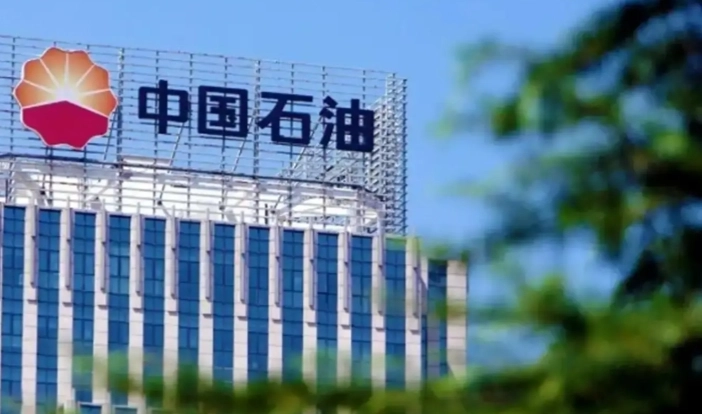
Energy Giant Weaves Local Ecosystem: PetroChina's Precision Move with Grand Canal Energy
PetroChina establishes Grand Canal Energy, deepening its integrated energy service network in the Beijing-Tianjin-Hebei region with a precision strategy.
As global fossil energy faces systemic transformation and traditional gas station models are being pixel-by-pixel disrupted by new energy charging infrastructure in mid-2026, traditional fossil fuel giants are no longer pinning their breakthrough hopes on grand capital narratives. Instead, they have fully pivoted to micro-level, precision grid-based penetration of core regional economic belts. On May 13, Tianyancha App showed that Beijing Grand Canal Energy Co., Ltd. was officially established, with legal representative Li Bohua, registered capital of 49 million RMB, and wholly owned by PetroChina.
This sub-50-million-yuan non-major investment covers a business scope that includes gas operations, petroleum product manufacturing, petroleum product sales, and synthetic material manufacturing, with highly extensible additions such as railway transport support services and motor vehicle repair services integrated into its peripheral offerings.
The stitching together of the "Grand Canal" — a symbol inherently associated with local culture and transportation hubs — with an "energy company" reveals a deeper underlying logic: it represents a defensive, precision downward-penetration strategy being rehearsed by PetroChina, a trillion-yuan-scale onshore energy giant, in response to the Beijing-Tianjin-Hebei region's long-cycle carbon reduction red lines and the technological inflection point of urban energy transition.
The industry's long-standing consensus, often nothing more than reflexive groupthink, holds that a petroleum central enterprise registering a small energy entity in Beijing is merely a routine sales subsidiary spin-off or a symbolic regional investment attraction exercise. Such platitudes completely underestimate the near-punitive green compliance pressure currently bearing down on Beijing and the entire core economic belt along the Grand Canal corridor when it comes to terminal integrated energy service networks.
Today, the crude approach of relying purely on traditional refined oil wholesale and retail is facing irreversible financial asphyxiation in terms of profit margins. Future integrated urban stations require pixel-perfect, tightly coupled binding of diverse revenue-generating cells — vehicle repair, road and inland waterway transport support, and even LNG (liquefied natural gas) and new synthetic materials — at the finest granularity. By establishing Grand Canal Energy with minimal share capital at this juncture, PetroChina's deeper intent is to leverage this entity as an agile forward outpost, legitimately positioned to undertake the integrated energy supply network retrofit of key ports and transport arteries at the northern terminus of the Beijing-Hangzhou Grand Canal. This also represents a rational asset-hedging move that converts the massive financial gravity of a central enterprise into lightweight, high-elasticity penetration of specific high-sensitivity regions.
The defensive sophistication of this regional sovereignty penetration lies in its exceptionally comprehensive, grid-based extension design.
The Tianyancha equity trail indicates that this entity is wholly controlled by PetroChina. This means the platform not only enjoys the hardest credit endorsement and oil and gas resource allocation authority of the central enterprise system, but can also — through an extremely streamlined decision-making chain — rapidly roll out gas franchise operations, motor vehicle compliance inspection, and supporting railway transport services at key Grand Canal hub nodes such as Wuwei and Tongzhou. The seemingly cluttered and highly cross-sectoral business scope listed on Tianyancha is not empty rhetoric; it is a tailor-made, full-service integration suite PetroChina has designed for this new shell, ensuring that from the moment of inception it can quickly recover free cash flow by undertaking diversified, fragmented business lines — avoiding the fate of becoming a pure financial black hole that bleeds fixed costs.
The evolution of commerce has always been cold-blooded. In the endgame of late 2026, where data density, comprehensive store efficiency ratios, and absolute compliance define the line between survival and death, paper-based conceptual promises can no longer withstand the harsh reality of physical retail decline.
The Grand Canal coordinate left by PetroChina in its Tianyancha filing is a sober statement of accounts — a clear-eyed ledger of how an energy giant is breaking through toward grid-based, precision-driven monetization. As the era of crude expansion — racing to stake territory and coasting on upstream crude oil price premiums — comes to a definitive close, locking down the long-tail customer base of the remaining 40,000-plus gas stations and surrounding corridors through the establishment of such small-but-refined, functionally complete local vertical entities will be the rigid strategic choice that this hundred-billion-yuan-market-cap energy giant can rely on to defend its market sovereignty through the coming cyclical consolidation.