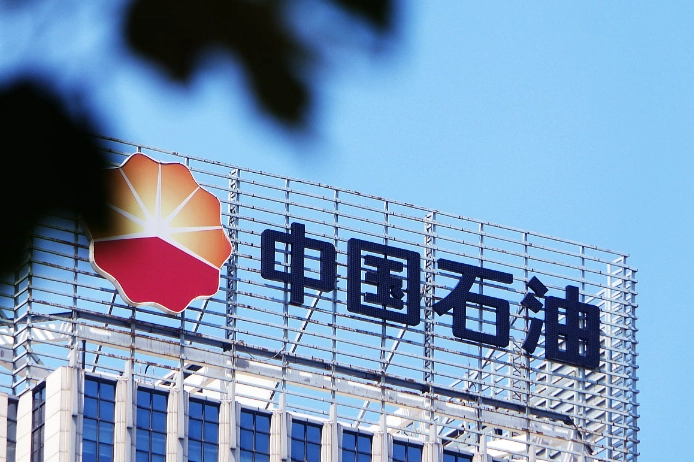
PetroChina's 'Canal' Move: Light Capital of 49 Million Backs Urban Terminal Positioning
PetroChina establishes Beijing Grand Canal Energy with a registered capital of 49 million yuan, lightly positioning in urban terminals and targeting the comprehensive energy market in the sub-center.
For the traditional giants that control China's oil and gas lifeline, exploration investments and overseas acquisitions on the scale of tens of billions of yuan are the norm. However, a lightweight chess piece recently placed by PetroChina in Beijing, marked by its distinctive name and precisely calibrated registered capital, reveals the energy behemoth's new calculus for its urban terminal network layout.
Tianyancha data shows that Beijing Grand Canal Energy Co., Ltd. was formally established recently, with legal representative Li Bohua and registered capital set at 49 million yuan, wholly owned by PetroChina Company Limited.
Within PetroChina's trillion-yuan asset landscape, 49 million yuan in registered capital is almost negligible. Yet this deliberate capital configuration, kept just below the 50 million yuan threshold, exposes the giant's sharp instincts when facing the refined micro-circulation markets of cities.
Hidden financial boundaries: the efficiency logic of a lightweight entity
At a deeper level, the establishment of such a lightweight subsidiary represents a tactical choice by major central state-owned enterprises to avoid cumbersome internal tiered approval procedures and achieve rapid response in local markets.
If a regional headquarters were set up with hundreds of millions or even billions in scale, the project approval, feasibility studies, and even board-level deliberations could drag on for extended periods, easily missing fleeting commercial opportunities. By keeping registered capital under 50 million yuan, the entity is granted sufficient initial operating funds while sitting at an extremely flexible node in terms of internal capital allocation and authorization approvals within the group.
The new team led by Li Bohua is essentially a light cavalry unit that PetroChina has deployed to a specific regional market in Beijing. Their mission is not to break new ground in search of oil and gas fields, but to push PetroChina's tentacles deeper and tighter into the refined energy consumption endpoints of the city.
Geographic positioning meets urban planning: the spatial ambition behind "Grand Canal"
The name "Grand Canal" in Beijing's current urban narrative is almost pixel-perfect synonymous with the Beijing Municipal Administrative Center — Tongzhou. As a sub-center positioned as a green development demonstration zone, Tongzhou's recent infrastructure construction, new urbanization, and high-standard supply chain network development are releasing enormous local energy consumption dividends.
Through the wholly-owned holding path shown on Tianyancha, PetroChina has built an exclusive protective wall in this region. The traditional wholesale and retail markets for refined oil products have already hit the ceiling, and the gas operations, engineering technical services, and new synthetic materials demand derived from sub-center development are precisely the highest-margin, highest-stickiness gold mines in urban micro-circulation.
Naming the subsidiary directly after the "Grand Canal" not only closely aligns with local regional development strategy in the political context, but also represents an early lock-in, at the commercial level, on energy sovereignty over water-land intermodal transport and green logistics corridors in Tongzhou and the Beijing-Tianjin-Hebei border zone.
Rejecting outdated consensus: this is not a simple extension of heavy assets
There is a prevailing industry view that traditional oil and gas giants set up new companies simply to open more gas stations or lay more pipelines, but amid the dual transformation of technology and low-carbon development, this view only scratches the surface.
Looking at Grand Canal Energy's business scope, gas operations and petroleum product sales are certainly the core foundation, but the parallel inclusion of synthetic materials manufacturing and engineering technical services reveals PetroChina's attempt at a composite, terminal-level survival logic.
As urban transportation structures shift, pure gas station networks are evolving into comprehensive energy service stations. The establishment of Grand Canal Energy is highly likely to be PetroChina's white-glove vehicle for piloting integrated "oil, gas, hydrogen, electricity, and non-fuel" retail terminals in the sub-center. With this 49 million yuan leverage point, the company aims to mobilize local government resource coordination in new infrastructure construction, thereby maintaining its grip on dominance in a new urban energy network defined by data and green standards.
In this market environment being reshaped by regional planning and carbon neutrality targets, any slow-moving behemoth faces the risk of having its terminal share eroded by local urban investment platforms or new-energy upstarts. The latest record PetroChina has left on Tianyancha proves that even elephants must learn to dance lightly when navigating the dense urban capillaries along the canal's banks. This micro-scale investment is, in effect, the purchase of an indispensable long-term entry ticket for the giant's traditional business in the future green sub-center.