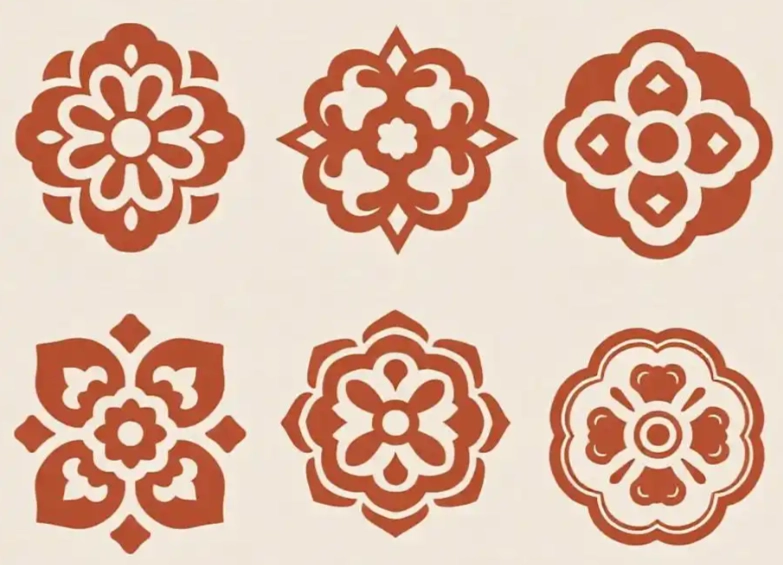
Millennium-Old Persimmon Calyx Pattern Becomes Capital's Playground: The Public IP Hijacking Behind the LV and Tea Brand Clash
The persimmon calyx pattern faces multiple trademark grabs, with the clash between LV and a tea brand exposing how public cultural symbols are turned into tools for capital enclosure and revealing loopholes in the trademark system.
A commercial ambush sparked by a millennia-old traditional pattern has thrust the gray chain of exploitation at the bottom of intellectual property into the harsh glare of the spotlight. As luxury giant LV and domestic new-style tea brand Molly Teahouse clash on social media over the ownership of the "persimmon calyx pattern," the emotions of countless onlookers have been precisely channeled into a grand narrative pitting cultural defense against corporate hegemony.
But this is by no means a stirring cultural defense campaign. Strip away the fervent emotional veneer, and the underlying logic reveals itself as an extremely bloodthirsty land grab on the public cultural commons.
In the current new-consumption frenzy, whether it's a luxury leather good priced in the tens of thousands or a new-Chinese-style tea drink costing a dozen yuan, brands are mired in acute narrative anxiety. The physical value of the product itself has long been squeezed dry by hyper-transparent supply chains. To sustain hefty brand premiums, the only shortcut is to "borrow" stories from the public cultural pool. The persimmon calyx pattern—a traditional symbol carrying the auspicious meaning of the "four-way ruyi" and lacking a clearly defined rights holder—has naturally become the perfect free lever for capital across the board.
Packaging it as an exclusive visual anchor at minimal redesign cost, then attempting to monopolize the aesthetic interpretive rights of an entire category—this is the most closely guarded formula for exorbitant profits among top brands.
Yet, in the blind spot of this battle between corporate giants, more covert arbitrageurs have already completed their low-cost harvest.
Tracing the commercial trajectory of this ancient symbol through the intellectual property records on Tianyancha, a grotesque map of trademark squatting emerges. Tianyancha's data clearly shows that, well before the clash between the multinational titan and the local upstart erupted, the persimmon calyx pattern had already been successfully registered as a trademark by multiple parties. These actual rights holders are not cultural preservation institutions but rather entities such as a cultural and creative company in Putian and a trading firm in Henan, with protection scopes crudely sprawling across unrelated categories from daily chemical products to social services.
This squatter chaos directly exposes the institutional loopholes in current commercial rules governing the protection of traditional symbols. Under the existing IP filing framework, anyone can slightly tweak—or even directly copy—a traditional pattern, submit an application ahead of others, and legally fence off ancestral public property into their own backyard. These small and medium-sized enterprises, tucked away in small towns or office towers, largely lack the capacity to commercialize and mass-produce these patterns. Their hoarding of culturally marked trademarks is, at its core, the private erection of toll booths along thoroughfares.
Once a real business attempts to use these patterns in its products, it is often met with extortionate licensing fees or malicious infringement lawsuits.
This tug-of-war over the ownership of the persimmon calyx pattern has torn away one of the ugliest fig leaves in the IP commercialization tide. When the public totems our ancestors left on brickwork and textiles are reduced to tools for monopolized premium pricing by multinational capital, or become litigation bargaining chips priced to the penny by speculators, talk of cultural heritage becomes nothing but profoundly hypocritical window dressing. Under capital's relentless infiltration, traditional culture is being chopped up, packaged, tagged with exclusive rights labels, and ultimately weaponized as commercial instruments—used by giants to strangle competitors and by opportunists to profit with zero capital outlay.
This is the coldest unwritten rule of the current trademark game: no one actually gives a damn about the fate of culture; they only care who can be the first to secure the license to legally collect the tolls.