Pangdonglai Rakes in 14 Billion in Half a Year, Leaps Beyond Retail Saturation to Seize High-Margin Sectors
Pangdonglai generated 14 billion yuan in sales in half a year, crossing into dining and entertainment to rebuild its business loop through brand trust premium and experiential consumption.
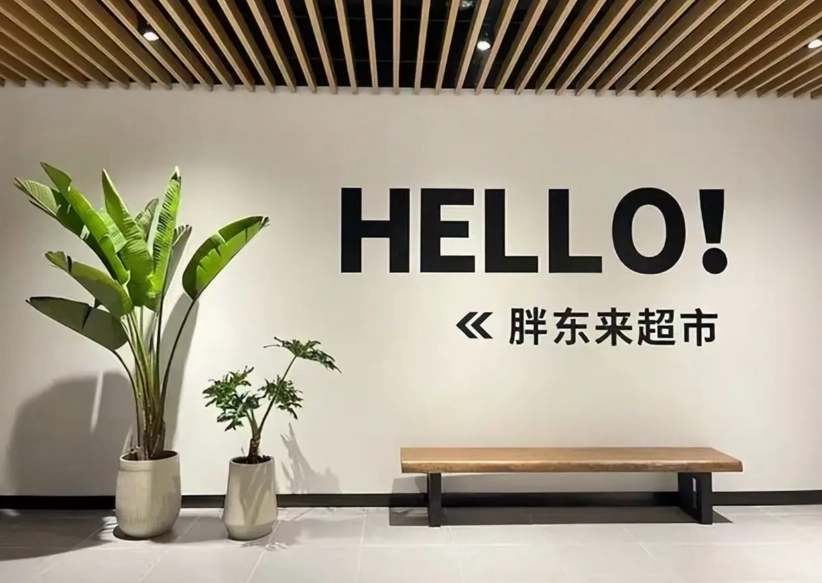
In the midst of a downward cycle that has left physical retail in ruins, a supermarket company rooted in a third-tier city in Henan has delivered a stunning performance. Six-month cumulative sales are approaching the 14 billion yuan mark, surging over 20 percent year-on-year against the trend. While outsiders are still buzzing about its exceptional service and employee benefits, this retail powerhouse has quietly aimed its expansion sights at the dining and cultural entertainment sectors—areas seemingly unrelated to selling goods.
Many observers accustomed to dissecting business legends through the lens of sales per square foot and supply chains tend to view this cross-industry move as either reckless diversification after profitable core operations or a simple upgrade of mall amenities. Such simplistic logic clearly underestimates the deep growth anxiety that physical supermarkets face when their geographic reach is constrained. Pure retail storefronts are ultimately limited by finite shelf space and coverage radius. Once 14 billion yuan in sales has largely exhausted the physical consumption ceiling of Xuchang and its surrounding cities, breaking out of the bloody red ocean of bulk commodities and seeking new monetization outlets with higher premiums and emotional value becomes a strategic leap this company must complete.
By dissecting the capital skeleton of this regional giant through Tianyancha's underlying corporate map, the hidden thread of its expansion logic comes into sharp focus. Xuchang Pangdonglai Commercial Group Co., Ltd., serving as the core hub of the entire empire, controls over 20 subsidiary companies with a registered capital of more than 56 million yuan. Within this vast outward investment network, the recently established Pangdonglai Dining (Zhengzhou) Co., Ltd. and Xuchang Pangdonglai Leyu Cultural Entertainment Co., Ltd. stand out conspicuously. This signals that its internal strategists have completely shed the label of a mere retailer, deploying independent capital entities to fully harvest the super traffic it has accumulated over years.
Dining and cultural entertainment are never just gap-filling side businesses; they are high-frequency cash cows with immense profit-generating power in today's consumer environment. In this restructuring of the business closed loop, Pangdonglai's core driving force lies in its irreplicable brand trust asset. When consumers are willing to queue for hours to buy a bestselling mooncake or sip a self-operated milk tea, that trust premium far exceeds the traditional supermarket model of profiting from buying low and selling high. Establishing dedicated dining and cultural entertainment companies is essentially an industrial spin-off and professionalized operation of the food courts and traffic-driving facilities once embedded within its hypermarkets. Pangdonglai is directly channeling its highly sticky customer flow into experiential consumption scenarios with gross margins far surpassing traditional retail.
At a time when internet giants are ruthlessly plundering physical retail's market share with low-price algorithms, simply scaling up sales volume can no longer build a lasting moat. While 14 billion yuan in half-year revenue is certainly impressive, what truly pressures competitors is Pangdonglai's attempt to comprehensively take over the daily meals and spiritual consumption of the local middle class. Through cross-industry establishment of new entities, it is forcibly reshaping a regional supermarket into a massive commercial complex peddling a lifestyle. In this ultimate reshuffling from selling products to selling experiences, the second half of the physical retail game has been completely rewritten.