A Panasonic children's chair failed a quality inspection and drew a penalty, exposing quality control failures and brand erosion under its OEM model.
A Single Fine, and the Halo of Japanese Manufacturing Peels Away
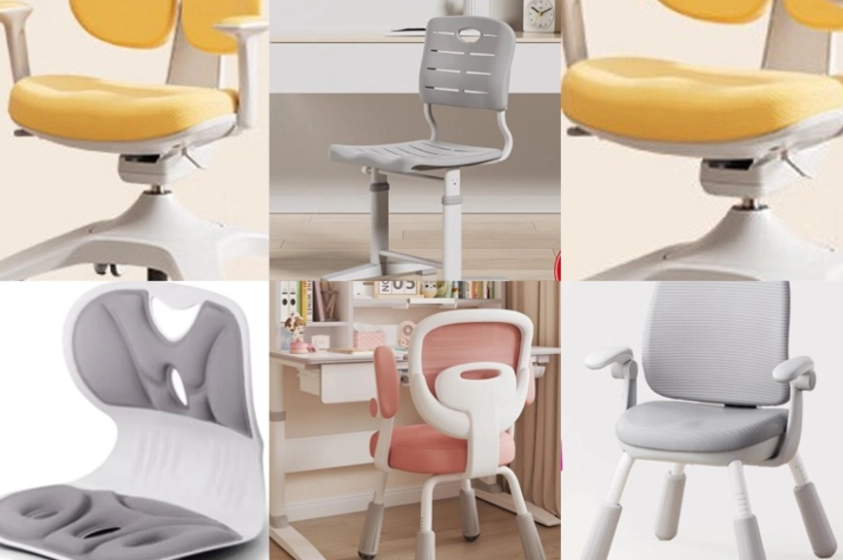
When an administrative penalty decision from the Market Supervision Administration of Qiantang District, Hangzhou, landed on the foreign home appliance giant, what the public saw was not merely the failure of a children's study chair in a spot check, but the thunderous peeling away of a century-old quality-control halo of a Japanese manufacturing enterprise amid its aggressive push into lower-tier markets. This fine, numbered Hang Qian Tang Shi Jian Chu Fa [2026] No. 430, directly determined that the product involved did not comply with national standards for safeguarding human health and the safety of persons and property.
To associate an old established firm that started with precision motors and compressors with an inferior chair that had excessive formaldehyde or structural defects—this stark physical contrast reveals not a lapse in a single quality inspection link, but the chaos of OEM manufacturing in which a foreign giant, after its traditional white goods main business came under siege from domestic rivals, frantically overdrew its brand credibility in order to dress up its financial statements.
The White Goods Heartland Falls, and Long-Tail Categories Become a Harvesting Ground
In the brutally grinding Chinese home appliance market, the survival heartland of foreign brands had long since been extremely compressed by domestic manufacturing oligarchs. When profits in the three core categories of refrigerators, washing machines, and air conditioners were pierced through by extreme supply chain involution, foreign enterprises still burdened with enormous multinational operating costs urgently needed new incremental growth that could be quickly monetized. Long-tail non-standard categories such as children's study desks and chairs, eye-protection desk lamps, and beauty devices, because of their extremely high gross margin space and their precise targeting of parents' educational anxiety, became a niche market that Panasonic focused on harvesting in recent years.
However, multinational giants would never build dedicated woodworking processing plants or injection molding lines in China with heavy assets for these marginal categories. They generally adopt a light-asset model of brand licensing plus domestic OEM manufacturing, purchasing goods at extremely low procurement prices from furniture OEM factories in the Yangtze River Delta or Pearl River Delta, affixing the Panasonic trademark, and then selling them to middle-class families at several times the premium. The non-compliant study chair penalized this time is precisely the inevitable product of this OEM interest chain that puts up a sign but exercises no strict oversight.
Supply Chain Out of Control Beneath a Ten-Billion-Yen Capital Cloak
Deconstructing this giant's foundation in China along the underlying commercial information, its enormous capital cloak and extensive cross-border expansion form an extremely glaring contrast. Tianyancha business registration data shows that Panasonic Home Appliances (China) Co., Ltd. was established in 2004, with both registered capital and paid-in capital reaching as high as 13.099 billion yen, wholly controlled by Panasonic Corporation (China) Co., Ltd. In the business scope of this entity at the level of tens of billions of yen, there are prominently listed frontier hardcore technologies such as intelligent robot research and development and service consumer robot manufacturing.
An established industrial foreign enterprise with the qualifications to research and develop high-precision intelligent robots and with hundreds of billions in heavy assets as backing, yet it cannot even hold the safety bottom line for a children's chair with the simplest structure. This absurd mismatch completely exposes its extremely weak supply chain control over non-core categories. In order to squeeze out more profit margin, the OEM factory chose inferior panels or simplified load-bearing structures, directly leading to the defeat of the end product in national standard spot checks.
OEM Manufacturing Overdraws Trust, and the Trademark Becomes a Marketing Prop
Doing an OEM business by selling the brand premium accumulated over history is essentially a game of passing the drum while drinking poison to quench thirst. China's new generation of consumers is examining every quality inspection report with a magnifying glass, and the trademarks of foreign brands are no longer a免死金牌—an immunity token. When Panasonic extends its tentacles into countless segmented tracks such as children's furniture and small home appliances, where it does not possess an original manufacturing gene, every case of cutting corners by an OEM factory precisely destroys the trust foundation of the main brand in the high-end market.
If even the most basic personal safety standards are reduced to a cost sacrifice in the outsourcing game, then that trademark, which once represented precision and durability, will ultimately become the cheapest marketing prop in the era of consumption stratification.