The Pallas-1's first flight came 20 months late, abandoning recovery to prioritize orbit insertion—a 3.5 billion yuan gamble in private spaceflight's cost-cutting life-or-death struggle.
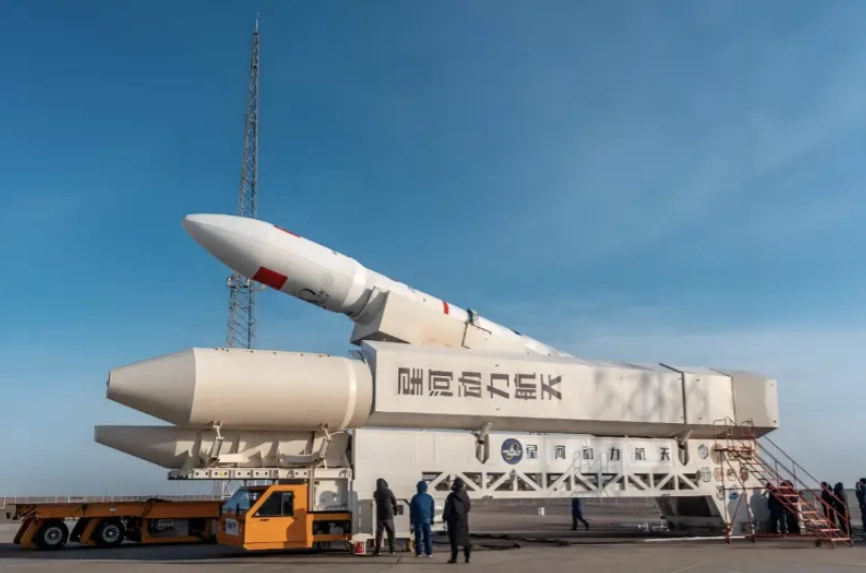
When the Smart Star One Y1, a medium-to-large liquid launch vehicle developed by Galactic Energy, successfully delivered its payload into the designated orbit, officially declaring its maiden flight a success, the spotlight on China's private commercial space sector was instantly illuminated. However, behind the overwhelming applause, two highly conspicuous footnotes immediately triggered deep scrutiny in the capital markets: First, this critical launch came at least 20 months later than the 2024 maiden flight milestone the company had announced at the end of 2023;
Second, this orbital launch completely abandoned any attempt to verify first-stage vertical recovery. In the face of two previous massive funding rounds totaling 3.5 billion yuan, this launch—nearly two years late—was by no means a leisurely technological tour, but rather a defensive breakout by a leading private rocket company forced into a "secure orbital delivery first, defer recovery for later" strategy under the dual squeeze of a rapidly shrinking satellite constellation deployment window and dangerously rapid R&D cash burn.
The Battle for Payload Capacity Tickets During the Satellite Constellation Deployment Window
The competitive logic of commercial space is undergoing a brutal qualitative shift. As China's Guowang GW constellation and the Qianfan polar-orbit constellation (G60) enter a phase of high-frequency, normalized deployment, the demand for launch capacity from low-orbit mega-constellations is exploding exponentially. While small solid rockets offer the advantages of rapid response and mobile launch, their payload ceiling is extremely low and their per-kilogram launch cost remains stubbornly high when faced with batch deployment demands measured in hundreds or thousands of satellites.
Only those who can first deliver a medium-to-large liquid rocket with 5-ton-plus low Earth orbit capacity can secure a ticket to bid on national-level satellite internet contracts. Smart Star One carries precisely Galactic Energy's core leap from "small solid" to "large liquid."
A Vertically Integrated Industrial Closed Loop Built on Heavy Assets
Tracing through the underlying architecture of intellectual property and physical manufacturing, the industrial foundation Galactic Energy has laid for this heavy-lift vehicle is clearly visible in Tianyancha records. Tianyancha business registration data shows that the two core entities responsible for R&D and manufacturing—Beijing Galactic Energy Equipment Technology Co., Ltd. and Anhui Galactic Energy Equipment Technology Co., Ltd.—are both wholly owned subsidiaries of Galactic Energy Aerospace. In the business scopes uncovered by Tianyancha, Beijing Equipment covers core R&D including launch vehicles, engines, and guidance control systems, while Anhui Equipment directly undertakes final assembly and manufacturing of spacecraft and launch vehicles.
The more critical technological positioning is reflected in the patent information recorded by Tianyancha. In September 2025, Galactic Energy Aerospace, together with Beijing Equipment and Anhui Equipment, jointly filed a key patent on rocket recovery control, which was officially published in January 2026 and entered substantive examination.
Two wholly owned corporate layers, billions of yuan in fixed asset investment, and a recovery patent still in substantive examination together clearly outline a vertically integrated industrial closed loop built on heavy assets.
The Cold Reality of 3.5 Billion Yuan in Capital Infusion and a 20-Month Delay
Yet it is precisely this massive heavy-asset chain that has devoured staggering amounts of capital over the past several years. The company secured 1.1 billion yuan in Series C and C+ funding in 2023, followed by 2.4 billion yuan in Series D funding in 2025, with the cumulative 3.5 billion yuan from both rounds explicitly tied entirely to Smart Star One's R&D, test stand construction, launch pad construction, and subsequent production ramp-up.
Even with the powerful catalyst of billions of yuan in capital injection, the maiden flight schedule still suffered a severe 20-month delay, brutally exposing the enormous resistance encountered during the pilot testing phase of engineering challenges including multi-engine parallel configuration of high-thrust liquid oxygen/kerosene engines, deep cryogenic propellant delivery, and rocket body lightweighting. Liquid rocket development is by no means mere code iteration—from thousands of seconds of full-system test firing to extreme vibration stress testing, the slightest flaw in any single component can force the entire system back to square one.
The Commercial Calculus of Stripping Away Recovery Verification
Amid the prolonged technological攻坚, Smart Star One's maiden flight choosing to strip away first-stage recovery verification represents a set of highly realistic commercial calculus.
Under the countdown of a capital winter and the approaching exit period in the primary market, investors' patience with the 3.5 billion yuan in chips has neared its breaking point. Continuing to stubbornly pursue recovery technology would mean the maiden flight schedule being postponed indefinitely. If a genuine orbital insertion pathway cannot be established as quickly as possible, not only would commercial satellite delivery obligations to existing customers face high breach-of-contract risks, but subsequent financing and IPO channels could be completely locked shut.
Decisively abandoning recovery and pushing Smart Star One onto orbit as an expendable rocket, while sacrificing the visual spectacle of demonstrating SpaceX-style reusability, delivers the closed loop of the rocket's payload capability at minimal risk, proving to military and commercial constellation buyers that it possesses genuine large-scale orbital constellation deployment capability.
The Life-or-Death Cost Reduction Equation Behind the Compromise Strategy
But this compromise strategy has also planted grave hidden dangers in the economic equation.
For SpaceX's Falcon 9, its core killer weapon for dominating the global launch market is precisely the reuse of its first stage dozens of times, driving per-kilogram launch costs down to the industrial extreme of a few thousand dollars. If Smart Star One cannot rapidly master vertical soft landing, engine re-ignition, and thermal protection refurbishment processes in subsequent flights, relying solely on expendable launches—even at full production capacity—its comprehensive launch cost will still be mercilessly suppressed by Chinese and American competitors with mature recovery capabilities.
Those massive upfront amortization costs sunk into the Anhui production base and the patent under substantive examination will ultimately require high-frequency cyclic recovery to achieve the extreme dilution of unit costs.
The Ultimate Ticket to Avoid Generational Obsolescence
This belated orbital insertion occurring in the height of summer delivers an extremely sobering reality check to the entire private space sector: the capital market frenzy will eventually end, and any technology roadmap on a PowerPoint must ultimately submit its final exam in the roaring flames of the launch pad. Securing orbital delivery qualification first may buy a company a brief breathing spell, but in the deep waters where cost reduction becomes the ultimate commercial barrier, only those who can fastest translate recovery blueprints into concrete, on-the-spot landings can secure the ultimate ticket to avoid generational obsolescence in this great space gamble toward the stars and the sea.