Ox Principal Becomes a Deadbeat: The Elite Heir Behind the Collapse of Influencer Dining
Ox Principal Dining was listed as a deadbeat for failing to fulfill contracts, with Mario Ho's capital exiting early and a Thai company taking over, revealing how influencer dining's reliance on traffic ultimately leads to a collapse of credit.
As the investment halo fades from top-tier celebrity heirs, the internet-famous restaurants once crowdfunded by capital and boosted by fans' follow-the-crowd dining habits under the spotlight are now facing the coldest collapse of their underlying credibility.
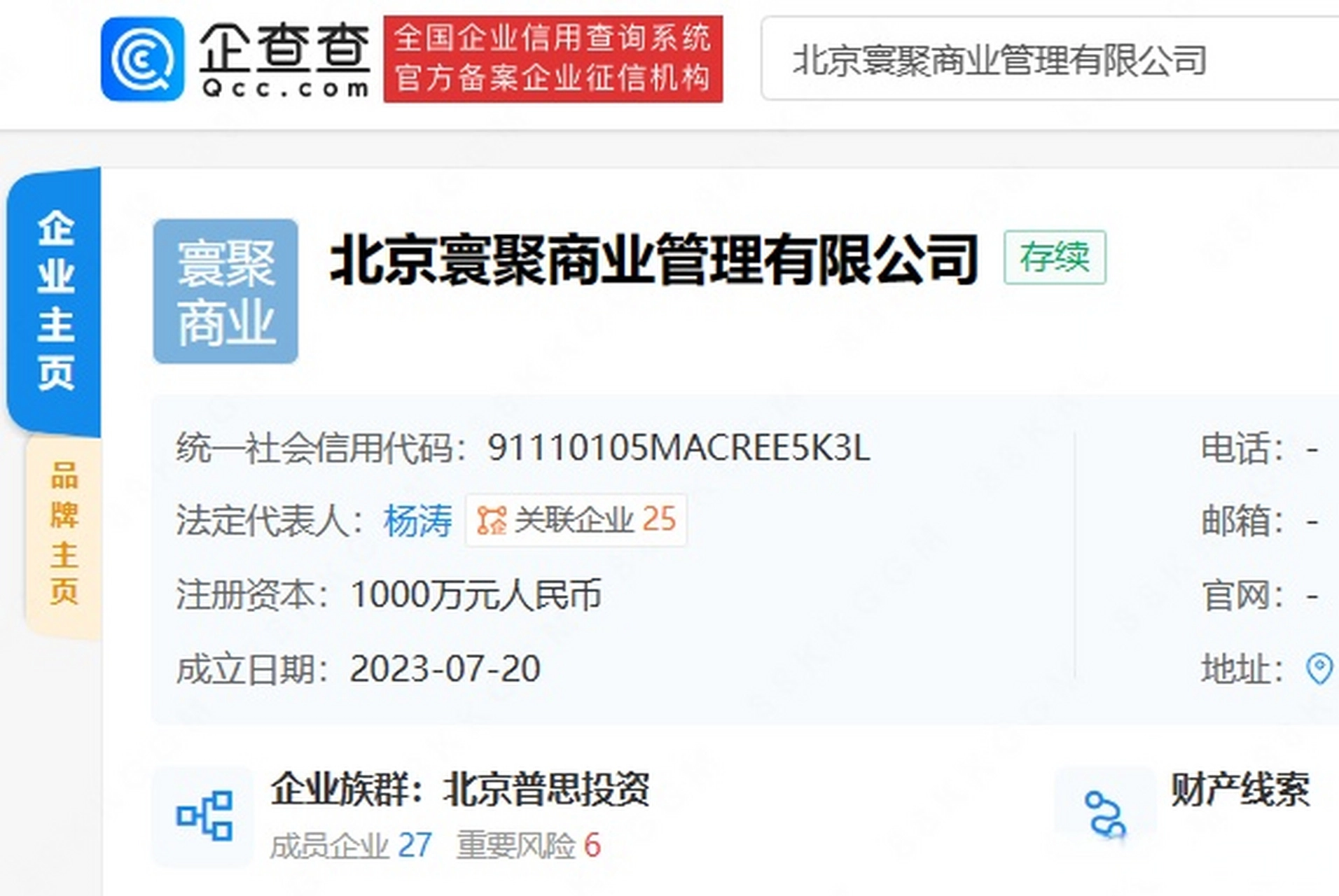
Recently, a business registration change on Tianyancha App exposed the covert capital exodus of freshly grilled beef jerky restaurant chain "Beijing Niuzhangzhang Catering Service Co., Ltd." on the eve of its financial collapse. The original shareholder—Beijing Huanju Commercial Management Co., Ltd., owned by Stanley Ho's son Mario Ho—fully withdrew, while a new shareholder, YOUKER (Thailand) Co., Ltd., was added. In stark contrast to the capital narrative of foreign takeover, Tianyancha's risk information prominently reveals: Recently, Niuzhangzhang, once backed by the top-tier celebrity influence of Wang Sicong and Mario Ho, has been officially listed as a judgment debtor (commonly known as a "laolai") by the court for failing to fulfill its obligations, and a consumption restriction order has been issued against it.
The Top Heir's Traffic Superstition: PPT-Style Internet-Famous Dining Hits a Ceiling
Many who are accustomed to watching Wang Sicong promote products and Mario Ho start businesses on social media tend to attribute Niuzhangzhang's collapse to overall industry competition in the restaurant sector or poor management at local stores. This simplistic logic completely underestimates the systemic management bandwidth failure these silver-spooned young capitalists face when crossing over into offline heavy-asset retail.
When Niuzhangzhang was founded in the fall of 2024, the business proposition on paper was extremely attractive: Wang Sicong, as the original top-tier internet celebrity, brought his "Principal" IP with immense influence and leads from young consumers; combined with Mario Ho's Huanju commercial management's push in B-end commercial real estate, the high-ticket, socially engaging categories of freshly grilled beef jerky and premium steak were forced into prime city-center shopping districts through pop-ups or flagship stores.
However, real money on the ground doesn't believe in internet romanticism. Beef jerky and steak dining are a muddy quagmire heavily dependent on supply chain cost control, precise oil management, intensive labor depreciation, and table turnover rates. When the initial "gawking at the rich kid" traffic dividend was exhausted, high store rents and premium raw material waste became mutually reinforcing, quickly spiraling into a systemic black hole that devoured core financial metrics.
Peering Through the Corporate Structure: Mario Ho's Huanju Commercial Management's Shrewd Exit
More intriguing than the collapse itself is the keen foresight and escape tactics of wealthy capital when a storm approaches.
By examining Niuzhangzhang's latest shareholding structure through Tianyancha, this company with only 1 million RMB in registered capital has undergone a dramatic asset isolation at its foundation. Beijing Huanju Commercial Management Co., Ltd., controlled by Mario Ho, completed a rapid liquidation and share withdrawal before the company was fully wound up and slapped with the "laolai" label.
This complete equity separation bluntly reveals the most ruthless logic of cause-and-effect cash-out in the current inventory cycle for top-tier capital. As seasoned players in commercial management, Mario Ho's team clearly reverse-calculated the systemic collapse of Niuzhangzhang's long-term cash flow early in the financial reconciliation process. Rather than staying to bear endless litigation backlash alongside local partners and draining their precious family brand assets, it was better to ruthlessly cut off this bleeding point.
Thai Capital Takeover and the Consumption Restriction Order: The Ultimate Reckoning of Musical Chairs
In this meticulously planned capital retreat, the newly added YOUKER (Thailand) Co., Ltd. has essentially become the final "fall guy" and restructuring shell in this game of musical chairs.
The 1 million RMB registered capital cannot offset the mounting debts Niuzhangzhang accumulated through nationwide expansion. From the media-highlighted investment highlights of Wang Sicong to now being reduced to a cold consumption restriction enforcement target in Tianyancha's system, Niuzhangzhang's current state serves as a clear strategic warning for the industry.
This indicates that the crude paradigm of new-consumption dining—piecing together celebrity shareholders, relying on selling celebrity appeal for easy money, yet lacking reverence for the underlying supply chain—has entered its most brutal phase of credit bankruptcy. As consumption returns to rationality, what tests a restaurant brand's vitality is no longer how many luxury cars show up at its opening, but its extreme control over per-order margins and long-term customer retention. The successive exits of the two top heirs and Niuzhangzhang's transformation into a judgment debtor are the ultimate rite of passage as internet-famous dining, having left behind its wild growth phase, is now ruthlessly cleansed by the laws of physical industry.