Selling Buildings for 35 Million and a Wave of Cancellations: The Leveraged Exit and Heavy-Asset Backlash of Northeastern Yujie and Her Husband
Northeastern Yujie and her husband sold a building for 35 million yuan and canceled companies in rapid succession, revealing a case study of how high leverage and heavy assets can backfire when influencer traffic recedes.
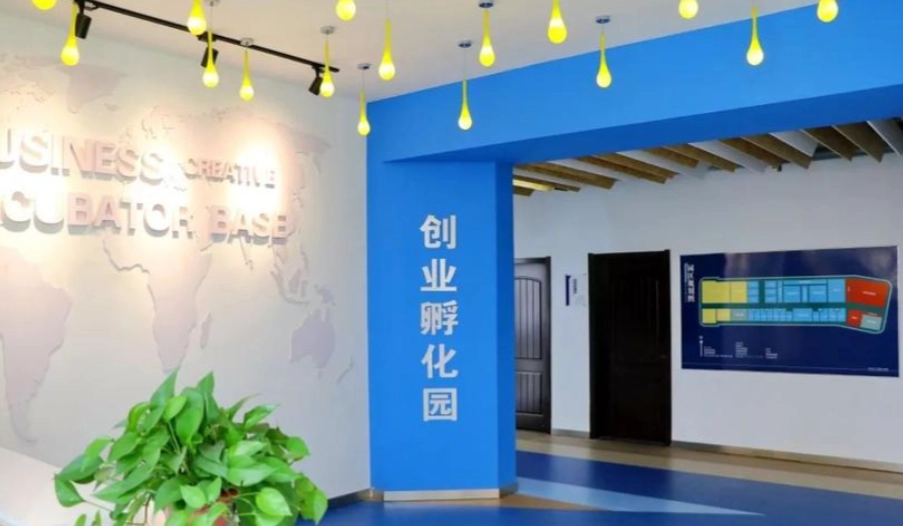
When the e-commerce livestream incubation base building owned by "Northeast Sister Yu" in Benxi, Liaoning was listed for transfer at a price of 35 million yuan, public attention remained fixed on the mundane arithmetic of buying low and selling high to pocket the difference. Having spent 18 million yuan to purchase the building two years ago and taken on over 12 million yuan in bank loans, the decision to now put it on the market amid public controversy and a halt in content updates is by no means a leisurely commercial exit.
During this ebb tide when top-tier livestream traffic has hit a cliff-like cooling, this heavy-asset structure—leveraged onto a high pedestal—along with the rapid deregistration of affiliated companies under the same owner, lays bare the collapse of a grassroots internet celebrity who, after accumulating initial traffic, attempted to consolidate assets through aggressive capital maneuvers only to be crushed by those very heavy assets.
Looking back at the evolution of top influencers in recent years, buying buildings and establishing incubation bases has become a canonized rite of passage for advancement. As public-domain online traffic grows ever more expensive and the lifecycle of personal IP shrinks, leading streamers have fallen into a profound sense of traffic insecurity. To secure tax incentives from local governments, demonstrate fulfillment capability to brands, and anchor fragile virtual traffic into physical assets that can be mortgaged and preserved in value, purchasing heavy-asset buildings has become the standard institutionalized transformation move for influencer families.
When Northeast Sister Yu bought the base building with over 60 percent of the cost financed through loans, she was essentially making an extremely aggressive pre-commitment of future traffic-driven earnings to the bank.
Yet this heavy-asset model, built on the mythology of personal traffic, carries a fatal fragility.
Asset Cleanup Moves Outpace the Noise of Public Opinion
Tracing the true skeleton of this commercial network through corporate filings, the asset cleanup moves behind the scenes are more urgent than the public outcry in the spotlight. According to the equity and executive timelines captured by Qichacha, the operating entity behind the e-commerce base, Liaoning Sister Yu E-Commerce Livestream Incubation Base Co., Ltd., is fully controlled by Yuhui Agricultural Technology, which is wholly owned by her husband Bai Guohui. Bai Guohui alone effectively controls more than 30 enterprises, building a sprawling network spanning agricultural technology, event planning, and supply chain operations.
What is even more telling, Qichacha data shows that since the start of this year, more than ten companies under Bai Guohui, including Xingsheng Business Planning and Xingxinghua Creative Advertising, have been rapidly moved into deregistration status.
This swift wave of deregistrations exposes a textbook risk-firewall operation in response to the external storm.
Shell Companies Turn from Traffic Hubs into Hidden Landmines
During the wild growth phase, setting up dozens of layered shell planning companies was often a means of tax planning across business segments, allocating supply chain channel fees, and dispersing contracting risks. But once the core IP faces a credibility crisis and the livestream business grinds to a halt, these shell entities—once used as traffic relay stations—lose their revenue-generating function and become hidden landmines that could trigger compliance audits and contract disputes at any moment.
Deregistering shell companies at maximum speed is the self-preservation move of cutting off debt pass-through and sealing off the spread of potential legal risks when cracks appear in the commercial landscape.
The simultaneous listing of the building for sale and the dense deregistrations sketch out an asset retreat with no turning back.
High-Leverage Building Purchase Becomes a Liquidity Noose
For the Sister Yu team today, the incubation building that once symbolized a business empire has, without the support of high-frequency livestream cash flow, devolved into a negative-asset liability that swallows massive interest and maintenance costs each month. The 35 million yuan listing price certainly reflects hopes for asset appreciation, but in the current environment of physical real estate and commercial retail, a county-level e-commerce building lacking a core commercial ecosystem is highly unlikely to find a buyer anytime soon.
This towering structure has not become a safe harbor; instead, it has turned into a liquidity noose tightening around the entire team's neck.
From the rural rags-to-riches myth of lifting up neighbors to the ten-fold leveraged building purchase and the frantic company deregistrations to cash out and hedge risk, this ending has shattered the glossiest veneer of the influencer economy. When the illusory traffic bubble bursts, any speculative scheme that tries to defy cyclical reality with financial leverage and shell-corporation matrices will ultimately be mercilessly exposed in the cold reckoning of the balance sheet.