Nongfu Spring has 1.125 billion yuan in fully paid-in capital and nearly 6,000 employees under a heavy-asset self-owned model, building an industrial moat through monopoly control of water sources and a full-chain closed loop.
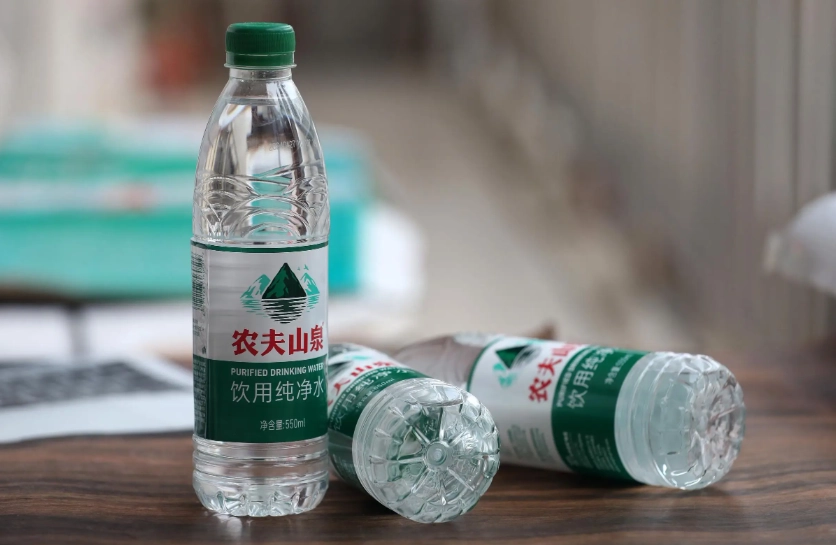
When the outside world focuses its attention on Nongfu Spring's astonishing gross margin, which has exceeded 60% year after year, and on the capital narrative of founder Zhong Shanshan repeatedly topping China's rich list, dissecting this consumer goods giant, which is about to celebrate its thirtieth anniversary, from the bottom up through business registration reveals that what is most striking is not a lightweight internet concept, but a set of heavy physical industrial data that is almost counterintuitive: as its core domestic operating parent entity, Nongfu Spring Co., Ltd. has registered capital of approximately 1.125 billion yuan, and paid-in capital contributions also amount to as much as 1.125 billion yuan, with a contribution implementation rate of exactly 100%.
What is even more intriguing is that, under the latest annual report basis, the parent company has as many as 5,960 enrolled insured employees.
Completely different from those new consumer speculators who routinely use dozens of shell companies for offshore tax avoidance and keep only a few people in the parent entity responsible for invoicing and dividends, Nongfu Spring has firmly nailed a heavy employment establishment of nearly 6,000 people and a fully paid-in heavy-asset foundation into the same entity. Opening its approved business scope, from upstream "production of natural water, beverages and packaging bottles, and purchase of fruits and vegetables," to midstream "freight forwarding, warehousing services, and delivery services," and further extending downstream to "sales, leasing, installation and maintenance of vending machines" and "design, production and publication of various domestic advertisements," a full-industry-chain closed-loop license network running through "raw material harvesting and production, intermediate trunk-line warehousing, terminal machine self-operation, and brand mindshare instillation" is clearly unfolded on its business registration foundation.
This is by no means the lightweight franchise business of an ordinary consumer goods company, but a heavy-asset manufacturing empire that has spent thirty years building moats anchored in water sources, using self-built logistics and directly controlled terminals to turn a two-yuan bottle of water into an industrial money-printing machine.
The underlying competition in the bottled water and soft drinks industry has never been a lightweight game where one can win effortlessly simply by relying on formulation and flavoring. The main component of packaged drinking water is water, and its physical characteristics determine that the product has an extremely low weight-to-value ratio and extremely high ton-kilometer freight costs for long-distance transportation. If the traditional model of "production at a central plant and nationwide shipment" were adopted, logistics freight would instantly devour all gross profit;
if an outsourcing contract manufacturing model were adopted, it would be impossible to guarantee exclusive possession of high-quality water sources and extremely stringent microbial control over a period of decades. The core reason Nongfu Spring has been able to build a moat against encirclement by the entire industry lies in its heavy-asset self-built supporting bottle-blowing and filling plants around major natural high-quality water sources across the country, such as Qiandao Lake, Changbai Mountain, Wanlu Lake, and Danjiangkou, welding mining permits, production workshops, and water source protection zones together.
Following the traces left at the commercial foundation level to penetrate the governance fabric of this veteran Hangzhou fast-moving consumer goods entity, its asset base in Tianyancha records shows a highly steady role as an industrial anchor. Tianyancha business registration data shows that Nongfu Spring Co., Ltd. was established on September 26, 1996, with Zhong Shanshan as legal representative, registered capital of approximately 1.125 billion yuan, paid-in capital contributions of approximately 1.125 billion yuan, and registration status of surviving.
Among the enterprise types penetrated by Tianyancha, it is registered as a "company limited by shares (Hong Kong, Macao and Taiwan investment, listed)," with 5,960 insured employees under the 2025 annual report basis. Having weathered thirty years of business storms, with no liquidation, no revocation, and full payment of capital contributions, this deep and stable commercial entity constitutes the industrial bedrock behind its annual revenue exceeding tens of billions of yuan and market value of hundreds of billions of Hong Kong dollars.
The scale of nearly 6,000 insured employees in the parent entity directly exposes the essential gap between it and asset-light fast-moving consumer goods brands that rely on outsourcing.
In the employment and qualification map penetrated by Tianyancha, these nearly 6,000 employees are by no means ordinary idle administrative posts, but directly cover water quality testing and laboratory engineers at water sources, technical technicians on fully automated high-speed integrated blow-mold-label-fill production lines, dispatch backbone staff for large trunk-line warehouses, and an expansion iron army controlling core vending machine terminals and direct-sales channels. Placing such a massive staffing establishment directly within the parent body of a listed joint-stock company not only reflects ultimate centralization of whole-process risk control over product quality, but also institutionally eliminates the water source pollution, batch quality loss of control, and food safety gray areas that may arise from multi-layer outsourcing and contract manufacturing.
A more ingenious strategic intention is hidden in the cross-boundary qualification combination of "production, circulation, and terminal integration" in its business scope.
First, the juxtaposition of "purchase of fruits and vegetables" and "production of natural water and packaging bottles" confirms its vertical integration penetration upward into the heavy-asset raw material end. Nongfu Spring not only extracts and fills water itself, but also purchases PET pellets itself to blow bottles in-house, squeezing the packaging material cost of bottles to the lowest in the industry; moreover, its deep layout in the Ganzhou navel orange base in Jiangxi and the Aksu apple base in Xinjiang further frees its juice and agricultural product deep processing from being hostage to external concentrated juice suppliers, laying the foundation of source autonomy for its "17.5° Orange" and pure juice business.
Second, the inclusion of "freight forwarding, warehousing services and delivery services" precisely opens the cost lifeline of cross-regional bulk transportation. Facing millions of retail terminals nationwide, expensive socialized trunk-line logistics is the largest black hole devouring beverage profits. With freight forwarding and warehousing qualifications in the hands of the parent entity, Nongfu Spring can build its own dispatch network of cross-provincial trunk lines and regional distribution centers (RDCs), directly coordinate road, rail capacity and shipping containers, and rapidly push water and beverages off the line from water source plants to regional freight stations with the lowest unit transportation loss.
Third, the deep锁定 of qualifications for "sales, leasing, installation and maintenance of vending machines" is its ultimate hidden door for intercepting competitors at close range and controlling real offline customer traffic. At a time when traditional mom-and-pop stores and supermarket shelves face extortionate slotting fees and display fees, vending machines directly deployed in subways, office buildings, universities, and scenic spots constitute digital direct-sales positions that do not let middlemen earn the spread and collect payments autonomously 24 hours a day.
By directly controlling equipment installation and operation and maintenance through parent entity qualifications, Nongfu Spring not only firmly locks up the golden positions closest to consumers in physical space, but also turns tens of millions of offline vending machines into a data radar for the parent entity to gain real-time insight into sales velocity.
However, pulling back the outer garment of this full-industry-chain heavy weapon honed over thirty years, hidden cyclical cracks and real challenges have quietly emerged.
The first is the ruthless squeeze on high-end water and high-gross-margin products from extreme price wars across the industry. As competitors in the low-degree tea beverage and sugar-free tea tracks frantically divert shelf space with hundreds of new product launches, even Nongfu Spring's "Oriental Leaf" must, after establishing a first-mover advantage, directly face close-quarters combat with giants such as Genki Forest, Suntory, and Uni-President in terminal freezer displays and promotional discounts.
And in order to consolidate the foundational share of mass drinking water, Nongfu Spring's counterattack with green-bottle purified water, although effectively blocking C'estbon and Wahaha in channels, also means it voluntarily allocates part of its production capacity to the relatively lower-gross-margin affordable water segment, pulling at the overall reported gross margin.
A deeper test lies in the gravitational backlash of the heavy-asset model during marginal expansion.
Nearly 6,000 insured employees in the parent entity, large plants spread across more than a dozen water sources nationwide, and thousands of high-speed filling lines give Nongfu Spring an unparalleled scale cost advantage, but at the same time bring an extremely heavy fixed depreciation burden and rigid labor expenses. Once overall consumer market growth slows, or extreme weather and tighter water resource environmental protection reviews put pressure on mining quotas at certain water sources, the massive fixed asset amortization and environmental maintenance costs will be difficult to cut quickly.
The water source barriers built over thirty years, while giving it monopoly premium, also anchor it deeply to this physical land that must continue to be maintained with heavy investment.
This 1.125 billion yuan fully paid-in business registration review on the eve of its thirtieth anniversary releases the purest business law to China's entire mass fast-moving consumer goods and physical industry sector: the strongest moat of a consumer goods giant has never been a loud advertising slogan, but rather heavy-asset infrastructure built in the muddy real world that others cannot replicate even if they understand it. This massive system, built with a fully paid-in capital foundation, a staffing establishment of thousands of professional technicians, and full-chain closed-loop qualifications, enables Nongfu Spring to achieve industrialized pricing of water resources on every two-yuan plastic bottle.
However, as the tide of the times moves from incremental consumption into the deep-water zone of stock reshuffling, how to respond to the brutal strangulation of affordable purified water and sugar-free tea without damaging the original high-gross-margin foundation of natural water is the ultimate proposition that Zhong Shanshan and this industrial giant, about to enter its thirties, must continue to answer.