Momenta Quadruples Gross Margin Ahead of IPO, but Three Challenges Remain
Momenta's gross margin jumped fourfold to 71.6%, yet concerns linger over installation volumes, overseas expansion, and the window for profitability.
Momenta's current stock price is $6.87, with a market cap of under $3 billion, down more than 70% from its 52-week high of $24.92. WeRide is also trading below its IPO price. The secondary market performance of these two companies provides a benchmark for the entire autonomous driving sector: the market's pricing logic for such companies has shifted from "believing the story" to "scrutinizing the numbers." Growth narratives are no longer enough — you need financials that can withstand serious scrutiny.
Momenta's HK$48.5 billion valuation on the table is a somewhat different situation from those two. It has annual revenue of RMB 2.4 billion, cumulative installations of nearly 900,000 vehicles, and both Mercedes-Benz and BYD sitting in its cornerstone investor seats. These fundamentals are indeed more solid than those of pure Robotaxi companies. But that story is only half told so far; the second half requires three things to fall into place, each of them difficult. The chain of logic connecting these three things is sequential: high gross margin has been achieved, but installation volume is still insufficient; overseas expansion is needed to make up the volume, but that takes time; and the time window is limited, so how much of that HK$48.5 billion is premium remains an open question.
Can 71.6% Hold?
Start with the change in financial structure. Gross margin climbed from 17.5% in 2023 to 71.6% in 2025 — a fourfold increase in three years. Behind this is a qualitative shift in revenue mix: from a project-delivery model to software licensing. Project work is essentially selling labor — taking on new clients requires investing in new teams, with high marginal costs. Licensing is selling code, where the marginal cost of copying approaches zero. Software licensing as a share of revenue jumped from 3.1% in 2023 to 40.1% in 2025 — that's the direct driver of the gross margin leap.
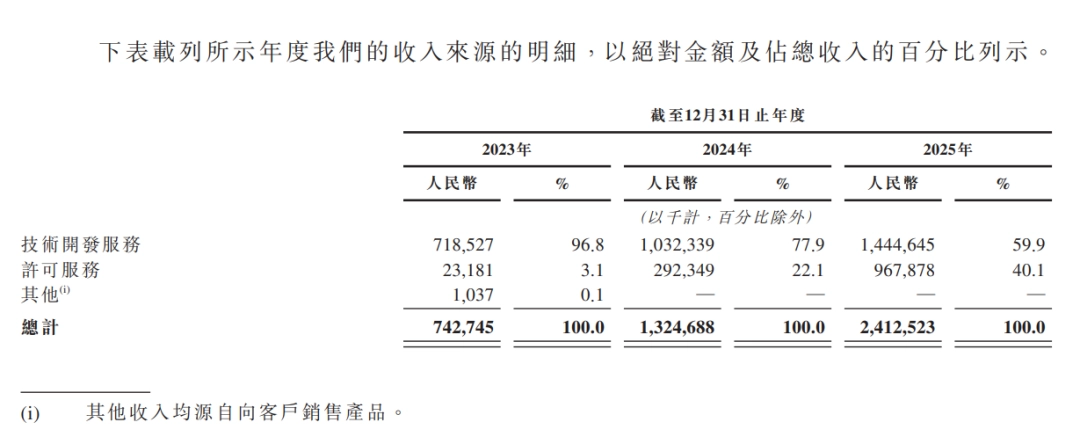
But there are several questions worth pressing on the 71.6% figure itself. It's too early to draw conclusions.
First, the method of recognizing software licensing revenue determines the sustainability of gross margin. If it's a one-time license fee recognized in full in the quarter the contract is signed, the gross margin for that period is artificially inflated, and revenue goes blank during the renewal cycle. If it's a subscription model amortized annually, the gross margin curve is smoother, but the current-period figure is lower. The prospectus doesn't break this out.
Second, some projects may include bundled hardware or non-recurring engineering fees such as NRE. If those are counted under the software licensing line, they inflate gross margin. NRE is one-time in nature and doesn't represent recurring product profitability.
Third — and most critically — is there pricing pressure on customer renewals? In a market where autonomous driving solution supply is increasingly abundant, automakers playing multiple quotes off each other is standard practice. Mobileye lowered its license fee threshold in 2024 for exactly this reason. Momenta's current 71.6% benefits, to some degree, from the pricing power of being an early exclusive or near-exclusive supplier. As the customer base diversifies and price concessions become the norm in new customer negotiations, whether this figure regresses toward the 60% range is an open question. The structural shift is real, but whether 71.6% can hold depends on the direction of these variables, none of which are locked in yet.
High gross margin and high profit are two different things. From 2023 to 2025, Momenta's cumulative losses were approximately RMB 9.2 billion. R&D expenses are the largest line item, reaching RMB 1.869 billion in 2025, or 77.5% of revenue. In industry context, Horizon Robotics' R&D ratio was around 85% in 2024, while Mobileye's was around 43%. Momenta's 77.5% sits between the two. A high R&D ratio isn't the problem — it's a necessity in the early stages of this industry. The question is when that curve starts coming down. CEO Cao Xudong has said that annual installation volumes need to reach several million vehicles to cover R&D costs. The company's cumulative installations are still under 900,000 vehicles — a long way from that target.
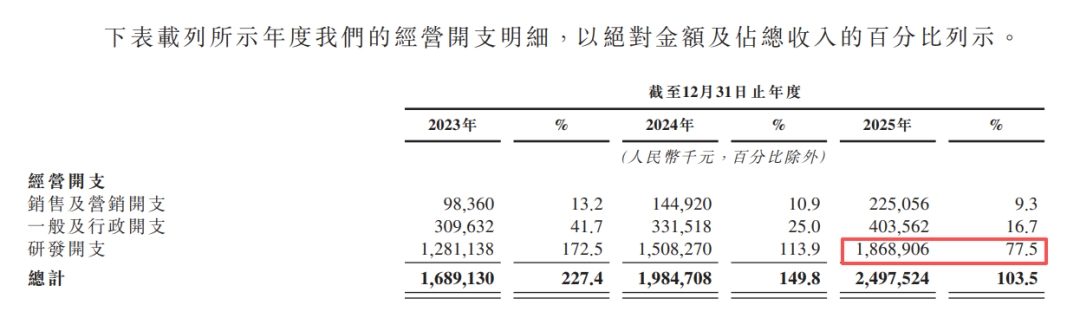
Selling and administrative expenses came in at RMB 405 million, or 16.8% of revenue — not excessive. But with revenue at only RMB 2.4 billion, once scale expands, the absolute SG&A figure will balloon along with it. Revenue grew about 35% year over year — not a slow pace — but demonstrating economies of scale will require a much larger growth base.
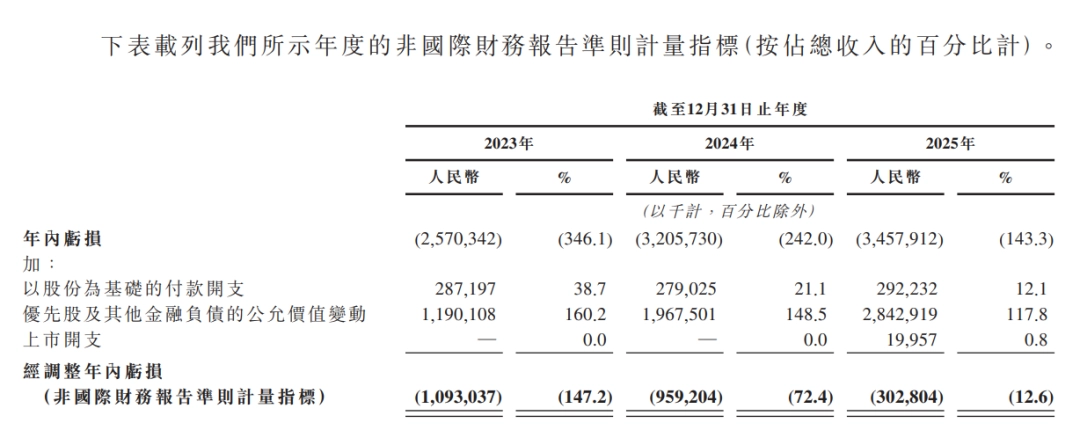
Adjusted net loss narrowed from RMB 1.093 billion in 2023 to RMB 303 million in 2025 — the core business is indeed approaching breakeven. But "adjusted" strips out non-cash items like share-based compensation and doesn't represent true cash flow. Whether the pace of narrowing can cross breakeven before cash runs out is the core question. How long the road is — whether 71.6% can hold — is the first variable.
The 900,000 Installations — What Matters Is What's Installed
Putting 900,000 installations into the industry context clarifies Momenta's actual position. Huawei's ADS has conservatively shipped more than 4 million units; Horizon Robotics shipped over 6 million chips in 2024; Mobileye has shipped more than 150 million EyeQ series units cumulatively. At 900,000 units, Momenta sits in the mid-tier among domestic third-party autonomous driving solution providers, but the gap to the leaders needs to be stated more plainly.
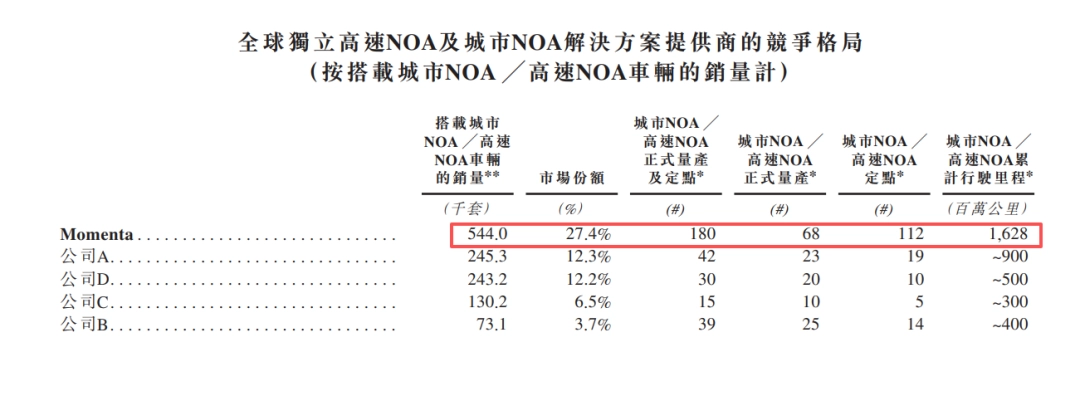
The composition of those 900,000 installations is the core of the issue. How many are full-stack solutions — where Momenta provides both the main compute and perception algorithms — versus how many are entry-level L2 driver assistance, covering only one layer of perception or decision-making? The prospectus doesn't break this out. If most of the volume is in entry-level solutions, the data value accumulated through algorithm iteration is diminished, because data density and complexity in L2 scenarios are far lower than in urban NOA or highway pilot. The difference isn't just a step — it could be a generational gap: between entry-level L2 solutions and full-stack urban NOA solutions, it's not a continuous incremental change but a fork between two technical paths. Momenta's algorithmic competitiveness needs to be validated by the share of full-stack installations. 900,000 units is only an entry point, not a conclusion.
BYD's role is the most unusual. It's both a cornerstone investor and, at the same time, aggressively pushing its in-house "God's Eye" system. Running external procurement and internal development in parallel, it will bet on whichever advances faster. BYD's presence on the cornerstone list means Momenta offers short-term irreplaceable value: fast mass production and cost reduction. But that doesn't mean a long-term commitment. God's Eye has already been deployed across BYD's main models including Han, Tang, and Seal, with a 2025 production target covering the entire lineup. Whether installations can jump from 900,000 to several million depends on the procurement pace of top customers — customers who are also developing in-house solutions and may replace external supply at any time.
Automaker in-house development is an industry-wide trend. Mobileye's revenue fell 17% year over year in 2024, with customers moving to in-house solutions as a direct cause. Facing customer attrition, Mobileye chose to lower license fee thresholds and offer a more open SDK for customization — effectively weakening its own pricing power to retain customers. Whether Momenta will need to walk that same path is a strategic choice worth deciding in advance. The length of its shelf life depends on whether mass production speed can stay ahead of customers' in-house development — and the precondition for staying ahead is a sufficiently high share of full-stack solutions.
Harder Than Regulation: Data That Can't Leave the Country
On the Robotaxi front, Momenta has taken a differentiated path: instead of fighting head-on in China, it has made overseas markets its main battleground. Baidu's Apollo Go covers more than 3,000 square kilometers in Wuhan with over 30,000 daily orders — the second-largest operation after Waymo. Head-on competition would be too costly; better to prove out the model elsewhere first.
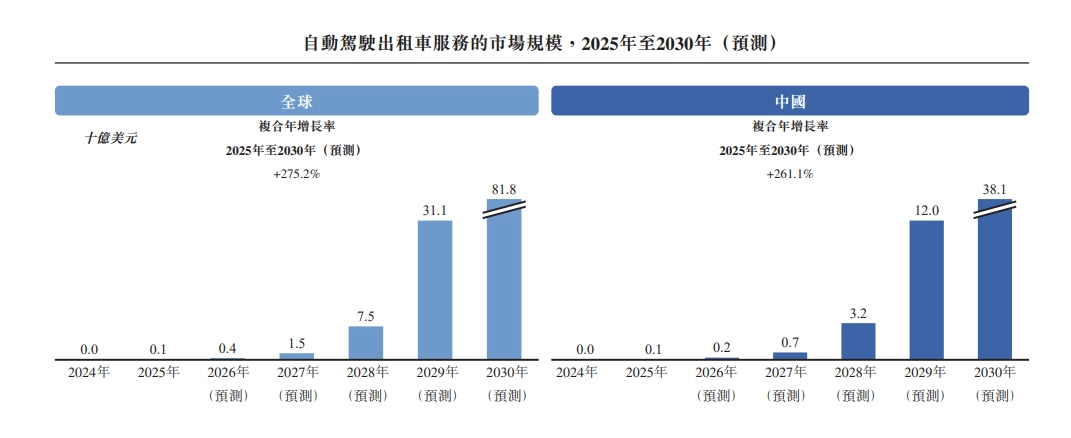
In Abu Dhabi, there's a luxury Robotaxi fleet run by Mercedes-Benz and Lumo; in Munich, there's Uber's L4 testing program. Mercedes-Benz's endorsement helps Momenta bypass the trust costs of cold-starting overseas. Compare this with Waymo's progress in the U.S.: it fully opened commercial operations in Los Angeles, San Francisco, and Phoenix in 2024, with over 100,000 weekly orders. Waymo has already proven out the first half of the overseas path, but Momenta faces the regulatory environment of Europe and the Middle East.
Overseas Robotaxi involves several unavoidable variables. Regulation and infrastructure are among them, but not the whole story. Two structural risks are easier to underestimate. The first is data repatriation. Whether road-test data generated overseas can be smoothly transmitted back to China for training is a massive uncertainty. Europe is extremely sensitive about cross-border data transfers — compliance costs and approval timelines under the GDPR framework are substantial, to say nothing of additional regulatory requirements around road perception data. The Middle East is comparatively looser, but the market size is limited, capping its strategic value as a data collection venue. The second is geopolitical friction in the chip supply chain. Export controls on AI inference chips are tightening. If overseas fleet hardware depends on specific chips, the stability of the procurement chain is itself a variable. If operational data can't flow back smoothly, model iteration stalls, and the entire point of overseas scale expansion is undermined. Data sovereignty and chip controls are structural constraints that can't be worked around no matter how well execution goes — that's the truly difficult half of the overseas Robotaxi equation.
By comparison, the timing for recognizing domestic mass-production revenue is more predictable. What investors need to track is the progress gap between the mass-production business and the Robotaxi line — and whether the precondition of overseas data effectively feeding back into domestic algorithms actually holds.
How Many Layers of Premium Are in HK$48.5 Billion
Momenta's cornerstone investor lineup for this IPO deserves its own analysis. GIC is Singapore's sovereign wealth fund; Fidelity is a top-tier global asset manager; plus BlackRock, Oaktree Capital, and then Mercedes-Benz and BYD. This isn't something that can be summed up simply as a "prestigious lineup."
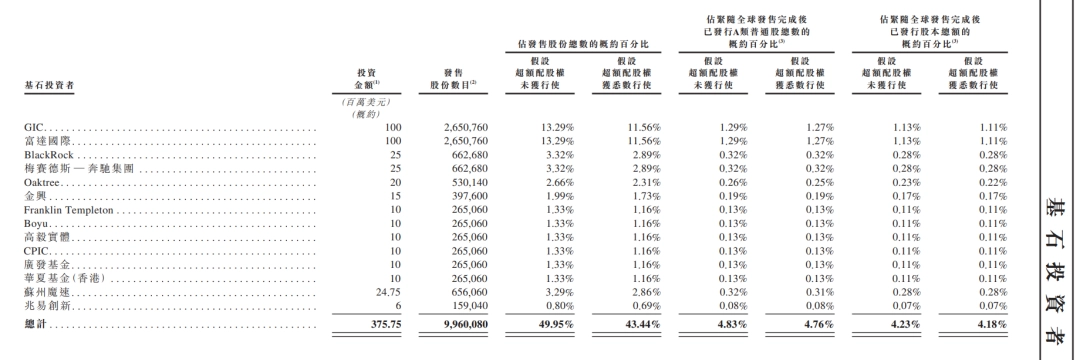
These three types of capital sit at the same table with different logic. GIC and BlackRock operate on allocation logic: to have exposure to the autonomous driving sector, picking the leading target is the least-bad option. Mercedes-Benz operates on industrial-alignment logic: when a deeply integrated supplier goes public, co-investing is a way to maintain the relationship. BYD operates on dual logic: both financial allocation and strategic defense. The stacking of endorsement signals from these three types of capital has real density. But none of them is making an all-in bet that Momenta will win.
Cornerstone investments typically carry a six-month lock-up period, expiring between late 2026 and early 2027. Institutional positioning at that point will be the market's truest pricing signal. If institutions choose to reduce positions, selling pressure will directly impact the stock price and squeeze the room for subsequent capital raises.
After the IPO, the company is expected to hold roughly RMB 10 billion in cash on its books. A rough estimate puts annual cash consumption at RMB 500 million to 800 million. Running a sensitivity exercise: if gross margin falls from 71% to 60%, cash consumption could rise to RMB 1 billion to 1.2 billion; if the R&D ratio can't be brought down, cash consumption will likewise exceed expectations. The balance sheet can support roughly a two-to-three-year operating window — which happens to align exactly with the phase where Momenta needs to prove mass-production profitability while making initial progress on Robotaxi. So going public isn't the finish line — it's the starting point of a more compressed countdown clock.
In Closing
Straightening out the chain of logic: high gross margin is already achieved, but whether 71.6% can hold depends on three variables — revenue recognition method, NRE contamination, and renewal pricing pressure — none of which have answers yet. On the mass-production side, 900,000 installations is enough to accumulate data, but the full-stack share is what matters; if most of it is entry-level L2, the gap to the leaders isn't a step but a generation. Making up volume overseas runs into structural constraints in Europe around cross-border data rules and chip controls, while the Middle East market is too small — and whether operational data can flow back for training is itself uncertain. Each of the three things is blocked by the next.
The verification window is observable: on installation volume, watch 2027 year-over-year growth and the full-stack share; on overseas revenue, watch for substantive announcements in the second half of 2026 plus a compliance plan for data repatriation; on breakeven, watch whether the loss ratio can converge to single digits before 2028. That timeline is the countdown for the HK$48.5 billion — and how fully those three things come through is the answer to what that number is ultimately worth.