Dingdong Goes Public, Meituan Clears the Field
Meituan's $717 million acquisition of Dingdong Maicai is a defensive move to block competitors and monopolize East China, signaling that instant retail has entered an era of infrastructure monopoly.
At 5 p.m. on February 5, 2026, a filing with the Hong Kong Stock Exchange stripped Dingdong Maicai of its status as an independent publicly listed company, with Meituan acquiring it at an initial consideration of $717 million.
In business history, this was a moment dripping with irony. Under conventional M&A logic, the acquired party is usually on the brink of a cash-flow collapse. But Dingdong Maicai delivered an anomalous report card: record-high quarterly revenue, seven consecutive quarters of profitability, and over 3 billion yuan in cash reserves sitting on its books. A company with the ability to sustain itself chose to "sell out" on the eve of Chinese New Year's Eve—a contradiction that laid bare the harshest side of the instant retail battlefield. Many outsiders read this as Meituan playing catch-up in East China, a typical surface-level misreading. The real driver behind the deal was not Meituan's offensive ambition, but a cost calculus rooted in "defensive clearance."
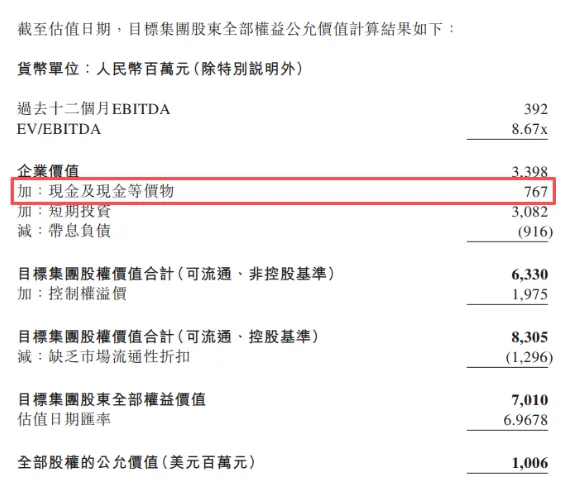
The essence of Meituan's willingness to pay a hefty premium was not to buy "groceries," but to prevent critical infrastructure from falling into the hands of any competitor, including JD.com. This $717 million is a "toll fee" used to lock in the industry's endgame, marking the formal shift of China's instant retail from a "traffic subsidy war" into the Cold War phase of an "infrastructure monopoly war."
The Uncertainty of Buying Out
The biggest lie in business competition is "win-win"; the real battles between giants are often zero-sum games. Meituan's core motive in acquiring Dingdong Maicai was never the so-called "alliance of strengths," but to prevent core infrastructure from falling into other hands. According to reports from LatePost, as of mid-December 2025, Meituan had judged Dingdong Maicai unworthy of acquisition, believing that time and imitation would be enough to outlast the competitor.The real variable emerged in January of this year, when the market reported that another major tech giant had completed due diligence on Dingdong, with the deal entering its final stretch.
For Meituan, if those roughly 1,000 front-warehouses scattered across high-net-worth areas in East China were taken over by a competitor—regardless of who—it would mean Xiaoxiang Supermarket would face a fully equipped enemy in its own backyard. After learning that the rival's deal was delayed due to lock-up period issues, Meituan moved quickly, completing the entire process from reassessment to final signing in just one month.
To close the deal, Meituan even signed off without completing full due diligence, and made major concessions on the cash distribution arrangement. The filing shows that in addition to the $717 million acquisition price, Meituan also allowed Dingdong Maicai shareholders to withdraw $280 million in cash, meaning shareholders including founder Liang Changlin would reap nearly $1 billion in total returns from the transaction.
The only explanation for Meituan paying such a steep premium and tolerating such onerous withdrawal terms is that it had to ensure these infrastructure assets stayed in its own hands. From a cost-benefit perspective, this is an extremely prudent "defensive expenditure."
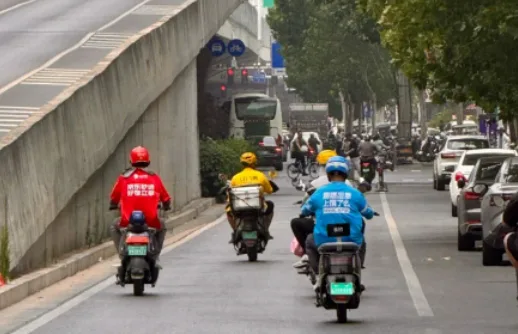 During the 2025 food delivery war, industry giants burned through over 70 billion yuan in six months, causing Meituan's core local commerce profits to plummet. By comparison, spending $700 million to directly eliminate a latent threat and lock in industry uncertainty ahead of time is the more financially rational choice.
Once this deal is complete, China's self-operated front-warehouse market will see Meituan dominate single-handedly, even if it risks crossing antitrust review red lines—the clearance must be done first.
Swallowing the East China Heartland
Defending against competitors is a strategic consideration, but conquering East China is the tactical weakness Meituan must address. Over the years, Meituan has advanced aggressively across the country, yet consistently struggled in the Yangtze River Delta, the region with the strongest consumer spending power in China.The data reveals a stark gap between the two sides in the region: as of 2025, Dingdong Maicai operated over 1,000 front-warehouses across 19 cities, with the vast majority of its core assets concentrated in Shanghai, Zhejiang, and Jiangsu. In its home turf of Shanghai in particular, Dingdong Maicai's average daily order volume per warehouse approached 1,700 orders, a figure that left the industry in awe.
Although Meituan's Xiaoxiang Supermarket has the backing of massive traffic, it has been heavily suppressed in the East China market by local powers like Hema and Dingdong. Front-warehouse site selection, construction, ramp-up, and cultivating user habits are processes that rely heavily on time and operational granularity. If Meituan chose to build from scratch, reaching Dingdong's current density and order volume in East China would take at least two to three years—and those three years are precisely the critical window in which the instant retail landscape will take shape.
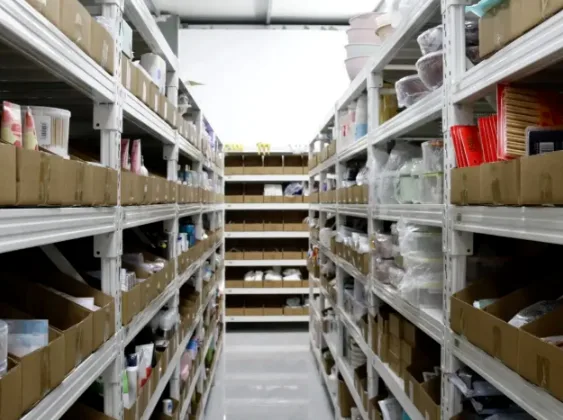 With this acquisition, Meituan has directly erased that time gap through capital. After the deal closes, the number of front-warehouses directly operated by Meituan will exceed 2,000, instantly achieving grid coverage in the East China market. This is more than adding physical locations; it is a seizure of high-value user resources. Dingdong Maicai's more than 7 million monthly purchasing users are predominantly high-net-worth individuals who prioritize quality and are relatively price-insensitive, complementing Meituan's existing base of price-sensitive food delivery users perfectly.
More critically, nearly 60% of Dingdong's newly added front-warehouses over the past two years are located in county-level markets in Jiangsu and Zhejiang, such as Yancheng, Taizhou, and Xuancheng—precisely the blind spots where Meituan's Xiaoxiang Supermarket has yet to penetrate deeply.
Supply Chain Friction
Beyond the battle over capital and territory, the most insightful aspect of this deal lies in the revaluation of the supply chain dimension. As instant retail moves into deeper waters, pure delivery speed is no longer the core moat; the true defensive barrier lies in control over "product." Dingdong Maicai's ability to sustain profitability amid industry consolidation rests on the physical barriers it built in fresh food supply chain.Liang Changlin's "4G strategy" (Good Users, Good Products, Good Service, Good Mindshare) has been precisely validated in financial data. As of September 2025, "Good Products" accounted for 37.2% of Dingdong Maicai's SKU mix, yet contributed 44.7% of GMV. This indicates that Dingdong has moved beyond the low-level stage of competing on commodity prices and now possesses formidable product definition capabilities.
Particularly in the non-standard fresh produce segment, Dingdong has established a standardized system spanning direct sourcing from origin to front-warehouse processing. Its supply chain accumulation in Jiangsu, Zhejiang, and Shanghai—especially its strong position in vegetables and its private-label capabilities—is something Meituan's Xiaoxiang Supermarket cannot replicate in the short term.
But this is not a perfect jigsaw puzzle; the two sides have gene-level conflicts in their supply chain logic. Meituan's Xiaoxiang Supermarket follows a "large warehouse, full category" model, with individual warehouses often exceeding 1,000 square meters and SKU counts reaching into the tens of thousands, aiming to be an "online one-stop supermarket."
Dingdong Maicai, by contrast, adheres to a "small but refined" fresh-food-focused strategy, keeping SKU counts under 3,000 with an exceptionally high share of fresh produce. This divergence in product architecture will pose enormous engineering challenges for post-acquisition integration. Meituan must confront the question of how to integrate Dingdong's high-turnover supply chain, designed for high-frequency fresh produce, into Xiaoxiang Supermarket's system built around long-tail SKUs and higher average order values.
Meituan has already restructured Xiaoxiang Supermarket's organization, bringing in Gao Yulong, former head of Youxuan, to lead infrastructure expansion, while former head Wang Ruochong shifted to the role of Chief Product Officer to shore up the "product" shortfall. This signals that Meituan recognizes the end of pure traffic monetization and the need to get its hands dirty with the gritty work of building real operations.
The Curtain Call for Independent Players
Stepping back from the specific business calculations, this deal reads more like a tombstone marking the end of the era of independent entrepreneurship in fresh food e-commerce. Dingdong Maicai's sale sends a chilling signal to the market: in China's business environment, vertical startups—no matter how well they perform—ultimately have one destination: becoming infrastructure for the giants.In the eyes of the capital markets, despite being profitable, Dingdong Maicai still lacked imagination. The company's market cap hovered at a low of $500–700 million, with a strikingly low price-to-sales ratio. The reason is that fresh food retail is a business heavily dependent on scale effects and capital density. Giants like Meituan can tolerate short-term losses in instant retail because they have other high-margin businesses to subsidize them. For an independent player like Dingdong, profitability is the baseline for survival, which inevitably constrained its expansion ambitions.
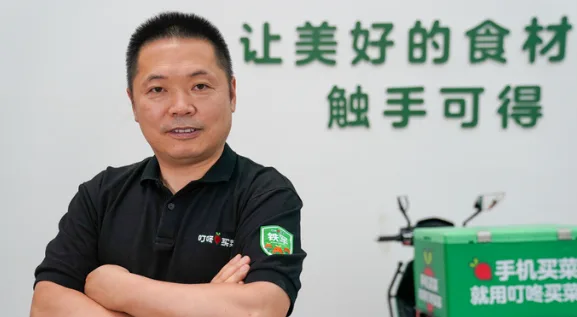
Liang Changlin's exit was clear-eyed and rational. He had already stepped back from day-to-day management in 2023, relocating to Singapore to explore overseas ventures. In this transaction, he explicitly insisted on retaining the overseas business and taking cash, demonstrating that he had long seen the dead end in the domestic market.
For him and his management team, cashing out at the company's peak performance—taking nearly $1 billion in returns to seek new growth overseas—was far smarter than staying entrenched in a domestic arena that could be crushed at any moment by a giants' price war. This outcome serves as a silent deterrent to other players in the industry.
Pupu Supermarket, as the last remaining major independent front-warehouse player, now faces an even more perilous situation. Once Meituan swallows Dingdong, it will inevitably turn its attention to mopping up the battlefield. If Pupu cannot continue securing massive funding, its room to survive will be squeezed even further.
Final Thoughts
Meituan's acquisition of Dingdong Maicai is not the end of the instant retail war—it is the beginning of a different form of warfare. It declares that the dimension of industry competition has shifted entirely from the "traffic end" to the "supply side." Going forward, the competition is no longer about who has more riders or who offers the most aggressive subsidies, but about who controls the most warehouses, the deepest supply chains, and the densest physical network nodes.In this new phase, infrastructure is power, and efficiency is life. For Meituan, this $717 million bought not just 1,000 warehouses, but a ticket to the next decade. Within the ironclad fortress the giants are building, the cracks left for latecomers have now completely closed.