Behind the Rumor-Dispelling: Mai Ji Milk's 'Million-Dollar Backbone' and 100,000-Yuan Registered Capital
Mai Ji Milk dispels rumors of absconding, but its asset-light model of 100,000 yuan registered capital and 11 subsidiaries triggers a trust crisis, exposing governance risks in franchise expansion.
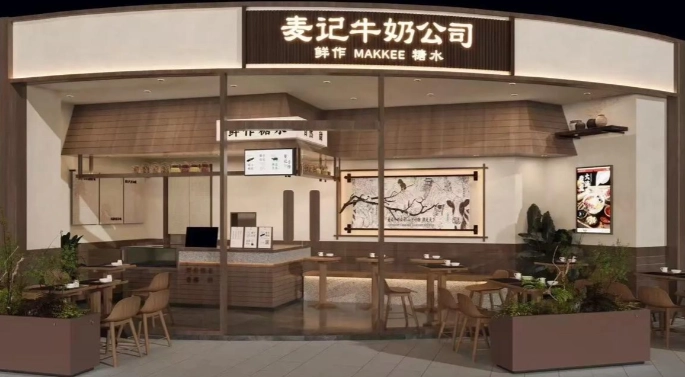
The chain of trust in the franchise-based food and beverage sector has always been fragile. Recently, rumors of a "team abandoning ship" and "headquarters imposing fine-based KPIs on supervisors" have thrust the rapidly expanding dessert chain brand "Maiji Milk" into the court of public opinion. Although its general manager, Xie Yongliang, responded promptly, dismissing the rumors as "malicious defamation," in 2026, when the sensitive nerves of franchisees and investors have been repeatedly frayed, this clarification has failed to fully assuage market anxiety.
Public wariness toward trendy internet-famous dining brands often stems from the tragic cycle of "flash-in-the-pan fast food" concepts that have emerged repeatedly in recent years. These brands typically attract a large number of franchisees in a very short period through polished storefront packaging, only to collapse quickly due to broken capital chains or team exits.
Root Cause: Friction Between Underlying Assets and a Vast Supply Chain
At the heart of Maiji Milk's current predicament lies a deeper issue: the severe friction between its underlying asset scale and its sprawling cross-regional supply chain amid rapid expansion.
Using public systems like Tianyancha to examine its core sales entity—Huzhou Xiangmai Mai Catering Management Co., Ltd.—reveals an inverted pyramid structure highly characteristic of the industry. Founded in February 2023, this company has a registered capital of just 100,000 RMB. Legally, such a modest registered capital implies an extremely limited capacity to bear liability; yet in the real commercial landscape, this asset-light shell company leverages equity to fully control a massive matrix of entities.
Tianyancha's investment chain clearly shows that this catering management company, valued at a mere 100,000 RMB, has invested in 11 enterprises across its portfolio.
Within this sprawling map, core subsidiaries such as Huzhou Maiji Milk Co., Ltd. and Huzhou Xingmai Supply Chain Management Co., Ltd. are prominently listed. This structure—wholly owned by Hangzhou Maiyan Enterprise Management Co., Ltd., which then branches out into supply chain entities—is a classic "light headquarters, heavy supply chain" approach in franchise catering. The headquarters mitigates front-end legal and operational risks through minimal registered capital, while simultaneously establishing independent entities for profit-generating supply chain and regional operations.
The Nature of the Rumors: Growing Pains of High-Frequency Expansion
The alleged "fine-based KPIs" and "team abandoning ship" rumors essentially reflect the governance growing pains of this high-frequency expansion model in lower-tier markets. When a brand's franchise stores multiply by the hundreds or thousands in a short span, the headquarters, seeking to protect profit margins from cold-chain distribution and direct raw material sourcing, inevitably tightens control over franchisees through rigorous supervision. However, as local stores see profit declines amid market saturation and price wars, such control measures are easily magnified by franchisees as malicious fines designed to "harvest franchisees." And when supply chain handoffs hiccup in a particular region, external speculation about a "team abandoning ship" can cascade like an avalanche.
Industry Warning: Rebuilding Trust Is Key
For the current new-Chinese dessert segment, the Maiji Milk incident serves as a clear alarm. A headquarters registered capital of 100,000 RMB may function as a clever capital firewall, but it cannot offer sufficient security to the hundreds of franchisees who have invested their life savings. Xie Yongliang's clarification may manage to steady the current public discourse, but in the coming cycle, how the brand proves that the supply chain network woven by its 11 invested enterprises possesses genuine delivery capability—rather than being a traffic-driven hollow shell that falls apart at the first sign of trouble—will determine whether it can escape the "flash-in-the-pan" trap.