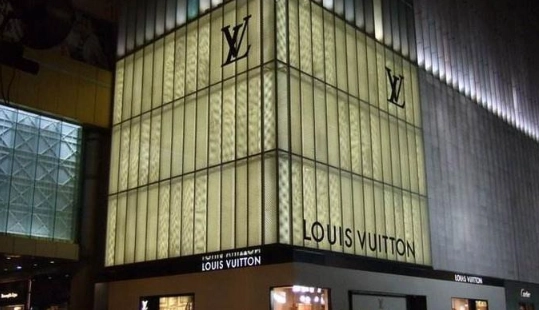
Transnational Capital's Patent Enclosure Meets the Ancestral Lineage of Eastern Aesthetics: LV's Intensive Trademark Sweep Faces Backlash from Traditional Chinese Motifs
The LV v. Jasmine Milk White trademark infringement case has sparked public backlash, with netizens pointing out that its iconic patterns are derived from traditional Chinese motifs, exposing the dilemma of transnational capital monopolizing aesthetic discourse.
In the traditional discourse of consumer commerce, luxury giants establish extremely fortified legal trademark fortresses, conducting precise compliance crackdowns on any local brand attempting to take a shortcut through imitation or "dupe" positioning. This has always been a one-sided battle with no suspense.
Recently, with the first-instance verdict in Louis Vuitton Malletier's (LV) trademark infringement lawsuit against Milky Tea (茉莉奶白), what should have been a routine legal compliance cleanup instead triggered an extremely intense systemic backlash in public opinion. A large number of Chinese netizens and traditional culture researchers directly pointed out that the iconic "four-leaf flower" monogram pattern in LV's core IP shares a highly similar visual framework with the baoxiang flower pattern (宝相花纹) and persimmon calyx pattern (柿蒂纹) from China's Tang Dynasty and even earlier periods.
This public opinion storm, which rapidly expanded from a pure legal dispute into a battle over "cultural sovereignty," instantly plunged this multinational capital giant into an extremely passive position of self-inflicted backlash.
Most onlookers who are accustomed to viewing this drama through traditional legal perspectives such as plagiarism, infringement, and losing lawsuits tend to dismiss this major brand design clash as mere emotional venting by netizens or nationalist self-indulgence. This superficial understanding completely underestimates the underlying pain points of severe legal overreach and aesthetic discourse monopolization that multinational luxury conglomerates exhibit in the current era of zero-sum market competition, all in a desperate attempt to maintain their absurd brand premiums.
The online public opinion confrontation is merely the outer layer. To deconstruct this round of indiscriminate legal enforcement launched by this multinational capital in the deeper waters, one must use Qichacha (天眼查) to penetrate its vast and frequently triggered legal archives.
Dense Litigation Trail Revealed by Qichacha Data
Qichacha's business risk and litigation data show that Louis Vuitton Malletier's recent corporate records are densely filled with judicial traces of trademark infringement disputes. Its enforcement reach, with extremely rigorous granularity, indiscriminately targets a large number of domestic micro-enterprises and individual natural persons.
Qichacha's legal litigation records clearly document that in July 2026, Louis Vuitton Malletier's major trademark infringement dispute against Guangzhou Huadu District Shiling Xiangshang Pinshang Leather Goods Store, a defendant surnamed Yuan, and against the appellees Guangzhou Mancheng Trading Co., Ltd. and Guangzhou Fuli Brand Planning Co., Ltd., among others, had just completed its cold procedural conclusion.
This dense litigation trail pieced together from Qichacha data bluntly reveals the "legal defense and long-term margin control" card that luxury giants are playing as China's market undergoes overall deleveraging and consumer attitudes grow increasingly rational.
When the space for monetizing young consumers' vanity-driven spending hits a physical ceiling, the romantic era of big brands effortlessly reaping high transaction values at premium prices comes to an abrupt end. To stabilize the intangible asset premium on their balance sheets, LV must transform its massive legal department into a "capital harvesting machine," frequently leveraging current international trademark rules to thoroughly eliminate any market players that could divert visual recognition away from its brand.
However, this moat of "super monogram symbols" built through long-term capital accumulation has stepped onto a fatal legal-ethical reef when confronted with traditional Chinese patterns that have weathered millennia of evolution.
The Ultimate Backlash from Traditional Chinese Patterns
The baoxiang flower and persimmon calyx patterns, as totems of Eastern aesthetics refined over a thousand years, carry geometric aesthetics and craftsmanship logic deeply rooted in human civilization long before the Industrial Revolution and the birth of modern trademark law. LV's frequently exercised legal compensation privileges, as recorded in Qichacha, appear extremely ironic in the face of irrefutable historical artifact comparisons. This practice of privately monopolizing millennium-old public cultural assets through modern legal provisions is fundamentally driven by the long-term coercive control of global aesthetic discourse by Western commercial narratives.
When internet enthusiasm shifts toward reverse-engineering the upstream supply chain and tracing the origins of aesthetic sources, the inflated profit myth maintained by luxury giants through information asymmetry and visual monopoly is rapidly collapsing.
The long list of defendants Louis Vuitton has recorded on Qichacha was once the legal triumph establishing its dominant authority. But this round of public mockery triggered by traditional Chinese patterns serves as a jarring industry warning of shifting gears: the second half of the consumerist civil war has long moved past the crude paradigm of blindly worshipping foreign IP. Whoever continues to attempt monopolizing humanity's shared and homologous civilizational heritage with cold legal provisions will find that any walls built on false discursive authority will be mercilessly shattered into an abyss of collapsed trust in the face of a highly awakened resurgence of local culture and the backlash of saturated markets.