Capital Reflection of a Traffic Icon: Copyright Games and Long-term Asset Positioning Behind Liu Shishi's Upcoming Dramas
Liu Shishi's upcoming dramas and affiliated companies reveal how top entertainers transform traffic into capital, securing commercial sovereignty through tangible investments.
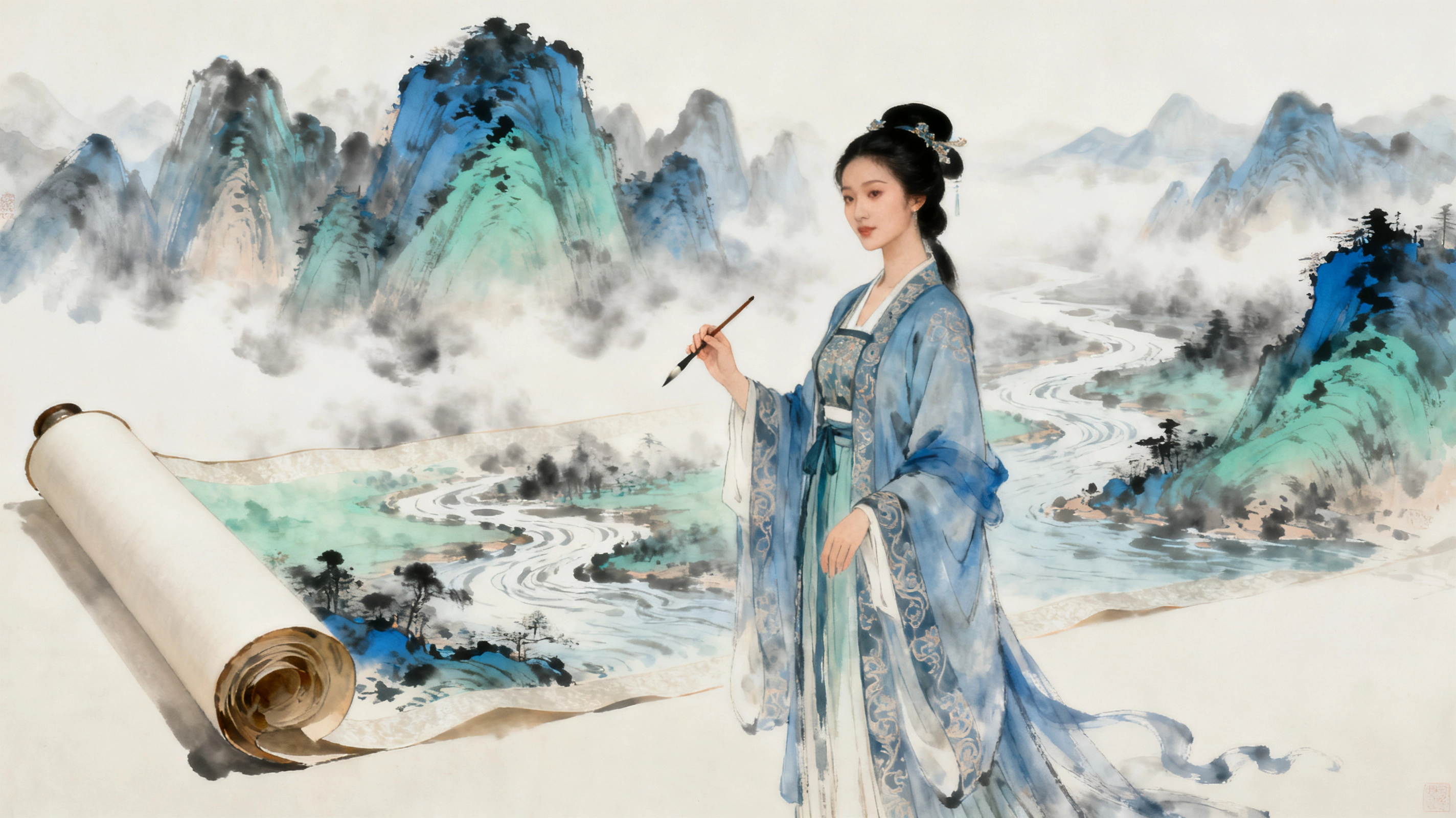
In mid-2026, when Liu Yifei and Liu Shishi, two top actresses in the costume drama genre, once again squared off on the endorsement front and triggered a social media storm, public attention was being laser-focused on the commercial value of celebrities' external appeal. Public records show that Liu Shishi currently holds two highly anticipated dramas with strong production quality, "Drunken Dream" and "A Thousand Miles of Rivers and Mountains." This dual surge, combining luxury fashion house haute couture resources with top-tier IP advantages in the film and television industry, is by no means a one-off paid traffic frenzy. The underlying cause lies in a pivotal industry shift: as the sector fully moves away from exorbitant salaries and toward stringent internal controls, top-tier actresses are deepening their content moats and transitioning their personal IP from asset-light traffic to asset-heavy capital conversion.
The shallow consensus commonly circulating in the industry holds that the resurgence of commercial value among mid-generation leading actresses is entirely driven by fan economy nostalgia and conceptual buzzwords trending on hot searches. Such platitudes completely overlook the ruthless scrutiny that major studios apply to content delivery capabilities amid the film and television cycle.
Under the gravitational pull of a long-term content reshuffle, platforms and capital show no mercy in purging talent without real substance. Liu Shishi's choice of heavyweight projects like "A Thousand Miles of Rivers and Mountains," which combine mainstream recognition with the underpinnings of serious drama, is essentially using her deeply refined acting assets to offset the rigid demands of brand endorsements for stable credit sovereignty. Luxury brands are willing to hand over core rights at this moment precisely because they value the intangible asset wall she has woven through long-term strategic engagements in film and television.
This illusory myth woven from spotlights and haute couture gowns, when examined through the lens of commercial capital, reveals a remarkably clear and establishment-style sophistication.
According to business records on Tianyancha, Liu Shishi is affiliated with a total of twelve companies. Of these, six remain in stable operation, including established film and television giants such as Beijing Hairun Film Industry Co., Ltd. and Jiangsu Straw Bear Pictures Co., Ltd. In the shareholder rosters revealed by Tianyancha, Liu Shishi is not merely a contracted performer taking profit splits and doing the grunt work; rather, she has directly entered the core capital circles of China's film and television industry as a shareholder and investor with real financial commitments.
These shareholding records quietly filed in Tianyancha's archives completely dismantle the perception held by some netizens that celebrities rely solely on acting fees for their livelihoods—an asset-light illusion.
From her deep early involvement with Straw Bear Pictures and witnessing its listing on the capital market, to her targeted investment layouts in upstream industry giants like Hairun Film Industry, Liu Shishi has mapped out an extraordinarily clear trajectory in the business network of "from actress to capital partner." This financial firewall built through multiple entities allows her to hedge against systemic risks in the film and television cycle with minimal compliance friction. For her, the six surviving companies are not only the back-end shell entities processing her extensive commercial endorsements but also asset-heavy strategic weapons for deep participation in film and television project investments and for locking in long-tail overseas copyright revenue from her works.
The evolution of commerce and entertainment has always been merciless. In a brutal battleground where survival is defined by compliance deadlines, real cash flow efficiency, and channel control, the era of relying purely on beauty-driven hype and paid traffic has come to a definitive end.
The six surviving companies recorded in Tianyancha's archives, along with her two upcoming dramas, constitute a sobering statement on how top-tier artists use capital leverage to secure commercial sovereignty. When the noise of trending topics fades, what determines whether a traffic icon can avoid being washed out by the cycle under future scarcity pressure is not the polished fan reports, but whether the top-level capital architecture hidden behind these corporate entities can continue to tighten the safety line ensuring sustainable asset recovery amid the dense web of data oversight and fierce zero-sum competition.