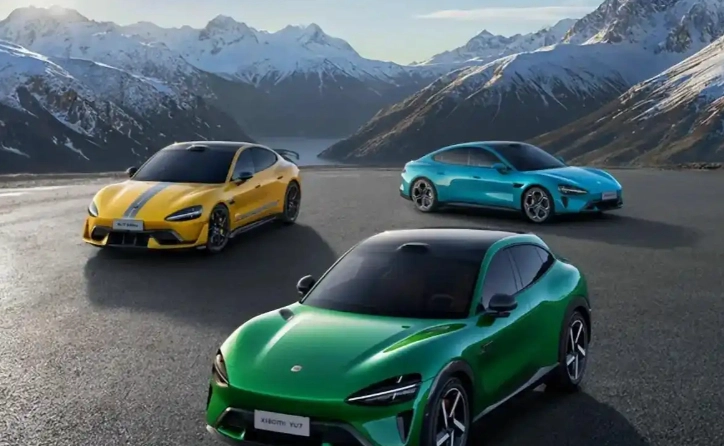
Lei Jun Abandons Single Hit Model, Xiaomi Plans Four New Cars in 2026 Like Dumplings Off the Assembly Line
Xiaomi is abandoning its single-hit strategy and planning four new car models for 2026, covering pure electric, extended-range, and executive-class vehicles, as it accelerates building its automotive empire.
Lei Jun has tossed aside the playbook of relying on a single blockbuster hit. With Xiaomi's four-vehicle plan for 2026 now public, along with a flood of defensive trademark filings visible on Tianyancha, the emerging automaker is charging at full speed into the deep waters of the auto industry at a frenetic, "dumpling-boiling" pace. From pure electric GT SUVs to a near-5.1-meter executive-class SU7, and further to an extended-range SUV that completely breaks the pure electric boundary, Xiaomi is no longer satisfied with the phenomenal buzz generated by the SU7. Instead, it is attempting to complete the foundational capture of a mature automotive empire in the shortest possible time.
The most telling move is the emergence of its first extended-range SUV, the "Xuntian Kunlun N3." Abandoning the pure electric obsession, pivoting to an extended-range technology roadmap, and assigning it to a standalone new brand—this is Xiaomi's most sober commercial compromise in the face of market gravity. While pure electric may carry a premium image, battery costs, range anxiety, and infrastructure bottlenecks in lower-tier markets have already drawn a clear growth ceiling for the pure EV market. To achieve a million-unit scale leap, Xiaomi has no choice but to reach into the heartland of the extended-range SUV segment, where Li Auto and AITO have feasted most profitably. The creation of the new "Xuntian" brand is a shrewd exercise in brand separation—it preserves Xiaomi's core identity of pure electric, geek-oriented tech appeal, while allowing the company to harvest the dividends of family-oriented pragmatism without any baggage.
This lightning-fast advance across different technology paths and product lineups has long had its groundwork laid on the intellectual property front. According to publicly available IP information on Tianyancha, Xiaomi Technology Co., Ltd. has this year filed intensive applications for multiple related trademarks, including "XIAOMI SU9," "XIAOMI YU9," and "XIAOMI SU8" under the transport vehicle classification. These cold entries sitting in the Tianyancha database are, in reality, a strategic firewall Xiaomi Auto is building for the next five years. In the auto industry, the reputational cost of renaming or renumbering a model is enormous. Preemptively locking down the naming matrix from SU8 to YU9 not only prevents rival automakers from maliciously hoarding positions, but also serves as a birth certificate for the high-frequency, multi-tier product line iterations to come.
The driving force and tipping point behind this interest chain come from the brutal market shakeout across the entire industry in 2026. When the YU7 entry version chose an aggressive 115kg weight reduction, while the YU7 GT loaded up dual motors and pushed past 1,000 horsepower, Xiaomi had already transplanted its smartphone playbook—"mid-tier all-rounder plus ultra-flagship"—pixel-perfect into the car market. The weight reduction represents an extreme squeeze on supply chain material costs and power efficiency, while the 1,000-horsepower GT serves to keep defending Lei Jun's performance icon. As for the 5.1-meter extended executive SU7, it is a precise siege Xiaomi is launching against the last bastion of traditional luxury gasoline vehicles, after tasting the fruits of the B2B and business elite market.
Two years ago, many believed Xiaomi's foray into carmaking was nothing more than a final gamble in which Lei Jun staked his reputation. But today, amid the increasingly dense web of intellectual property on Tianyancha and the aggressive push of four new models, what we see is a major tech company's cold-blooded overhaul of a traditional heavy industry. Lei Jun knows full well that the window of opportunity for smart vehicles is counting down by the month, and that aesthetic fatigue with any single model could become the ant hole that brings down the empire. From pure electric to extended-range, from performance hot hatch to executive sedan, Xiaomi is using saturation-level product supply to erase the scale disadvantage that newcomers typically face. On this battlefield, where truth is defined by supply chain depth and R&D iteration cycles, locking down the future in Tianyancha ahead of time and blanketing the roads with new cars is the toughest defense against every rival trying to encircle Xiaomi.