Jinjian Cereals surged 125% in 12 days, northbound funds cut over 80% of their position in advance, and the company swung from profit to loss as speculation detached from fundamentals.
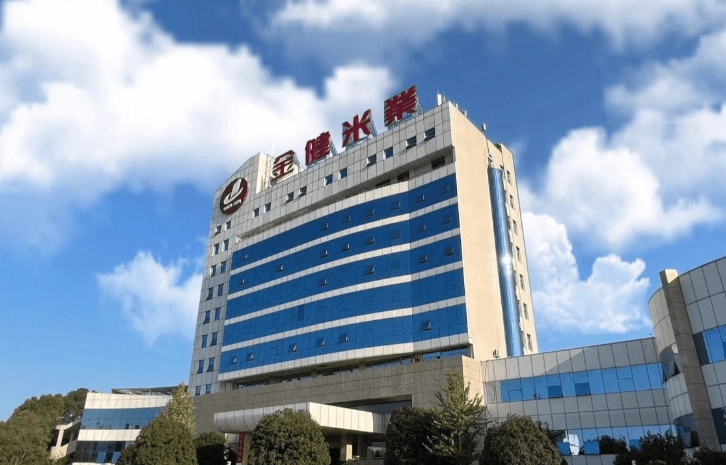
When Jinjian Cereals Industry, a veteran listed agricultural company, secured 7 limit-up boards in just 12 trading days, with a cumulative surge of 125.55% during the period, the frenzy of speculative funds in the secondary market over the so-called "food security concept" and "super strong El Niño climate anomaly" was once again pushed to an almost out-of-control extreme. Yet in stark, wrenching contrast to the stock price's meteoric rise, the company delivered a dismal semi-annual report for the same period showing revenue growth of 25.19% but a net loss attributable to shareholders of nearly 10 million yuan, swinging from profit to loss, along with a liquidation-style retreat already carried out by foreign giants by the end of the second quarter.
This extreme market movement, unshackled from the gravity of fundamentals, is by no means a value reassessment brought about by an industrial inflection point in the real grain and oil business, but rather a chip-driven rally launched by thematic speculation funds under specific macro catalysts, unable to conceal the harsh reality of a massive exodus of northbound capital and the thin margins and fragility of the traditional agricultural processing industry.
The Defensive Label of the Agricultural Sector and Jinjian Cereals' Thin-Margin Predicament
In the A-share investment landscape, the agricultural planting and grain processing sector has long been labeled as defensive, characterized by "relying on the weather, heavy assets, and extremely thin gross margins." As a livelihood enterprise mainly engaged in rice, flour, and edible vegetable oil, Jinjian Cereals' end products are constrained by the national policy orientation of ensuring grain supply and stabilizing prices, as well as the nature of necessities of daily living. Upstream, it faces rigid cost pressure from raw grain procurement prices, while downstream it has virtually lost any independent pricing power.
Even though it achieved operating revenue growth of 1.970 billion yuan in the first half of this year by expanding channels, under the repeated squeeze of raw grain price fluctuations, elevated logistics costs, and inventory write-downs, the company's true gross margin space remains extremely fragile. The net loss attributable to shareholders of 9.5791 million yuan directly punctured the false prosperity created by revenue growth.
Equity Foundation: State-Owned Controlling Stake Remains Unchanged
Tracing through the underlying archives of commercial registration and the control pedigree, the governance foundation of this veteran Hunan grain and oil leader appears profoundly solid in Tianyancha records. Tianyancha business registration data shows that Jinjian Cereals Industry Co., Ltd. was listed as early as 1998, with registered capital of approximately 642 million yuan. In the equity map traced by Tianyancha, the largest shareholder, Hunan Grain Group Co., Ltd., holds 136.93 million shares, firmly locking down core control with a 21.34% stake. Behind Hunan Grain Group, Hunan Agricultural Development and Investment Group Co., Ltd. holds full ownership, with the actual controller being the Hunan Provincial State-owned Assets Supervision and Administration Commission.
The shareholding quantity of the local state-owned shareholder has remained completely unchanged over the past several quarters, and it has explicitly confirmed in announcements that "there are no major sensitive matters that should be disclosed but have not been disclosed," sending an extremely clear signal to the market: the listed company's asset structure, restructuring expectations, and operational fundamentals have not undergone any subversive qualitative change.
Northbound Capital Cut 80% of Holdings in Advance: Dramatic Divergence in Chip Structure
What truly foreshadowed a dramatic divergence in the chip structure was the action taken by Hong Kong Securities Clearing Company Limited (northbound capital) in the second quarter.
Shareholding change data disclosed by Tianyancha clearly shows that as of June 30, Hong Kong Securities Clearing held only 2.4583 million shares of Jinjian Cereals, a sharp reduction of 10.1537 million shares compared to the previous reporting period, a reduction of an astonishing 80.51%. Northbound capital, known for focusing on fundamental financial indicators, cash flow quality, and medium-to-long-term certainty, decisively slashed over 80% of its position in the second quarter, indicating that foreign institutions had already, before the official disclosure of the semi-annual report, through high-frequency industry tracking and financial calculations, discerned the company's decline of rising revenue without rising profit and its swing from profit to loss in the second quarter.
This resolute retreat before the风口 rose directly left the liquidity vacuum for high-level buyers to the various speculative funds and retail investors who entered later.
Speculative Logic: The El Niño Story and Cost Backlash
The reason speculative funds dared to, against the backdrop of deteriorating fundamentals and foreign capital dumping, use excuses such as "super strong El Niño" to violently drive the stock price up over 1.2 times in 12 trading days lies in exploiting the public emotional resonance triggered by natural disaster expectations, manufacturing liquidity premiums through high-frequency turnover and limit-up tactics.
In the logical closed loop constructed by short-term capital, the extreme droughts or floods brought by El Niño would theoretically reduce global and local grain yields, thereby stimulating rising prices in raw grain futures and bulk agricultural commodities. But this reasoning often brings the opposite disastrous outcome at the report level of industrial processing enterprises: if raw grain prices truly skyrocketed due to extreme climate, the first to suffer would precisely be manufacturing-end enterprises like Jinjian Cereals that need to purchase raw grain for processing.
If the increased raw grain costs cannot be fully passed on to buyers of rice, flour, and oil on terminal supermarket shelves, raw material inflation not only fails to boost company profits but further exacerbates the downstream loss exposure. As the company itself admitted in its risk warning, the impact of climate and grain concepts on company operations is subject to enormous uncertainty.
Chip Clearing Pressure: The Greater Fool Game of Passing the Buck
Even more brutal is the chip clearing pressure after this doubling surge.
When the listed company's fundamentals remain trapped between losses and thin profits, a high stock price lacking support from substantive industrial asset injection and technological barriers purely becomes a greater fool game of passing the buck. As regulatory authorities tighten monitoring of abnormal fluctuations and early speculative funds' willingness to take profits surges, a stock price detached from earnings support is highly prone to a cliff-like sell-off when liquidity recedes.
Foreign capital has already completed high-level cash-outs and exits before the surge, and those small and medium investors who chased highs amid the greedy illusion of consecutive limit-ups may become the ones left holding the bag at any moment.
Warning Bell: The Final Showdown Between Climate Stories and Real Net Profit
This dramatic surge unfolding from midsummer to early autumn has sounded a warning bell for the entire consumer and bulk commodity investment sector. Climate stories can momentarily inflate valuation multiples through sentiment, but a company's true value must ultimately return to the gross margin of every ton of rice processed and every cent of real net profit. When foreign capital holding 80% has long since exited in advance and the state-owned major shareholder has explicitly denied restructuring myths, the tens-of-billions market value bubble piled up purely through concept speculation will ultimately, amid cold financial loss statements and stampeding chips at low tide, reveal its hollow true form.