Jia Yueting Takes AI Helm as Faraday Future Faces Court Restrictions
Jia Yueting assumes role as Faraday Future CEO, pivoting to AI and humanoid robots, while domestic affiliate is hit with high-consumption restrictions amid lingering credit woes.
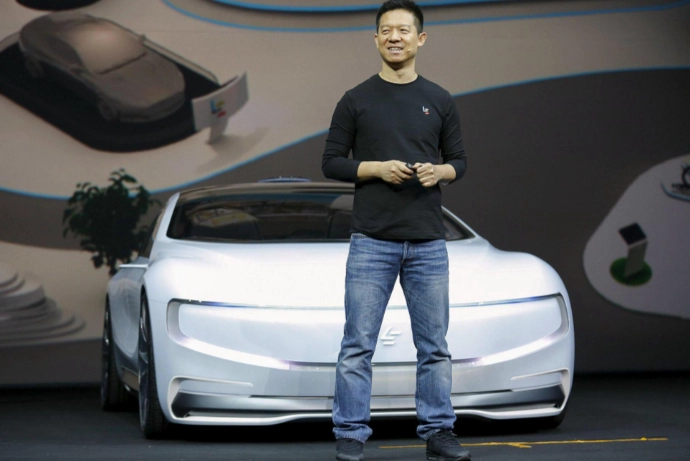
On May 11 U.S. time, Faraday Future, based overseas, announced a major executive shakeup: founder Jia Yueting was officially appointed global CEO. In the automotive world, this was tantamount to a long-overdue shoe finally dropping. In a corresponding move, the company announced a full strategic pivot, shifting from pure electric vehicle manufacturing to an all-in bet on embodied intelligence and the physical AI ecosystem, with humanoid robots as the priority.
However, even as Wall Street weighed in with divergent views on the return of the founder-led model and the new AI narrative, the company's domestic entity threw cold water on the overseas enthusiasm with a sobering set of credit records.
According to publicly available legal filings from Tianyancha, as recently as February of this year, Faraday Future's domestic affiliate—FF Automotive (China) Co., Ltd.—and its legal representative were issued a consumption restriction order. On one side, a major strategic upgrade in the global capital markets; on the other, deteriorating credit for the core domestic entity. This cross-border polarization offers a stark, real-world snapshot of the survival status of this veteran startup.
It is widely understood in the industry that the capital-intensive game of smart vehicles burns through free cash flow at an enormous rate. After years of vehicle development, with production capacity and deliveries failing to achieve economies of scale, the company's overseas balance sheet has long been stretched thin. Jia Yueting's decision to step in personally in mid-2026 and shift focus toward humanoid and bionic robots reads, in commercial terms, as a pragmatic survival move. Automotive manufacturing carries an overly long supply chain and heavy fixed costs, whereas humanoid robots can leverage a leaner R&D profile to capture the industry's richest AI premium. This is not merely a technological diversification; it is a financial self-rescue effort that restructures the product portfolio to seek renewed capital from global strategic investors.
But projecting the overseas AI vision onto the domestic market still means contending with the inescapable weight of legacy debt.
Since January of last year, FF Automotive (China) has, through a series of rapid registered capital increases, pushed its paid-in capital to 481 million RMB, signaling an intent to restructure local supply chains and re-establish a foothold in the domestic market. However, the consumption restriction order means its commercial credit in China is critically strained. This not only blocks the path to asset-backed financing and capital raising in the local market but also cripples the operational flow of its domestic team. With one hand injecting capital through frequent equity increases and the other hand choked by historical debt, this tug-of-war makes any industrial initiative a grinding struggle.
The evolution of business has always been ruthless. Wrapping itself in a trendier code-based facade may offer short-term compensation to capital markets, but it cannot erase the bills left on its credit record. When the noise fades, what determines the company's fate is no longer a high-profile title change, but whether its domestic entity can untie the knot of debt and finally get the physical products on the blueprint running on the ground.