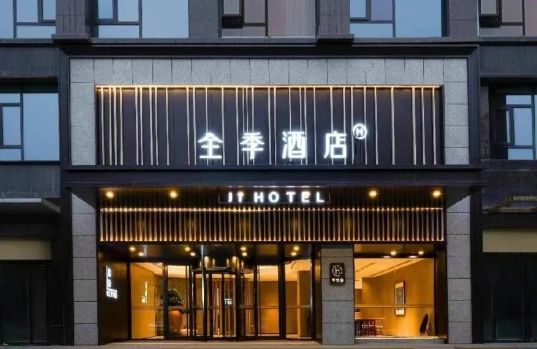
Arrogant Remarks and Property Disputes: The Franchise Chaos Behind Ji Hotel's Door Left Open for 8 Hours
The Ji Hotel door-left-open incident exposes franchise model failures, with quality control and contract compliance out of sync, threatening consumer safety and requiring systemic reform.
When a housekeeper at an All Seasons Hotel in Guangzhou left a guest room door wide open for more than eight hours, the regional supervisor from Huazhu Group didn't reflect on the security lapse. Instead, he delivered a veiled threat to the victim: "If you keep pushing this, it won't be good for either of us." The public outcry was instantly ignited by that blatant arrogance. However, to dismiss this incident merely as a personal emotional failure of a frontline manager or an isolated mistake by a single property would completely overlook the widening, nearly irreparable gap between the backend quality-control systems and the front-line franchise execution capabilities that mid-scale hotel chains have developed after a period of breakneck expansion.
In the current hotel consumption landscape, mid-scale brands like All Seasons precisely target the RMB 400–800 price range. What they sell to urban middle-class travelers and business professionals is a stripped-down Eastern aesthetic, standardized cleanliness and comfort, and a sense of private, undisturbed security. This brand premium has made All Seasons the most profitable growth engine within its parent group.
However, this mid-scale persona, built on refined marketing, is now facing its most severe foundational test under the asset-light franchise model that has expanded at breakneck speed.
Operational Breakdown Under Rapid Expansion
To aggressively capture market share across the country, major hotel chains rely heavily on franchisees for capital and property. But for franchise investors burdened with heavy rents and renovation loans, compressing front-line operating costs has become the only shortcut to squeeze out profits, especially as revenue per available room growth slows. The housekeeping segment bears the brunt first: outsourced labor, piece-rate assessments, and extremely compressed time limits per room cleaning keep frontline staff in a state of constant fatigue, operating under high pressure with little margin for error.
When safety management and procedure checks are treated as expendable obstacles to efficiency, absurd low-level safety incidents like an open door for eight hours stop being a rare fluke and become an inevitable product of systemic loss of control.
The Hidden Shoals of Legal and Operational Issues
Tracing the operational blueprint beneath All Seasons' glossy facade, its legal and operational vulnerabilities are equally striking. Public business registration data from Tianyancha shows that All Seasons Hotel's affiliated company, Hanting Xingkong (Shanghai) Hotel Management Co., Ltd., has a registered capital of USD 138 million, with He Hui listed as the legal representative. Among the litigation and business risk records compiled by Tianyancha, the company has not only been taken to court multiple times by guests over service contract disputes but has also been repeatedly involved in property rights protection disputes, with multiple historical records as a judgment debtor.
The dense record of property rights protection and service-related disputes forms an ironic real-world parallel to this incident of the wide-open door.
At its core, hotel consumption is about paying hard cash in exchange for absolute control, privacy, and personal and property safety within a specific space. But as the string of civil lawsuits recorded by Tianyancha shows, in actual operations, the franchise system's encroachment on guests' spatial rights and its negligence in property asset management have already played out repeatedly across numerous properties nationwide. Faced with such recurring failures to honor commitments, the regional supervisor's willingness to pressure and threaten consumers is deeply rooted in the group's distorted performance evaluation mechanisms.
Under a management system driven by store opening targets, negative review interception rates, and claim dismissal rates, a regional supervisor's core priority is not to solve systemic problems but to exploit information asymmetry and a position of power to suppress negative publicity at the local level as quickly and crudely as possible, preventing fallout from reaching their year-end bonuses and franchise fee collection.
When a massive capital platform pours all its energy into the store count figures and profit margins on its financial statements, while completely offloading core safety inspections and staff training onto overburdened franchise endpoints, the trust contract between the brand and consumers ceases to exist in any meaningful form. That arrogant remark—"If you keep pushing, it won't be good for you"—rips away the last veneer of warmth from mid-scale chain hotels. It lays bare a cold reality for all consumers: in the eyes of a business machine obsessed with scale and throughput, an individual's sense of security and privacy is nothing more than cheap, expendable material that can be disregarded at will in the relentless pursuit of maximum efficiency per square foot and profit margins.
Unless the root causes of this unmanaged franchise ecosystem and this arrogant management inertia are addressed at the systemic level, any polished brand story will ultimately dissolve into thin air, one door left wide open and one gavel strike at a time.