JD-badged home decor: E-commerce giant goes all-in on the asset-heavy final mile
JD Group rebrands Sichuan-based Life Home as JD Home Decoration Group, using heavy-asset supply chain integration to overhaul the fragmented industry and end regional fiefdoms profiting from information asymmetry.
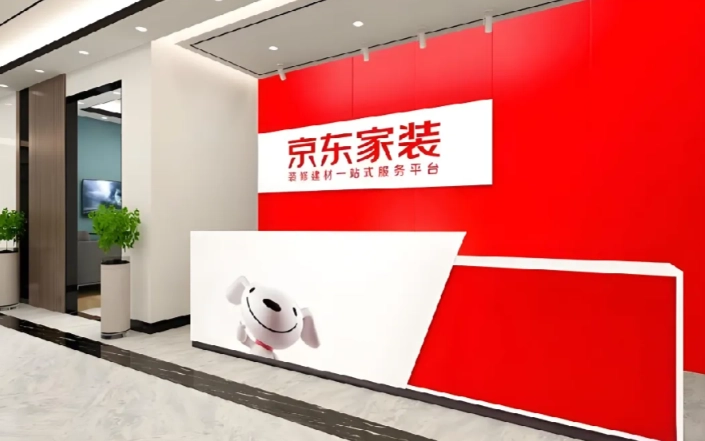
The era when internet giants could earn commission revenue passively by matching supply and demand online has come to a definitive end. As the growth curve of standardized online products approaches its ceiling, these giants are forced to make aggressive inroads into traditional asset-heavy industries characterized by extremely high transaction values, long delivery cycles, and complicated offline operations. Recently, a business registration change at Sichuan Sheng Huo Jia Home Furnishing Group Co., Ltd. has revealed the true ambition of e-commerce giants to comprehensively consolidate their positions in the trillion-yuan home renovation sector—this home furnishing group, which has deep offline roots, has officially been renamed "JD Home Furnishing Group Co., Ltd."
This change in name is not a simple brand licensing or marketing collaboration, but a critical strategic move by JD.com to reshape the industrial value chain of the broader home furnishing sector. It marks the entry of a giant using asset-heavy supply chain management to comprehensively consolidate a traditional industry that has long suffered from a severe trust deficit and extreme fragmentation.
Stripping away the local brand label: from "financial investment" to complete absorption in interest restructuring
Many industry observers accustomed to viewing JD.com from a retail and logistics perspective tend to see this renaming as a routine subsidiary rebranding. Such a superficial view completely overlooks JD.com's years-long capital maneuvering and deep reorganization of Sheng Huo Jia Home Furnishing.
To understand the underlying cause-and-effect of this trillion-yuan consolidation battle, one must examine the shareholder structure of the newly renamed group through Tianyancha. This company, established in 2011 with a registered capital of approximately 17.91 million RMB, has a shareholder roster that includes Beijing JD Century Trade Co., Ltd. and Sheng Huo Jia Home Furnishing Group Holdings (Hainan) Co., Ltd., among other entities. In the past commercial landscape, Sheng Huo Jia was a well-known integrated decoration and assembly chain brand in Southwest China and even nationwide.
From early equity probes to the current direct use of the "JD Home Furnishing Group" title, the core driver behind this is that JD.com has completed its transformation from a mere traffic provider to an absolute controller.
The traditional home renovation market is an extremely difficult challenge. Its low frequency, high transaction value, and heavy delivery requirements have repeatedly frustrated internet companies accustomed to high-velocity turnover. In the past, many e-commerce platforms approached home renovation by merely setting up front-end platforms to sell building materials and design plans, outsourcing construction and delivery to local informal teams. This asset-light approach ultimately led to numerous delivery failures, severely depleting the brand credibility of these giants. By choosing to thoroughly "JD-ify" Sheng Huo Jia's mature offline integrated renovation network, JD.com is essentially aiming to forcibly weld its massive self-operated supply chain with Sheng Huo Jia's accumulated offline construction management, warehousing and distribution, and craftsmanship systems.
Peaking traffic dividends: supply chain giants use home renovation assembly lines to hedge against physical growth anxiety
Deeper strategic ambitions are hidden in the business scope disclosed by Tianyancha. The newly established JD Home Furnishing Group retains traditional asset-heavy operations such as residential interior decoration and construction engineering, while also listing first-class value-added telecommunications services among its internet core functions. The rules of this slow-moving business have been completely rewritten.
This signals that JD.com does not intend to simply open more traditional renovation stores locally, but rather seeks to build a digital home renovation delivery hub anchored by its supply chain.
The endgame of the home renovation industry lies in centralized procurement and standardized delivery through supply chains. For JD.com, which holds procurement dominance across the entire home appliance, furniture, and building materials industry chain, the home furnishing group serves as the optimal outlet to absorb upstream production capacity and extract higher gross margins. Through this fully internalized renovation force, JD.com can directly install its self-operated home appliances, sanitary ware, and main materials into consumers' raw shell homes in the form of packages, completing a super closed loop from material procurement to appliance installation.
As the tide of high growth recedes, what tests a tech giant's viability is no longer the DAU metrics in its apps, but its ability to reconstruct high-barrier vertical industries. The transformation of Sichuan Sheng Huo Jia into JD Home Furnishing Group is a clear industry warning. It indicates that the barbaric era of the home renovation track, dominated by regional powers profiting from information asymmetry, is being accelerated to its end. Internet giants armed with massive capital and heavy supply chains are using disruption tactics to redefine the profit distribution rules of this trillion-yuan existing market.