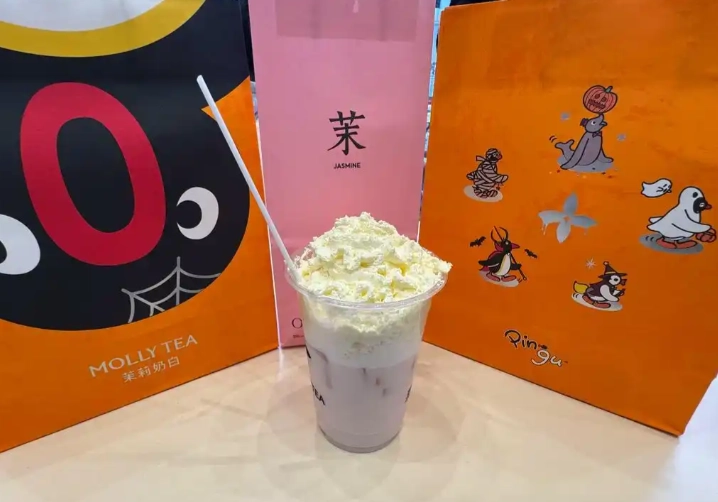
Jasmine Milk White lost the first instance of an LV trademark infringement lawsuit, saw insured employees drop by 54, as traffic frenzy masks organizational losses and legal risks.
In the blood-soaked deep waters of the new-style tea beverage track, any traffic shortcut that tries to ride on the coattails of "premium brand alternatives" will ultimately be ruthlessly liquidated under the most stringent judicial audits and survival metrics.
Recently, the Suzhou Intermediate People's Court issued a first-instance judgment in the trademark infringement case brought by Louis Vuitton Malletier (LV) against Jasmine Milk Tea, instantly thrusting this trending new Chinese-style tea brand into the spotlight. Despite the dramatic "copycat" storm generating a viral traffic miracle of 100,000 new followers in 2 days on social platforms, the backend data alarm bells have pulled it back to cold reality in the most glaring way possible.
Many onlookers accustomed to watching the drama unfold on social media—even dismissing the infringement lawsuit as "Jasmine Milk Tea winning a flood of traffic"—tend to cheer for the 100,000 follower surge over two days. This superficial buzz completely underestimates the systematic collapse of defenses that a new-style tea company in the midst of aggressive franchise expansion faces when confronted with rigid legal claims from an international luxury giant and its own organizational bleeding.
The viral traffic frenzy online is just a polished filter. To see the true asset position and real survival model beneath the surface of this internet-famous tea brand, one must use Tianyancha to penetrate its underlying business registration and employment data.
Tianyancha business registration information clearly shows that Shenzhen Jasmine Milk Tea Catering Management Co., Ltd. was established in May 2020, with legal representative Zhang Biao, jointly controlled by Shenzhen Jasmine Milk Tea Holdings Co., Ltd. and overseas entity Fragrant Tea Limited. Beneath its equity structure supported by milk tea R&D and physical chain investments, the registered insured headcount trend in the Tianyancha system brutally tears off its mask of prosperity: the company's insured headcount plummeted from 219 people in 2024 to 165 people in 2025—a measured loss of 54 insured employees in just one year.
This slow-burn business, which originally relied on rapid store openings and refined visual aesthetics to recruit franchisees, is now facing severe backlash from cost-cutting and organizational contraction at the backend.
A nearly one-quarter shrinkage in insured headcount within a single year for a brand headquarters in the midst of nationwide expansion is tantamount to a blunt disclosure of severe internal management bandwidth and supply chain attrition. As the new-style tea track enters an extremely competitive cycle of "price wars" and "hand-to-hand combat," the old paradigm of blindly piling up headquarters staff and using inflated management overhead to paper over the franchise landscape has completely collapsed. The sharp decline in insured headcount is typically driven by headquarters' ruthless layoffs and cost-cutting in long-tail departments such as R&D, planning, or franchise development—all in a bid to maintain book profit margins.
This backend organizational bleeding, combined with the high-profile "co-branding infringement" loss at the front end, mutually compound to define Jasmine Milk Tea's current commercial predicament.
In order to forcibly buy consumer attention on short-video and social platforms, the operations side had come to believe in shortcut-driven brand borrowing, attempting to use the cheapest visual symbols to offset traffic anxiety. However, international luxury brands' legal departments do not believe in internet notoriety superstitions. The first-instance judgment in this infringement case not only means Jasmine Milk Tea faces potential massive financial compensation and enormous depreciation costs from a full visual overhaul, but it has also severely undermined its "brand compliance security" in the eyes of core franchisees.
The novelty-driven gain of 100,000 followers in 2 days cannot be converted into long-term repeat purchases and real revenue that can be booked on the balance sheet. Once the public's curiosity fades, what remains for Jasmine Milk Tea is a muddy mess of unresolved legal minefields, a de facto shrunken core management team, and the burden of fighting off hefty infringement costs.
In the second half of the new-style tea game, there is no room for sentimental packaging that has not been subjected to compliance scrutiny.
Zhang Biao's Sino-foreign joint venture capital structure registered on Tianyancha was supposed to be the ultimate weapon against front-line giants like Heytea and Bawang Chaji. Yet this survival alarm, jointly triggered by the LV lawsuit and declining insured headcount, is a jarring signal of an industry shift: the sloppy era of new consumer platforms using clever tricks and brutal employee benefit cuts to dress up financial reports is officially over. Unless a hard-core cleansing is first carried out in brand originality quality control and internal organizational self-sufficiency, any viral traffic forcibly seized through fake gimmicks will, in the end, be hurled into the abyss of disillusionment under the cold letter of judicial rulings and the iron law of market consolidation.