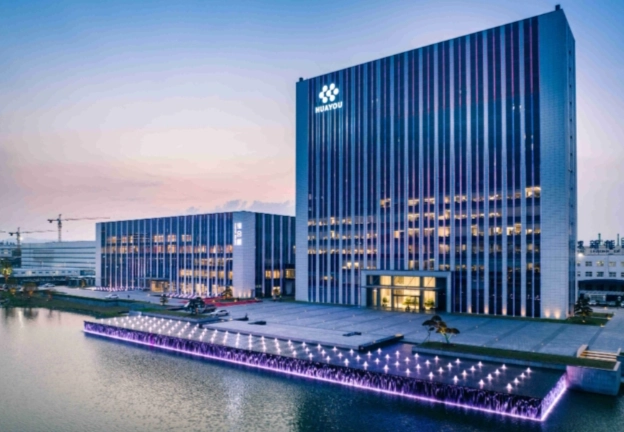
Heavy Capital, Sovereign Positioning: Huayou Cobalt's Counter-Cyclical Capital Increase and the Resource Sovereignty Play
Huayou Cobalt raises capital by 12% in a counter-cyclical move, doubling down on global cobalt resources and precursor production to build a moat of heavy assets.
In mid-2026, as the global new energy supply chain is mired in intense competition and frequent geopolitical compliance friction, the every move of upstream non-ferrous metals giants is becoming a key bellwether for the industry's future prospects. The latest business registration changes publicly disclosed by Tianyancha App show that Zhejiang Huayou Cobalt Co., Ltd. has recently completed a significant capital increase, with its registered capital rising from approximately RMB 1.7 billion to approximately RMB 1.9 billion, an increase of about 12%.
This injection of hundreds of millions of yuan in capital is by no means a routine cosmetic exercise in financial reporting. Peering through the gloom of the current low-price volatility in global lithium battery materials, the underlying driver is that this cobalt giant, facing the technological inflection point of solid-state batteries and the global competition for mining rights, has chosen to leverage the hard-won advantages of heavy assets to cement its absolute control over global ternary precursors and strategic resources.
A shallow consensus commonly held in the industry suggests that capital increases by raw material majors during downturns are merely to ease short-term debt liquidity. However, this view completely underestimates the survival pressures currently facing non-ferrous metals conglomerates. As the entire new energy vehicle supply chain becomes pixel-level demanding about long range and high safety margins, the process barriers for high-nickel ternary and next-generation cobalt-based materials have undergone another leap. The old asset-light model of simply buying mines and reselling materials can no longer survive the competition. If giants want to firmly hold the pricing power over global commodities, they must deploy massive capital as quickly and heavily as possible into advanced processing and the vertical integration of global supply chains.
A close look at the business scope disclosed on Tianyancha reveals a highly controlling vertical ecosystem, spanning R&D, production, and sales of cobalt, nickel, and copper metal products, through to the core cobalt lithium oxide.
This resource entity led by Chen Xuehua is co-held by Huayou Holdings Group, Hong Kong Securities Clearing Company Limited, and other multinational and domestic core capital. With resource protectionism on the rise and the gravitational pull of credit constraints, Huayou Cobalt's capital increase is, in essence, a means of converting surplus financial strength into self-built high-technological-barrier intangible assets, thereby erecting its own line of defense within corporate registration records. This high capital threshold can rapidly push the technical sophistication of domestic refining bases to new heights, squeezing out mid-tier traders who merely speculate on spot price arbitrage. This is an extremely sober form of asset hedging: in an environment of escalating global trade friction, building a self-owned, high-purity, full-supply-chain defensive network is the only solution for giants to maintain supply chain resilience.
The evolution of business has always been ruthless. In an era where life and death are defined by technological barriers and resource density, the narrative of non-ferrous metals is retreating from flashy production figures back to the most classic contest of heavy industrial capital.
The nearly RMB 1.9 billion capital base now on file with Tianyancha is the long moat that Huayou Cobalt has built for itself amid the cyclical storm. Those mid-tier enterprises still clinging to reckless expansion, unwilling to get their hands dirty in the gritty fundamentals of manufacturing, will ultimately pay the steepest exit bill under the sheer asset dominance of multinational giants.