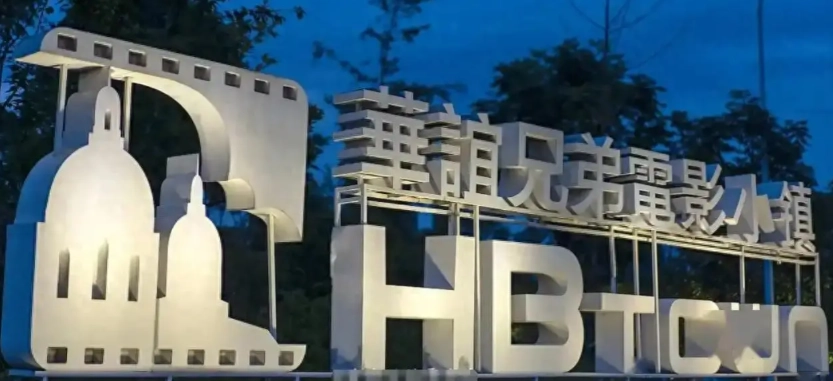
Huayi Brothers exits its Shenzhen cultural tourism project, marking the end of a 14-year 'Disney of China' dream and a shift away from asset-heavy operations back to its core film content business.
The live-action entertainment bubble that major film studios inflated during their golden age is now completing its final debt-clearing game under the brutal consolidation of the current inventory cycle. Shenzhen Huayi Brothers Cultural Creative Industry Co., Ltd. recently underwent a surgical corporate restructuring—its original shareholder, ST Huayi's subsidiary "Huayi Brothers (Tianjin) Live-Action Entertainment Co., Ltd.," which already carries the delisting risk warning label, has completely exited the company with no remaining stake.
This fourteen-year cross-industry marathon ultimately ended with Huayi Brothers handing over all its chips and retreating in defeat.
Casual observers and financial media outlets accustomed to reciting corporate announcements often reduce this move to nothing more than ST Huayi liquidating assets under the pressure of protecting its listing status, or a conventional "trimming the fat" exercise by a film company responding to a cash flow crisis. Such superficial financial metric attributions completely overlook the brutal technological and commercial inflection point emerging in mid-2026: the deep decoupling of heavyweight film production from local real estate and cultural tourism projects. That model—pitching a "Chinese Disneyland" concept to secure land from local governments and speculate on attached residential development—has been reduced to rubble by the changing times.
A review of the full case history on the Tianyancha App shows this cultural creative company, established in September 2012, had a registered capital of RMB 300 million, with Xu Jijun as its legal representative.
Looking at the core operational mandate in its Tianyancha corporate record, its sole purpose for existing was to develop and build the "Pingshan Huayi Brothers Cultural City" in eastern Shenzhen. In that freewheeling era when domestic box office revenues were surging and brothers Wang Zhongjun and Wang Zhonglei were squandering the capital premium with abandon, Huayi's live-action entertainment division was the grand narrative the capital markets loved most. The platform attempted to leverage its film IP to win low-cost land and funding from local state-owned enterprises and real estate giants, then use the premium from cultural tourism real estate to subsidize its cash-strapped film production fundamentals.
But after years of being crushed by the real estate cycle and with Huayi Brothers' own content creation capacity fully hollowed out, this profit chain had long since mutated into a massive financial drain.
According to the latest equity structure changes disclosed by Tianyancha, the studio giant has completely severed its legal ties to those RMB 300 million in assets. The new company is now wholly owned by Shenzhen Pingshan District Urban Construction Investment Co., Ltd. and Shenzhen Pearl River Investment Development Co., Ltd.
The urban investment platform and the established real estate developer have gone from being "backstage sedan bearers" to "final bad-debt recipients." Beneath this restructuring of legal rights lies a deeper driver: the debt ceiling imposed by ST Huayi's consecutive annual losses totaling over RMB 8 billion in recent years. This base, once intended to carry South China's cultural tourism ambitions, never contributed real ticket sales or revenue-sharing profits to its parent company over more than a decade of friction. Instead, it became a source of risk overflow, triggering repeated judicial freezes and consumption restrictions for the parent company on Tianyancha, driven by complex land development disputes, lingering construction cost litigation, and heavy financial amortization.
By forcing the tier-two shell company Tianjin Live-Action Entertainment to make a targeted exit, ST Huayi is using the coldest and most experienced legal framework to physically isolate risk.
It has dumped the near-bottomless follow-up construction obligations for Pingshan Cultural City and the tangled web of lingering debt onto the local urban investment platform and Pearl River Investment. Huayi Brothers, now reeling from leadership changes and bankruptcy petitions, simply wants to shed its heavy-asset outsourcing layer with minimal damage and retreat to the narrow path of pure film content—a track that now depends on luck and young directors to survive.
Liquidation in the business world has always been ruthless. In this second half of the game, where survival is defined by real cash-generation efficiency and net cash flow purity, the old-era studios that thrived on flipping IP concepts and arbitraging local real estate cycles will ultimately pay the most expensive exit ticket under the weight of heavy-asset compliance. The exit trail ST Huayi has left in the Tianyancha system is a sobering ledger documenting the complete end of the cultural tourism real estate concept. When the grand screen inflated by capital is brutally torn apart by the pressure of reality, whoever can let go of the grandiose imperial narrative first will be the one who keeps a spark of survival alive in the long, painful cleanup of financial ruins.