Huafeng Chemical's 6.85 billion yuan related-party acquisition of group assets securitizes them at a cyclical high, shifting risk onto public shareholders.
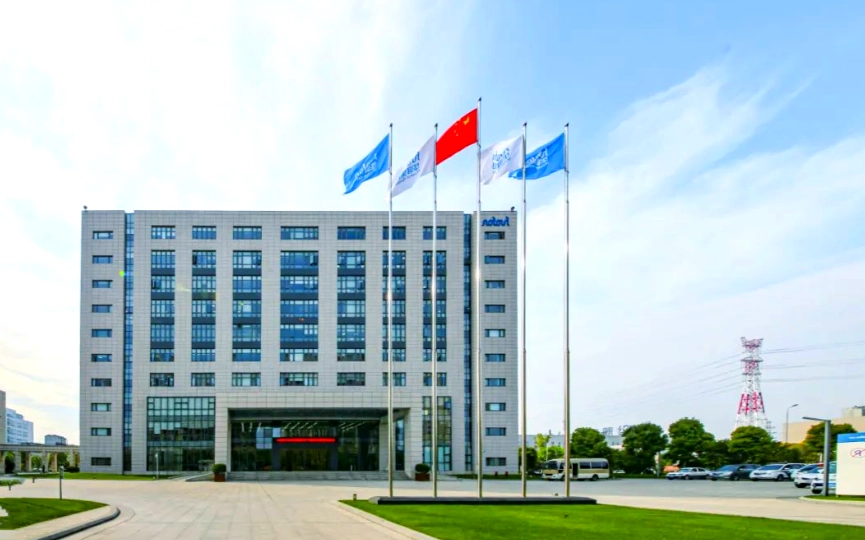
When Huafeng Chemical's extraordinary shareholders' meeting approved this related-party acquisition worth as much as 6.85 billion yuan by an overwhelming vote, if the capital market had focused only on the grand rhetoric of integrated consolidation across the entire polyurethane industrial chain, it would have completely overlooked the classic financial engineering feat on the eve of the bottoming out of the bulk chemicals cycle: the controlling shareholder's high-level securitization of off-balance-sheet assets.
The two target companies—Zhejiang Huafeng Synthetic Resin Co., Ltd. and Zhejiang Huafeng Thermoplastic Polyurethane Co., Ltd.—were assigned transaction considerations of 4.15 billion yuan and 2.7 billion yuan, respectively. This nearly 7 billion yuan injection of heavy assets was paid for entirely by the listed company through the issuance of shares and the payment of a large amount of cash. In essence, it is a precise great shift of risk and profit by Huafeng Group into the listed company system during a painful period when the chemical industry broadly faces supply-demand mismatch and overcapacity.
Family Control Chain and the Substance of the Asset Injection
If one traces the corporate registration records to penetrate the lineage of these two target companies, their highly centralized family control chain is clearly preserved in Tianyancha archives. Tianyancha corporate registration data shows that before this transaction closed, Huafeng Group Co., Ltd. directly held a 51% controlling stake in Huafeng Synthetic Resin and wholly owned 100% of Huafeng Thermoplastic. Huafeng Group itself is precisely the controlling parent of Huafeng Chemical, a main-board listed company on the Shenzhen Stock Exchange.
Under the transaction plan, the two direct-line group assets that were originally outside the listed entity will all become wholly owned subsidiaries of Huafeng Chemical. This kind of transfer from the parent company's asset pool to a listed company's subsidiaries has a more straightforward name in the language of capital operations: asset injection by the controlling shareholder.
Performance Self-Rescue: The Driving Force Behind Asset Injection Under Cyclical Strangulation
The core driving force behind the completion of this massive transaction is Huafeng Chemical's performance self-rescue as its core businesses of spandex and adipic acid suffer cyclical strangulation.
In the past few years, Huafeng Chemical, as the global spandex leader, has keenly experienced the backlash brought by frenzied capacity expansion. Industry-wide operating rates have declined and product prices have hovered at rock bottom. Relying solely on its original chemical fiber manufacturing, the listed company's profit safety cushion has been cut to a historical low. Meanwhile, the polyurethane resin and thermoplastic polyurethane (TPU) cultivated for years outside the group, because they directly serve downstream niche consumer segments such as footwear, apparel, bags, new energy vehicle interiors, and consumer electronics, enjoy higher gross margin premiums and greater cyclical resilience than pure bulk chemical fiber.
The most immediate effect of injecting these two assets into the listed company is to consolidate billions of yuan in annual revenue and hard cash net profit into Huafeng Chemical's statements, forcibly propping up the listed company's valuation center in the secondary market.
The Tilted Scales of Interest: Controlling Shareholder Cash-Out and Risk Transfer
However, once the gorgeous curtain of asset integration is pulled back, the scales of interest in this hundred-billion-yuan asset reshuffling naturally tilt toward the controlling shareholder.
With the high valuation considerations of 4.15 billion yuan and 2.7 billion yuan, offset by payment in cash and shares, Huafeng Group can not only directly cash out a large amount of the listed company's precious cash flow, but also further solidify its absolute control over Huafeng Chemical through newly issued shares. A deeper industry pain point lies in the fact that the technical barriers in the synthetic resin and TPU industries are not unbreakable. As domestic trillion-yuan chemical giants such as Wanhua Chemical have launched saturated, dimension-reducing attacks across the entire TPU industrial chain in recent years, the defense line for downstream high-margin space is being rapidly flattened.
By choosing to inject both companies in full into the listed company at this point in time, Huafeng Group is in fact transferring in advance the risk of future technical and price wars that off-balance-sheet assets are highly likely to encounter, as well as the massive burden of production line depreciation, to the listed company platform jointly borne by the broad public shareholders.
Game Signals and Future Hidden Reefs
This nearly 7 billion yuan related-party transaction in early autumn released the most straightforward game signal to the entire bulk chemicals sector: during the ice age of the bulk cycle, industrial chain integration is both heavy armor against the cold winter and the best cover for the controlling shareholder to realize asset monetization. By issuing shares to lock in control and consolidating off-balance-sheet profits to fatten the financial statements, Huafeng Group has played a highly mature market value management combination punch.
But after the consolidation carnival, how to truly resist the full encirclement by chemical giants in the downstream derivative materials field is the long hidden reef that Huafeng Chemical must face directly after draining a large amount of its cash reserves.