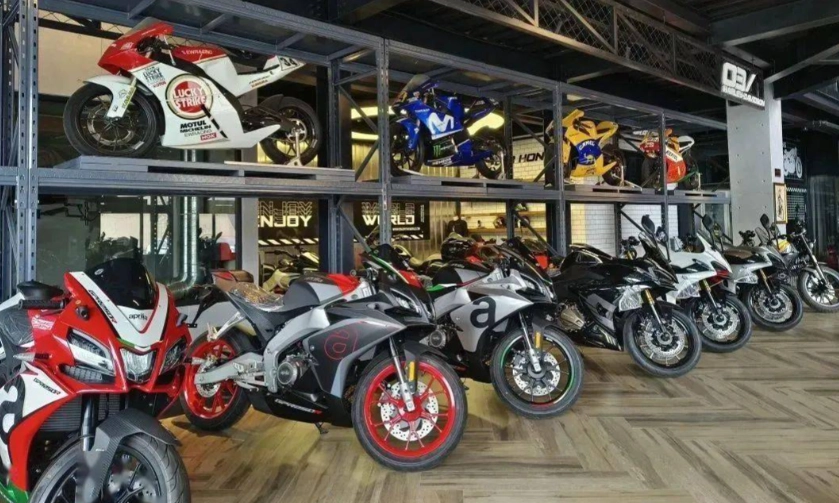
Zhang Xue leveraged a customer service crisis to clear out traditional channels, gaining 660,000 followers and reshaping power dynamics in the motorcycle industry chain.
The roll-down shutter at the Chengdu motorcycle shop slamming shut played out in public as a satisfying drama of a founder taking down an unscrupulous dealer, but on the real ledger of business, it was nothing more than Zhang Xue using an incidental customer complaint crisis to issue a precise eviction notice to a bloated traditional offline sales channel. The salesperson who was sacrificed on the spot for coaching a customer to ride an unlicensed motorcycle probably had no idea what line he had crossed. The data showing a surge of over 660,000 followers in thirty days reveals, with cold hard clarity, the real return on this crisis management play.
Outsiders tend to slap idealistic labels on motorcycle fanatics like this, assuming that giving away a new bike on the spot or smashing his own store sign is some kind of cost-blind brotherhood code. That emotional take completely obscures the extreme oversupply and inventory friction currently gripping the domestic gasoline motorcycle sector. In an era when new EV makers are all competing on smart chassis technology, the incremental market for traditional two-wheeled motorcycles has long hit its ceiling. Those franchised stores scattered across the country, chasing whatever paltry monthly revenue they can scrape together, had already crushed any pretense of regulatory compliance. Test rides with no plates are essentially the inevitable result of grass-roots sales staff buckling under desperate quota pressure.
If Zhang Xue were just a pure mechanical enthusiast, he could have quietly settled the matter with compensation. But he was extremely sharp in pulling this conflict into a livestream watched by tens of thousands, executing a direct dimensional strike. If we dig into the underlying business registration data in the Tianyancha system, the manufacturing entity named Chongqing Zhang Xue Motorcycle Industry Co., Ltd. was established this April, with the legal representative and core decision-maker being, unsurprisingly, Zhang Xue himself. But in the shareholder roster, external capital such as Shanghai Gaoxin Lingzhi Venture Capital Partnership quietly holds a stake.
With real money from venture capital funds in play, Zhang Xue is no longer just a hardcore gearhead; he has to find the most efficient path to recoup capital for the massive costs of road vehicle production and R&D. In the past, the lifeblood of a heavy-asset manufacturing plant was tightly controlled by provincial and municipal distributors, who not only absorbed hefty channel rebates but also, through lousy after-sales service and short-sighted profit-seeking, dumped endless messes back onto the brand itself.
Zhang Xue is now using the brutal magnetic pull of his personal IP to punch through that traditional iron barrel of interests. Those 660,000 real new followers are a private-domain asset that doesn't have to pay any channel tolls. When a brand founder has the ability to speak directly to consumers and even sell out the first production run with just a few short videos, those offline retail stores that once stood high and mighty—even daring to break the rules—shift from indispensable heavy assets to sunk costs that can be knocked around or ruthlessly cut loose at any moment.
Shutting down the Chengdu store looks on the surface like losing a regional sales touchpoint, but in reality it's Zhang Xue laying down the law for all franchisees nationwide, forcibly squeezing their terminal profit margins and bargaining power. He traded the minor financial loss of one new motorcycle for a free, web-wide viral marketing moment. More importantly, it firmly secured his absolute control over profit distribution across the entire supply chain.
Once the motorcycle business gets infused with fan-culture fervor and the catalytic power of a mega personal IP, the traditional rules of supply-and-demand distribution go completely out the window. The rage Zhang Xue displayed in that livestream wasn't just aimed at the store manager in Chengdu; it was a muscle-flexing show for the capital markets and lurking competitors. When cold machinery stops being merely a mode of transport and gets successfully transformed into a faith-based token wrapped in the founder's personal charisma, the traditional offline pressure-selling agency channel has already reached its coldest twilight.