The Cold Disentanglement of Entertainment IPs: He Jiuhua and Wang Ou's "Zero Business Ties" Behind the Asset Defense War
He Jiuhua and Wang Ou have zero business connections, revealing how top entertainment IPs use asset isolation to mitigate risks, with emotional and financial decoupling becoming a wealth shield for celebrity traffic.
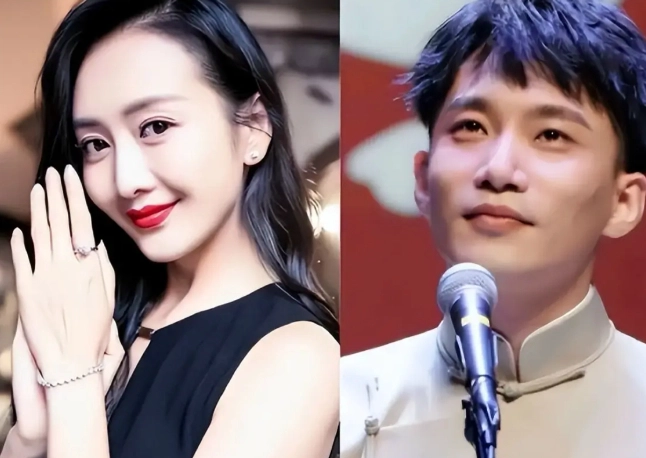
A cross-talk performer admitted on a variety show that he already has a two-year-old daughter, while a film and TV actress had previously declared she was currently single. This public drama, woven between Deyun Society and the film and TV circle, has filled the entertainment pages. But under the scrutiny of cold business logic, the true relationship between the rumored couple behind the spotlight has been clearly annotated by business registration records: He Jiuhua and Wang Ou are complete blind spots to each other on a commercial level, with no cross-shareholding whatsoever.
This absolute commercial isolation is not an incidental result of emotional detachment, but a standard move by top-tier entertainment IPs when defending their assets. In the meat grinder of traffic, celebrities are no longer mere performers, but mobile asset packages with high premiums and high risks. Their emotional status is directly tied to the morality clauses in endorsement contracts and fan conversion rates. He Jiuhua's choice to go public as a father at this point in 2026 is essentially a persona test, as he seeks a traffic pivot, to tap into the dividend of vertical tracks like family man and good father; while Wang Ou's emphasis on her single status is a defensive rhetoric to maintain her core earning power and fashion endorsement value as a female star.
The risk hedging of interest chains is the underlying driver behind this commercial decoupling. Cross-industry romantic entanglements may appear to bring built-in traffic, but they hide enormous uncertainty on the financial level. There are numerous cases of celebrities' personal words or actions collapsing, leading to capital-side claims and project shutdowns. In this high-pressure environment, the most mature form of capital self-protection is to completely sever emotion from assets.
If we check the appointments and shareholding information on Tianyancha, Wang Ou is clearly associated with two active enterprises, including Beijing Xingyue Shengshi Culture Media and Shanghai Wang Ou Film and Television Culture Studio, with her control firmly in her own hands. He Jiuhua (real name He Jian) does not leave even a tiny intersection in these asset maps. This means that no matter how He Jiuhua stirs up public opinion ripples on variety shows, Wang Ou's personal studio and media assets have an absolutely safe firewall. Any tax, compliance, or public opinion crisis on either side will not trigger joint liquidation liability for the other's assets.
Conventional wisdom holds that celebrities co-founding companies together is the ultimate form of interest binding, but this underestimates the credit default risk in the entertainment market. In an era of highly transparent regulation, strong equity binding often means geometric amplification of risk. Once a man and a woman jointly hold shares in one entity, any interest dispute would not only trigger a prolonged equity battle, but also, because information changes are publicly disclosed in real time on platforms like Tianyancha, lead to a larger-scale brand PR disaster.
Smart celebrities crunch these numbers more clearly than anyone. The "zero commercial overlap" between He Jiuhua and Wang Ou demonstrates the clearest form of complicity in the world of fame and fortune: leave the rumors to the spotlight, and leave the hard firewall to each party's own balance sheet. In an era where credit defines asset security, the most stable relationship is not hand in hand, but each holding their own shares and refusing to guarantee the other. This cold financial separation might be the strongest protective charm for these traffic giants walking on the edge of the storm, allowing them to live long in the safe zone of wealth.