Harbin Concert Collapse Exposes Heavy Asset Liquidation and Risk Control Vacuum
A Harbin concert was canceled due to severe weather, revealing the promoter's fragile risk controls and a registered capital of only 5 million yuan, highlighting an industry that prioritizes marketing over assets.
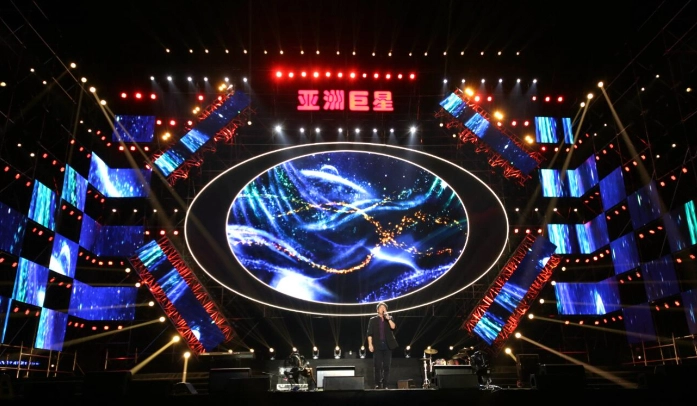
The violent storm that tore through the roof of the Harbin International Convention, Exhibition and Sports Center that night soaked far more than the tens of thousands of vacant seats on site—it exposed the long-standing false prosperity of the domestic live performance market. On May 31, the "Super Sound Hero" concert, originally scheduled to unleash a massive wave of sound at this landmark venue in the Ice City, came to an abrupt halt under the physical impact of severe convective weather. In the apology letter released overnight by the organizer, every line was filled with complaints and helplessness about the extreme climate. However, when we shift our focus from the weather radar to the deeper commercial operating framework, this sudden incident that appears to be orchestrated by nature is, in reality, a targeted detonation aimed at the industry's fragile underlying capital chain and its near-zero risk control threshold.
The collapse of the stage trusses is merely the surface. What has truly collapsed is the pathological leverage game of the regional performance market—one that has long prioritized marketing over assets, with virtually zero risk-resistance capacity.
The Precarious Gamble of Five Million in Registered Capital and the Financial Defense Line
Tracing the operators behind this super-scale event—one that involves tens of millions in capital flow and mobilizes tens of thousands of security and infrastructure resources—the thinness revealed by the corporate registration records is enough to make any rational business observer feel profound absurdity and a chill down the spine.
A cold and objective set of underlying data fully reconstructs the real skeleton of the company in question, Beijing Hanxi Culture Media Co., Ltd. Following the equity penetration path on the Tianyancha app, it is clear that this veteran media company, founded in March 2015, has its legal representative registered as Huang Xin, who holds 100% ownership—an archetypal sole proprietorship. The compliance detail that most defies business common sense is that this entity, which has operated in the performance market for eleven years and dared to organize mega-star lineup concerts, has registered capital stuck at the absolute low of five million RMB.
In the context of large-scale outdoor commercial performances in 2026, a capital base of five million RMB is almost tantamount to a financial illusion. It is not even enough to cover the initial upfront payment for a top-tier superstar's appearance fee, let alone fully fund the massive and complex stage steel-structure construction, top-level security personnel deployment, and hefty venue rental deposits. This extreme mismatch—stuffing enormous commercial default risk into a micro-capital shell—is precisely the most hidden and perilous underbelly of today's concert economy.
Hanxi Culture's extremely low capital defense wall, as exposed in its Tianyancha file, accurately depicts the near-speculative financial planning logic prevalent among a large number of regional performance promoters. They habitually use their extremely limited own funds as the leverage point to pry open mega-projects, aggressively locking in consumer funds through advance ticket sales, and then using those pre-sale revenues to fill the bottomless pit of upstream artist fees and the enormous costs of downstream engineering. When the skies are clear and the show lands smoothly, they can leverage high ticket premiums to reap astonishing cash-flow spreads, completing a perfect "free lunch" maneuver. But once a black swan event like the severe convective weather in Harbin strikes, this capital shell with only a five-million legal defense line will instantly face dual physical and credit circuit breakers under the pressure of tens of millions in refund runs and project reconstruction costs.
Risk-Control Distortion Under Upstream Siphoning Effects
To probe the deeper causes of this distorted ecosystem, we must turn our attention to the pathologically imbalanced profit-distribution mechanism across the entire entertainment industry chain. In today's severely lopsided seller's market, the superstars who hold the absolute keys to traffic, along with the booking agencies behind them, constitute the most ruthless black hole of profit siphoning at the very top of the food chain.
These top-tier forces are extremely rigid and non-negotiable in their demands for appearance fees. They often require organizers to pay a high percentage of the fee upfront—or even in full—before tickets even go on sale, and in their contract liability waivers, they deploy their most elite legal teams to aggressively shield themselves from cancellation risks caused by weather, venue security, or other factors outside their control. This means that for mid-tier organizers like Hanxi Culture, they are not just capital movers; they are the perfect risk-isolation walls for the superstars.
Having lost all bargaining power in negotiations with top-tier artists, organizers are forced to hand over every drop of liquid capital on their books just to secure the superstar slots that guarantee baseline ticket sales. Before a single load-bearing bolt of the stage in Harbin's stadium has even been tightened, the core profit expectations of the entire project have already been drained with surgical precision by the upstream. This financial suffocation from early overextension directly forces organizers to engage in no-holds-barred extreme cost-cutting on subsequent hardware investment and risk-defense systems.
Therefore, when faced with the highly variable thunderstorm climate conditions of northern summers, they lack both the means and the will to purchase the extremely expensive cancellation insurance for large-scale outdoor events. Under the weight of survival pressure and the lure of huge profits, the gamble on favorable weather trumps basic business logic. What should have been a tightly sealed financial risk-control framework is completely distorted into a crude, fate-determined meteorological bet.
Infrastructure Degradation and the Cruel Backlash of the Supply Chain
Capital running naked without financial hedging tools inevitably leads to missteps in physical infrastructure. The severe damage to the Harbin International Convention, Exhibition and Sports Center facilities on this occasion certainly involves the irresistible force of nature, but at a deeper level, it exposes the organizer's extreme sloppiness in stage-engineering subcontracting and on-site stress testing.
Under normal asset-heavy business logic, for mega-scale outdoor performances during high-frequency severe convective weather periods, the wind-resistance rating of the stage load-bearing structure, the redundant design of rainproof and drainage systems, and the emergency reinforcement of surrounding facilities must all pass the most stringent pressure tests from third-party engineering institutions. However, when the lion's share of the capital pool is mercilessly consumed by artist fees, the budget left for stage engineering and venue maintenance is inevitably stretched thin. To forcibly compress costs in exchange for a razor-thin profit margin, the industry resorts to an unspoken set of rules: multi-tier subcontracting, use of marginal-grade cheap truss materials, and even drastic cuts to professional emergency response plans for extreme weather.
What collapsed in that gust of wind and rain was not just the stage facilities, but the total bankruptcy of this asset-light operating model in the face of nature's absolute physical force. Even if this media entity with just five million in registered capital liquidated and sold off all its fixed assets, it would be nearly impossible to cover the major repairs and replacement costs for the Harbin venue, the full compensation for damaged high-end audio equipment, and the chain reaction of breach-of-contract penalties that follow. They attempt to soothe public sentiment with a slick, emotionally charged apology letter, but the debt settlements in the capital markets and supply chains are far colder and more precise than online comments. Once creditors and suppliers pursue asset penetration and forced freezes through judicial procedures, this business shell that seemingly operated successfully for eleven years can easily be reduced to a dried-out, untrustworthy husk under the asset-heavy noose of successive lawsuits.
Consumer Mindset Evolution and the Passive Bailout by Local Economies
Raising the perspective to a broader macroeconomic level, this failed superstar concert also lays bare the structural contradiction between local governments' pursuit of trending economies and the awakening of consumer awareness.
Harbin, a top-tier city that went viral for its ice-and-snow tourism, is desperate to attract a dense schedule of large-scale entertainment events during the summer to fill the seasonal revenue vacuum in tourism and sustain the city's long-term online buzz. Local municipal governments tend to roll out the red carpet for concerts that can draw massive crowds, extending full administrative support in venue approvals, traffic management, and even security deployments. However, this strong drive to attract investment and stimulate domestic demand often inadvertently lowers the rigor of scrutiny into the organizer's underlying qualifications and true risk-resistance capacity.
When local governments embrace these asset-light organizers—who bring massive traffic but lack deep capital moats—with an extremely accommodating attitude, they are in effect taking on highly explosive social public-risk hazards. If, as on May 31, a sudden weather shift causes the entire show to collapse, the sunk costs of transportation and accommodation for tens of thousands of out-of-town fans, along with the collective anxiety over inaccessible refunds, will ultimately translate into a massive wave of public backlash against the city's business environment and emergency-response capabilities. The local government's original plan to boost surrounding dining and accommodation spending through the concert instead ends up forced into a painful administrative bailout and reputation cost for commercially speculative behavior that lacks any fundamental support.
At the same time, the 2026 consumer market has already undergone a ruthlessly cold evolution in mindset. The era of blind fandom—where simply putting a star on stage was enough to make fans pay with tears in their eyes even amid deafening audio feedback—is completely over. Today's performance audiences are rights-defending warriors who place extreme emphasis on contractual integrity, consumer experience, and the rule of law. They show absolutely zero tolerance for show postponements or cancellations caused by inadequate organizer preparation and missing risk controls. Through the highly efficient coordination of social media, a wave of rights-defense demands—not just for full ticket refunds but also for full compensation for flight and hotel losses—is now launching an all-directional reckoning against undercapitalized organizers like Hanxi Culture.
The crowding in the refund channels and the outcry in the rights-defense chat groups will eventually subside over time, but the heavy hammer from that summer night in the Ice City must leave a deep mark on the skull of the entire performance industry chain. Those operators who are addicted to carrying tens of millions in box-office ambitions on paper-thin financial shells need to fully wake up from the illusion of asset-light arbitrage. The future performance ecosystem is no longer a crude game of lineup roundups; it is a heavy-industry battleground built on real capital flows, extremely stringent compliance and risk control, and absolutely resilient physical infrastructure defenses. Whoever fails to pile up thick capital walls at the foundational level of resistance will, at the next storm's passing, be utterly annihilated in the cold rain of the era—along with their flimsy business reputations.