Guizhou Gas acquires shale gas assets for 1.164 billion yuan, consolidating gas sources through a state-asset left-hand-to-right-hand deal to break the upstream bottleneck.
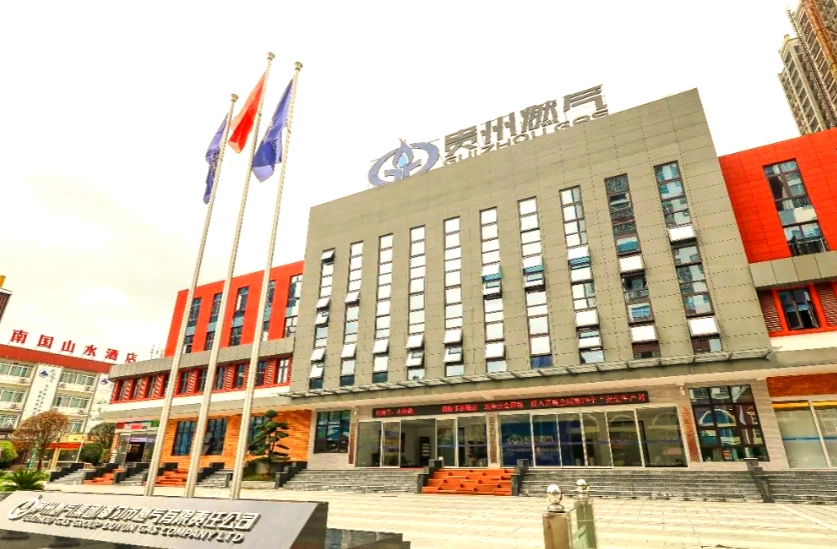
When Guizhou Gas put forward a restructuring plan to acquire 100% equity of Guizhou Shale Gas for a proposed consideration of 1.164 billion yuan through the full issuance of 241 million shares, the secondary market's most immediate excitement centered on the steep financial elasticity. The target asset's 2025 output accounted for only 14.11% of the listed company's gas sales volume, yet in the pro forma statements, it directly caused the listed company's net profit attributable to parent for the first quarter of 2026 to surge by 50.81%.
However, if this restructuring is viewed merely as a routine injection of high-quality assets and profit accretion, then the deeper intentions behind this transaction in Guizhou's local energy chessboard—when facing a chokehold on gas sources and horizontal integration among peers—are completely underestimated.
The Lifeblood Predicament of City Gas Enterprises
The city gas industry was once often regarded as a rent-collecting business that steadily earned the spread of public utilities, but in reality, the lifeblood of city gas enterprises has always been firmly gripped by the three major upstream oil companies. A city gas company without its own gas source is essentially just a pipeline network mover that buys high and sells low. Once the upstream gas price pass-through mechanism is blocked, and downstream end users are unable to freely raise prices due to the red line of ensuring livelihood supply, the price scissors between upstream and downstream can quickly devour the operating cash flow of city gas enterprises.
For Guizhou Gas, which is located in the inland southwest, has complex terrain, and faces extremely high pipeline network coverage costs, guarding the downstream network while waiting for upstream concessions is tantamount to chronic blood loss; forcibly extending upstream into exploration and development is the only way out to break the profit ceiling.
State-Owned Asset Centralization by Passing from One Hand to the Other
Peeling through the underlying equity of this billion-yuan-level merger, the logic of capital maneuvering under the same actual controller is especially clear in the industrial and commercial registration traces. Tianyancha business registration data shows that before the transaction, Wujiang Energy Investment simultaneously held 29.33% equity of Guizhou Gas and 58.33% equity of Guizhou Shale Gas, and the top-level actual controllers of both companies were both the Guizhou Provincial State-owned Assets Supervision and Administration Commission. Through this cross-shareholding map accumulated by Tianyancha, it can be found that after the completion of this transaction, Wujiang Energy Investment's shareholding ratio in Guizhou Gas will be further raised to 34.31%.
This is a typical left-hand-to-right-hand asset centralization led by local state-owned assets.
Packaging unlisted upstream extraction assets and injecting them into the listed company platform not only directly resolves the heavy development costs previously sunk by local state-owned assets in shale gas exploration through stock consideration of the listed company, but also achieves the grand unification of the region's entire natural gas industrial chain on the A-share capital platform. By coordinating equity scattered across upstream exploration and downstream sales into the same listed company, the Guizhou Provincial State-owned Assets Supervision and Administration Commission directly strengthens the absolute control of the controlling shareholder Wujiang Energy Investment, completing a concentrated defense of the region's energy lifeblood through capital operations.
The Huge Divergence Between Production and Sales Scale and Profit Contribution
What is even more intriguing is the huge divergence between production and sales scale and profit contribution.
An annual output of 266 million cubic meters corresponds to only 14.11% of the listed company's annual gas sales volume, but why was it able to leverage more than half of pro forma net profit growth in the first quarter of this year? Behind this contrast is the explosive profit elasticity of self-owned gas sources during the heating season. The first quarter is precisely the peak gas consumption period in the southwestern region, when externally purchased pipeline gas and LNG spot prices often rise sharply. The extremely low marginal extraction cost of self-produced shale gas not only saves high cross-provincial pipeline transportation and procurement premiums, but also allows full enjoyment of the lucrative window of peak-period gas prices.
A 14% incremental marginal production increase played the role of a high-gross-margin lever that moves a thousand catties with four ounces under extreme supply-demand conditions.
Long-Term Hidden Worries Behind Shale Gas Assets
However, incorporating shale gas extraction assets into the statements is by no means a move that allows one to rest easy from then on.
Unlike conventional natural gas, shale gas belongs to typical tight reservoirs, with an extremely high single-well decline rate, and extraction relies on uninterrupted hydraulic fracturing and high-intensity capital expenditure to maintain stable production. While enjoying its short-term profit pulse, the listed company must also bear alone the subsequent high drilling costs, depreciation and amortization, and the invisible risks of geological exploration failure. When the capital expenditure pressure brought by heavy-asset extraction presses along the equity chain onto the grid-connected pipelines, whether this merger can ultimately withstand the test of a long-term return cycle still depends on whether extraction costs under Guizhou's karst topography can truly be continuously pushed down.
The Final Signal of the Era of Thin Margins for City Gas
This major energy integration in the southwestern hinterland sends a clear signal to the capital market: in the era of thin margins when downstream profits of city gas are increasingly weak, the business narrative of simply relying on pipeline network taxation has come to an end. Local state-owned energy assets are sparing no cost to break the boundaries between upstream and downstream, rebuilding a security moat by forcibly injecting upstream resources.