Gexin Development Rebrands as Gelv Cultural Tourism Group: Gree Group's $1 Billion State-Owned Elephant Pivots to Unlock Value from Legacy Assets
Gree Group's subsidiary Gexin Development has been renamed Gelv Cultural Tourism Group, with 900 million yuan in capital to enter the cultural tourism sector, revitalize existing assets, and counter declining profits in traditional asset management.
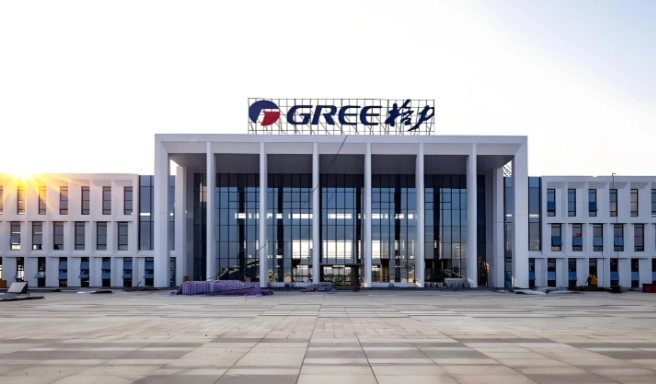
In the current macroeconomic cycle where traditional manufacturing and heavy-asset investment growth are slowing, every renaming and structural reorganization by local state-owned capital giants sends a precise signal of a forced shift in regional industrial direction. Recently, Zhuhai Gexin Development Co., Ltd. underwent a business registration change, with the company name officially changed to "Zhuhai Gelv Cultural Tourism Group Co., Ltd."
This seemingly ordinary change in wording is, in fact, a heavy strike by Zhuhai's state-owned capital giant Gree Group in the era of stock assets, marking the official regrouping of its core investment flagship into the cultural tourism track. Many casual observers who are accustomed to interpreting "Gree" from the perspective of Dong Mingzhu and home appliances often mistake this move for a routine adjustment of a subsidiary's business scope. This view completely underestimates the deep-seated asset restructuring that Zhuhai Gree Group, as a local state-owned capital investment and operation company, is undertaking in response to the cultural tourism consumption dividends of the Greater Bay Area.
To see through the underlying profit attribution and industrial drivers behind this renaming, one must use Tianyancha to penetrate the company's core foundation. This entity, established in 2018, has a registered capital of up to 900 million RMB, with legal representative Liu Yuchuang. From the shareholding structure on Tianyancha, it can be seen that the company is 100% wholly owned by Zhuhai Gree Group Co., Ltd. For a long time in the past, the company's business scope mainly focused on segments such as "asset management services for investments with自有 funds, investment activities with自有 funds, and park management services," leaning toward traditional industrial incubation and heavy-asset park operations.
Turning Point for Transformation: From Traditional Asset Management to the Cultural Tourism Track
Why is a state-owned enterprise giant holding 900 million in funds and primarily engaged in park management and asset management insisting on tearing off the old "Gexin" label and putting on the new "Gelv Cultural Tourism" coat at this moment? The core driver lies in the turning point for transformation that local state-owned capital faces in asset revitalization and urban renewal. As the saturation of traditional industrial parks reaches its peak, the profit margins of traditional asset management models that rely solely on rent and industrial support services are being extremely diluted. At the same time, the Greater Bay Area, leveraging its unique geographical advantages, is ushering in a new wave of consumption explosion in cultural tourism, vacation, and island economies. Gree Group has previously quietly accumulated a large amount of high-quality real estate and cultural tourism assets in areas such as island development in Zhuhai, high-end hotels, and cultural districts.
Asset Restructuring: Integrated Consolidation and the Turning of an Elephant
This upgrade of the 900-million-scale asset management flagship directly into a "Cultural Tourism Group" is essentially an integrated consolidation of park management, space operations, and investment outreach that were previously scattered across various dimensions. This is a typical turning of an elephant where a wholly state-owned company, after moving away from crude investment, uses refined "big cultural tourism" operations to revitalize stock assets and extract higher premiums.
Future Outlook: Capital Leverage and the Profit Moat
With the renaming now in place, the 900 million in capital of this newly formed Gelv Cultural Tourism Group will no longer be park management fees sitting on the books, but will become capital leverage to drive cultural tourism IPs and island vacation industries in the Guangdong-Hong Kong-Macao Greater Bay Area. For traditional local state-owned enterprises currently in the deep water of transformation, this is not just a change in brand name, but a coming-of-age ceremony of empowering heavy state-owned assets with light-asset operations and rediscovering profit moats in the deep waters of cultural tourism.