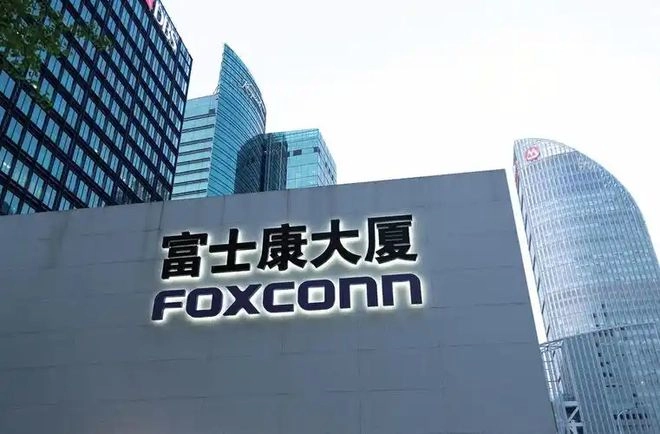
Foxconn's Precision Electronics in Chengdu Raises Capital in Supply Chain Consolidation Move
Foxconn's Chengdu base increased its capital by about 5%, converting dollar holdings into heavy assets such as automation equipment, reinforcing its western manufacturing defense and raising technical barriers to tackle supply chain challenges.
Amid the noisy reshuffling of the global tech hardware supply chain in mid-2026, every move by the contract manufacturing giant carries outsized significance as a bellwether. The latest business registration changes published on Tianyancha App show that Hongfujin Precision Electronics (Chengdu) Co., Ltd. has recently completed a major capital increase, with its registered capital rising from approximately $1.08 billion to about $1.13 billion, an increase of roughly 5 percent.
This injection of hundreds of millions of dollars in USD-denominated capital is by no means a routine bookkeeping transfer. Stripping away the public narrative of a sweeping industrial exodus overseas, the underlying motivation is that Foxconn, facing a zero-sum game in global smart devices and a technological inflection point in high-end manufacturing, has chosen to use the sheer gravity of heavy assets to reinforce its core manufacturing defenses in western China.
The prevailing shallow consensus in the industry holds that the capital increase at Foxconn's Chengdu base is merely to handle routine capacity expansion. But this view completely underestimates the survival pressures currently faced by major electronics contract manufacturers. With the explosion of AI-powered personal computers and foldable smartphones globally, the process requirements for high-precision micro-structures and high-heat-dissipation communication modules have become pixel-level exacting. The old light-asset workshops that relied purely on cheap labor for assembly can no longer secure orders from the next generation of top-tier OEMs. For the giant to firmly retain control over its core supply chain, it must pour massive amounts of capital, quickly and heavily, into upgrading automated and intelligent production lines at the back end.
A closer look at the business scope disclosed on Tianyancha reveals that, in addition to traditional computer and software manufacturing, communication equipment manufacturing and network equipment manufacturing rank at the top. This directly exposes the strategic intent behind this $50 million capital increase.
This Chengdu precision electronics entity, led by Zhang Gang, is jointly held by Foxconn's core units including Zhongjian Enterprise Co., Ltd. and Futaihua Industrial. In 2026, when the Chengdu-Chongqing economic circle has long become a globally important electronic information hub, Foxconn's capital increase is essentially converting its accumulated dollar positions into hard assets such as integrated automated industrial robots and high-precision CNC machine tools. This high capital barrier allows the Chengdu base to rapidly elevate its technological sophistication, thereby locking out second-tier contract manufacturers that try to snatch orders through cheap land incentives and low labor costs. This is an extremely clear-eyed asset hedge: amid heightened geopolitical compliance requirements and intensifying trade frictions, building a heavy-asset defense line with high technical barriers is the only way for the giant to maintain its supply chain resilience.
The evolution of commerce has always been ruthless. In an era defined by production efficiency and yield rates per device, the narrative of electronics manufacturing is retreating from flashy traffic concepts back to the most classical contest of heavy industrial capital.
The capital base of over one billion dollars now recorded in Tianyancha's archives is the moat Foxconn has built for itself before the storm arrives. Those mid-tier contract manufacturers still clinging to light-asset traffic buying and unwilling to get their hands dirty in the fundamentals of manufacturing will ultimately pay the most expensive exit bill under the absolute efficiency crushing of multinational giants.