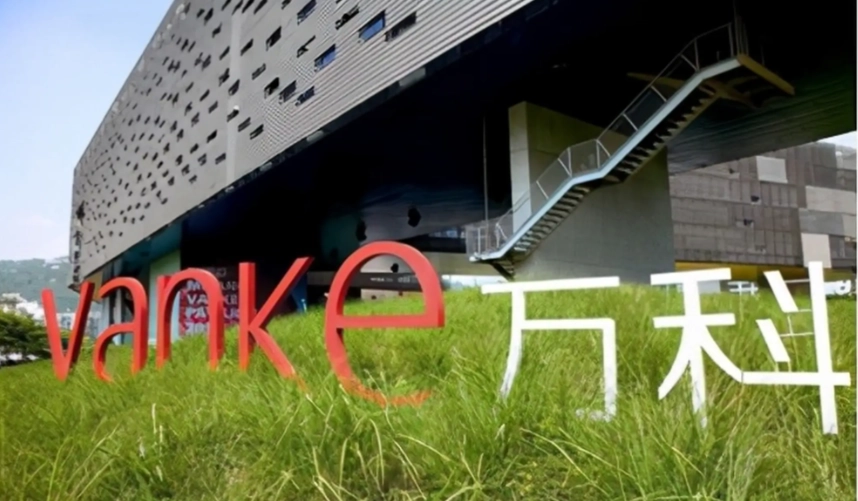
Vanke's leadership change, with Xu Enli taking over, signals a shift from expansion to defense, focusing on bottom-line safety and capital restructuring.
As Vanke, the fortress that once represented the highest governance standards in Chinese real estate, quietly completes its transition of power, the outside world still instinctively tries to glimpse signs of industry stabilization through personnel changes. Xu Enli has replaced Huang Liping as the legal representative and chairman of China Vanke Co., Ltd. This seemingly routine executive rotation is by no means a conventional power handover during peacetime. In the depths of a bitter winter in which the real estate industry faces extreme contraction of balance sheets, handing over the seal of legal representative means Vanke has completely bid farewell to the romantic era of expansion led by star professional managers and has turned toward a brutal restructuring period absolutely dominated by bottom-line security and capital will.
Looking back at the decades of real estate frenzy, Vanke's leaders were often preachers of the industry's expansion logic. But times have changed—today's top developers' chairmen are no longer orators talking about long-termism under the spotlight, but rather firefighters who must constantly respond to debt rollover pressures, asset disposals, and the imperative to deliver housing projects.
Capital Games and Risk Control Calculations
Following the underlying business logic to deconstruct this succession, the capital games and risk control calculations behind it are extremely cold-blooded. According to the industrial and commercial change trajectory captured by Tianyancha, Vanke's massive registered capital base of RMB 11 billion remains unchanged, but the replacement of the legal representative has been precisely timed to the most critical juncture of corporate liquidity defense. Under the current legal and business context, the legal representative of a real estate company holds an extremely high-pressure defensive position—not only bearing the penetrating risks of massive debt, but also serving as the person of ultimate responsibility in direct confrontation with local governments, financial institutions, and countless suppliers under extreme strain.
What appears on Tianyancha as a simple change record is in fact a reconfiguration of the command hub by Vanke's core shareholder camp, aimed at re-consolidating control and ensuring bottom-line security amid an extremely stringent debt-resolution cycle.
Strategic Shock and Defensive Pivot
The underlying driver behind the leadership change is a strategic shock born of complete disillusionment with the traditional high-turnover model.
Vanke today does not need a pioneer capable of drawing up grand land-acquisition blueprints; it needs a financial and compliance cleanup specialist who can precisely execute asset divestitures and squeeze cash flow out of a sprawling portfolio of illiquid assets. Xu Enli being elevated to chairman at this juncture signals that Vanke's core actions will now turn fully toward extreme defense. Those once-vaunted diversification efforts and heavy-asset investments will be re-examined under a magnifying glass—any segment that cannot immediately generate positive cash flow will face ruthless divestment or cut-price transfer.
Deep Penetration of Major Shareholder Will
This is also the inevitable outcome of the major shareholder's will penetrating deeper. At a time when real estate companies broadly face credit crises, entities lacking strong state-owned capital credit backing find it impossible to move forward. The balance between Vanke's management and core shareholders such as Shenzhen Metro is being completely reshaped—the capital side needs a top leader who can better implement its defensive contraction will and demonstrate absolute execution capability in debt restructuring and asset revitalization.
The old team of professional managers often carried path dependency when handling the historical burdens of a shrinking enterprise, and the arrival of the new chairman is precisely meant to sever that dependency—using colder financial discipline to re-measure every inch of Vanke's assets.
This announcement of a high-level reshuffle has thoroughly shattered the illusions of those in the real estate sector hoping to merely cling to survival. Amid the ruins of a stock market no longer believing in wealth-creation myths, the core objective for leaders of real estate giants has shifted from expanding the scale of the pie to steering their hundred-billion-yuan vessels toward a dignified downsizing in order to survive. Vanke's handover of power marks the beginning of the second half of the game for China's leading real estate developers—a contest defined by the courage to make painful cuts and the ultimate capacity for survival.
In this brutal close-quarters battle, only those who can calculate every line of the balance sheet down to the bone deserve to remain at the table.