Falcon Needs No Believers, but Satellites Need the 'Wuling Hongguang' Strategy
China's commercial space sector is focusing on space infrastructure and cost efficiency to compete for global orbital resources, leveraging its industrial scale advantages to secure strategic assets.
Musk's 2025 proposals for "hundred-thousand-ton payload orbital insertion" and "orbital AI data centers" are, at their core, an early strategic maneuver for global dominance in space-based computing power. In the face of this grand narrative laced with individual heroism, the surge of activity in China's commercial space sector in early 2026 reflects the industry's deep concern over the rules governing the allocation of space resources. This concern does not stem from emotional imitation, but rather from a sober commercial reality: low-Earth orbit slots and frequency resources, as non-renewable "strategic assets," are currently in an allocation phase with an extremely narrow window of opportunity.
In the evolution of commercial civilization, the endgame for any advanced technology is a race of efficiency and cost. For China's commercial space industry, rather than agonizing over replicating an icon, it makes more sense to return to fundamental business rationality: how to leverage a first-mover advantage in "space infrastructure" to transform aerospace from a precision art of the laboratory into standard industrial components on an assembly line—thereby securing a stable foothold in the global competition for resources.
Don't Disguise "Compute Anxiety" with "Idealism"
For a long time, public perception of commercial space has been stuck on the spectacle of "building big rockets," but seasoned business observers focus on asset liquidity and market share. The capacity of low-Earth orbit is not infinite. Under the International Telecommunication Union's principle of "first-come, first-served, first-to-launch, first-to-occupy," whoever makes their move first secures priority usage rights to that orbital slot. This is not merely a contest of technical prowess; it resembles a beachhead landing for an "orbital household registration."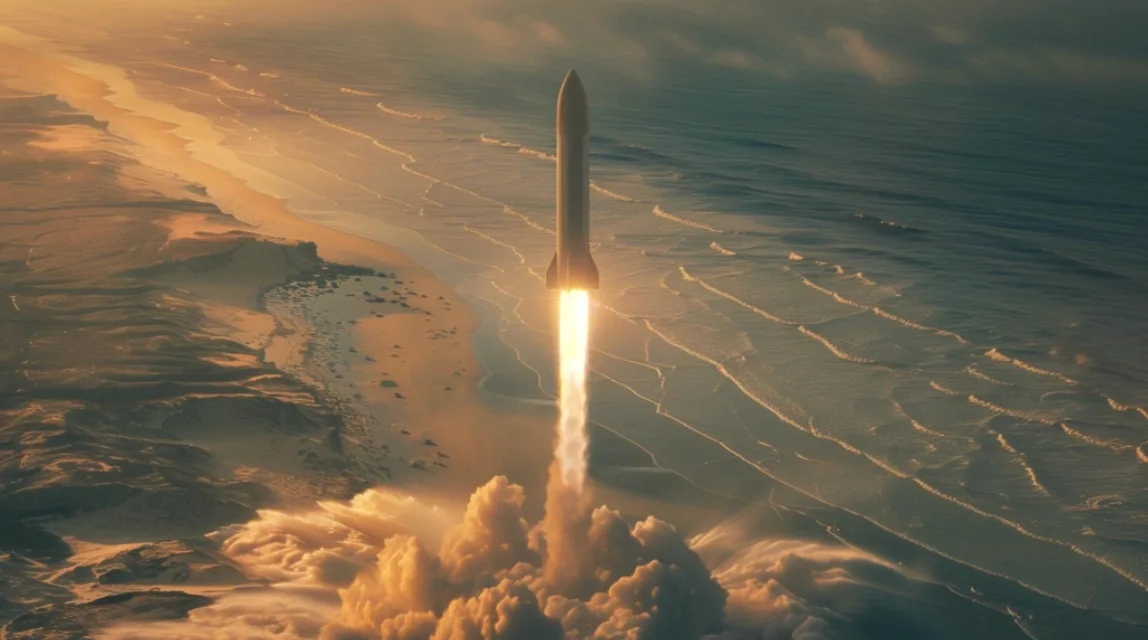
The real challenge is that we are facing a highly dynamic and congested global competitive landscape. This is no longer a two-player dance between China and the US, but a multi-dimensional scramble for resources.
The "Predator Logic" of Amazon and OneWeb
On the chessboard of commercial space, besides the wildcard that is Musk, Amazon's Project Kuiper is demonstrating formidable financial heft. In 2025, Bezos not only poured billions of dollars into reserving a significant number of launch slots with United Launch Alliance (ULA) and Blue Origin, but also built a massive satellite assembly plant in California. Amazon's logic is straightforward: leverage its own cloud computing ecosystem to turn its satellite network into a global extension of cloud services. This "cloud-network convergence" strategy is essentially a preemptive harvest at the downstream application end.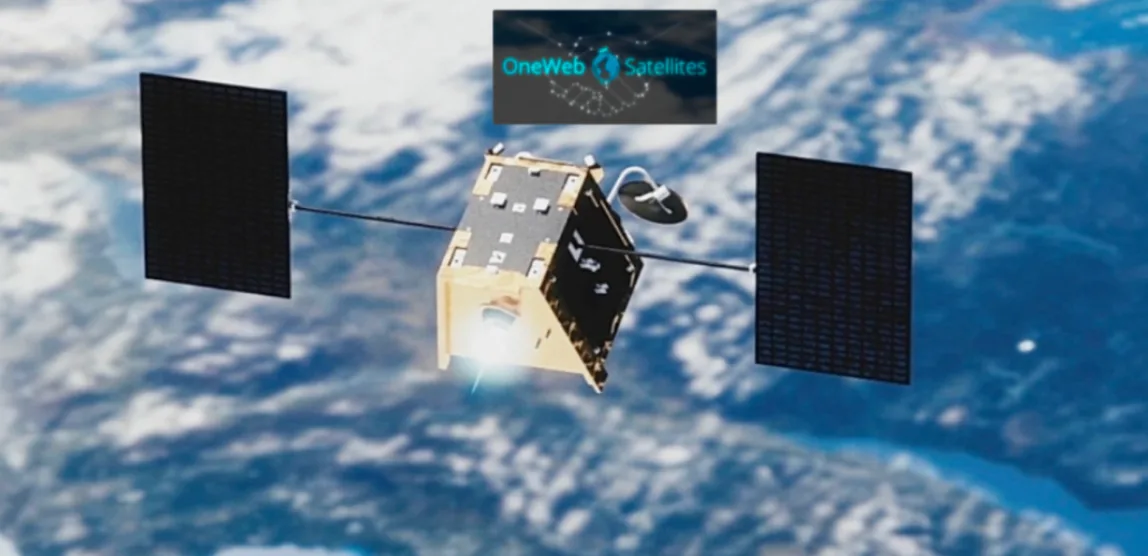
Against this backdrop of global competition, the potential of China's commercial space sector cannot rely solely on "catching up"—it must be built on a "differentiated path." While Western players compete on individual willpower and financial leverage, we are leveraging the systemic strengths of our industrial base to execute a "infrastructure-first" disruptive strategy.
The Industrial "Mass Production" Logic Under the Launch Capacity Gap
Discussing commercial space without data is pure nonsense. In 2025, there were 315 orbital launches globally, meaning a rocket lifted off on average every 28 hours. SpaceX alone accounted for nearly half of the global launch frequency, creating a significant gap from those chasing behind. Domestically, although commercial launches now account for over 54% of China's total, the structural shortfall of "too many satellites, not enough rockets" remains both the opportunity and the challenge on every CEO's desk.The current hard metrics are sobering. For leading domestic private rocket companies like LandSpace, the design target for the "Zhuque-3" (Vermilion Bird-3) is approximately 21.3 tons of low Earth orbit payload capacity. In contrast, Musk's Starship can carry up to 150 tons per launch. This means that if we simply follow the incremental path of increasing single-rocket payload, we could remain in a perpetual state of "tailgating."
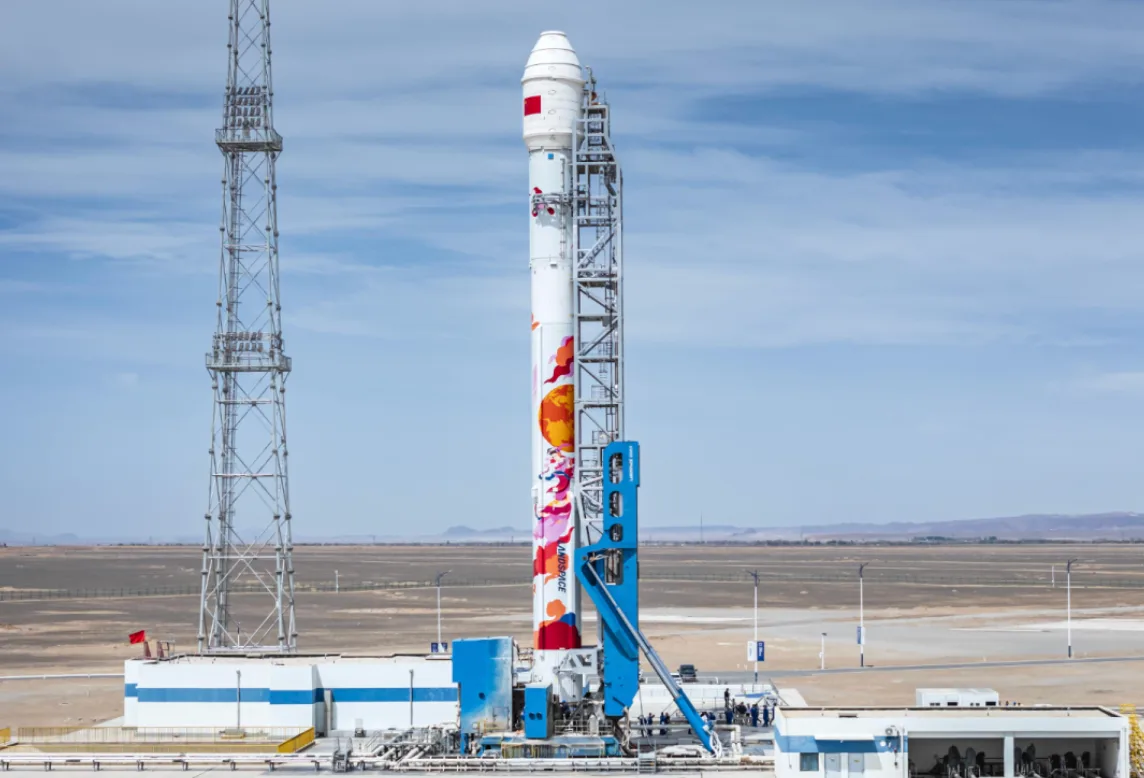
This is why Chinese companies are almost obsessive about liquid oxygen/methane engines and reusable rocket technologies. The multiple tests conducted by LandSpace, Space Pioneer, and others in 2025 are essentially efforts to benchmark SpaceX's cost curve. Once we can reduce the per-kilogram launch cost from the current level of around ¥100,000 to ¥20,000 or even lower, China's massive manufacturing supply chain advantage will instantly translate into a "space mass-production" scale effect. This "extreme cost-performance" is the only weapon China has to counter capital-intensive plans like Project Kuiper.
The "Land Finance" and Closed-Loop Logic of Space Infrastructure
Why is China intensively building new commercial launch sites in Hainan, the eastern coastal areas, and Jiuquan at this particular juncture? The business insight behind this is: rockets are merely the delivery vehicles; launch sites are the true "space trade hubs."We can view the current commercial space boom as a "space version of infrastructure development." In the past, we relied on the four national launch sites, whose resources were prioritized for major national projects like lunar exploration and crewed spaceflight. For private players to find launch windows in the gaps was like trying to get a standing-room-only ticket during Spring Festival travel rush.
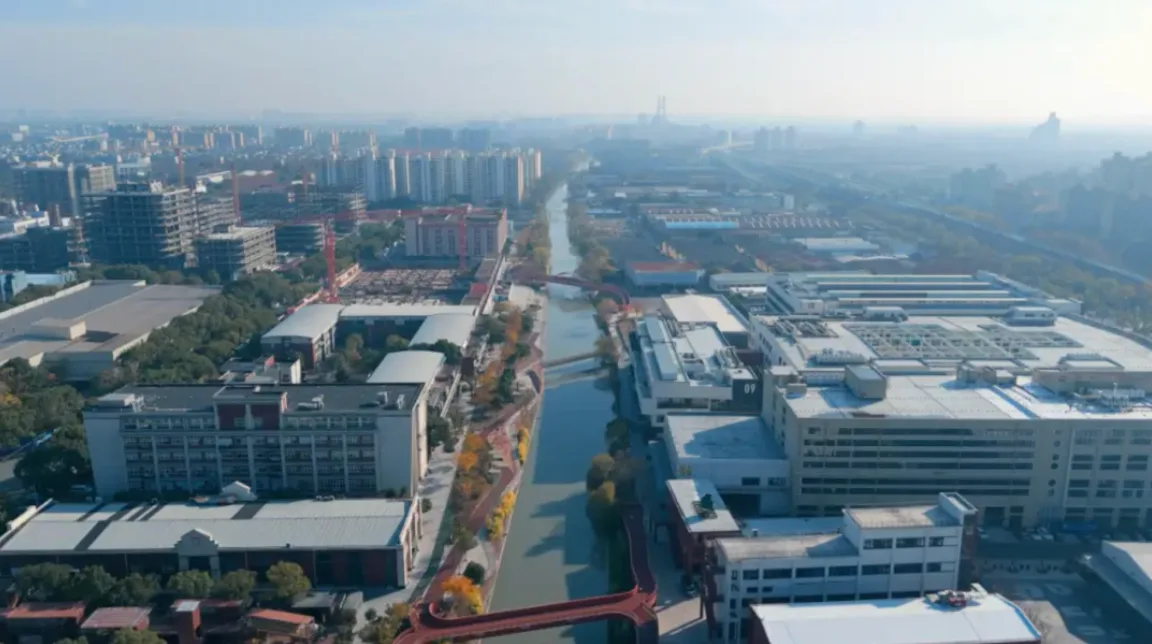
Only when there are enough "docks" and launch frequency shifts from "monthly" to "weekly" or even "daily" can the return on investment for commercial space truly pencil out. This is not just about building roads; it is about establishing a new space logistics protocol. This "hard connectivity" driven by national will is an ecosystem depth that purely commercial giants like Amazon and OneWeb cannot easily match.
The Commercial Cash Cow of "Sensing, Communication, Computing, and Application" Integration
Any hard technology without a clear application scenario is a false proposition. Whether commercial space can succeed depends on its ability to generate high-frequency consumer data on the ground.The integrated space-air-ground information network combining "sensing, communication, computing, and application" is China's differentiating strategy compared to Musk's one-way Starlink output. What we pursue is not just connectivity, but intelligence. At the application level, China is penetrating through three of the most explosive entry points: direct satellite-to-phone connectivity, aviation internet, and connected vehicles.
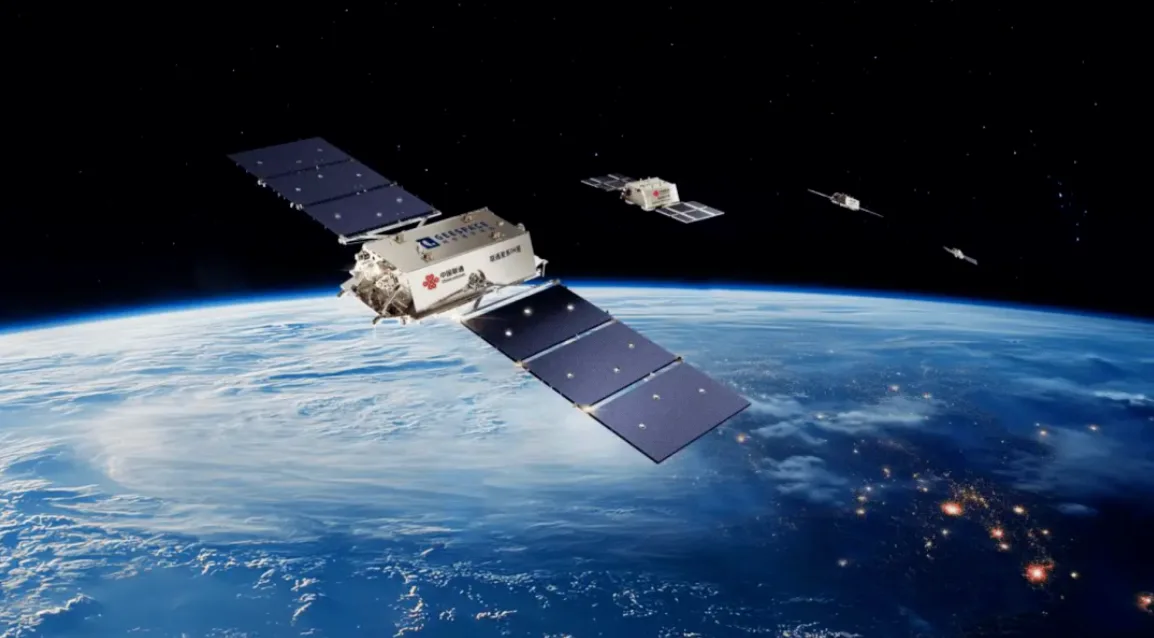
This logic of using downstream applications to drive upstream manufacturing gives China more confidence when facing Project Kuiper. Amazon sells connectivity; we sell systematic productivity tools based on "space-ground integration."
However, amid this rush toward the STAR Market with a total valuation of ¥85.5 billion, many companies have displayed a certain "arrogance of logical closure." They are overly fixated on Musk's public statements while ignoring his near-brutal penny-pinching when it comes to supply chain costs. Commercial space is an extremely capital-intensive industry with very little room for error. Any recklessness—such as forcing an inadequately tested recovery test for publicity effect—can lead to the immediate collapse of the capital chain.
Currently, the secondary market has already seen some "fake concept stocks" that dare to ride the hype for gains despite aerospace accounting for less than 1% of their revenue. This phenomenon of bad money driving out good is a drain on China's aerospace credibility. The truly promising companies are those deeply engaged in liquid propulsion, digital manufacturing, or "hidden champions" with core competitiveness in key supporting areas, such as CIMC. These companies don't talk about ideology; they talk about efficiency.
Final Thoughts
2026 marks the first year of the global space economy entering a "commercial growth-driven cycle." If SpaceX goes public successfully at this time, it will fully ignite global capital's frenzy for this sector. For China, we don't need every company to grow into a copy of SpaceX. What we need is a system integration capability built on China's industrial resilience.The countdown to ignition is, in fact, the bell tolling for the global redistribution of resources. When we begin building those cold, monotonous launch pads and factories on the beaches of Hainan, in the industrial parks of Shanghai, and on the Gobi Desert of Jiuquan, China's commercial space sector has already found the most pragmatic path forward. This is no longer a fantasy about who can reach Mars first, but a question of how, through extreme industrial efficiency, we can plant our own definitive commercial future in every precious inch of orbital space.
This battle is fought with production capacity, won with infrastructure, and the time for performers is running out. While Amazon and OneWeb are still anxious over market share in a single region, China's commercial space sector has already begun writing its own name into the underlying protocols of "space infrastructure." Only those pragmatic players who relentlessly focus on "space logistics" will ultimately claim their own piece of "land" in this trillion-yuan blue ocean.