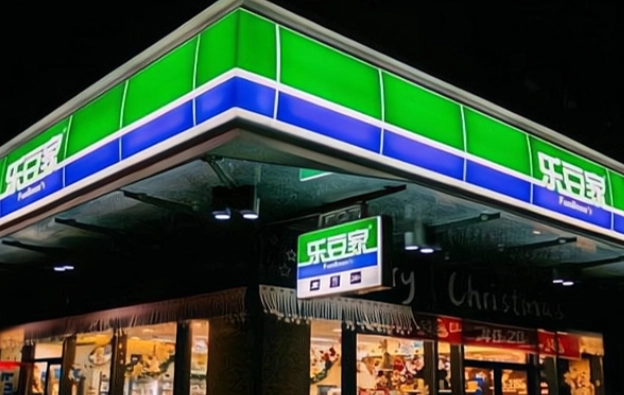
Ledoujia convenience store faces a food safety scandal, with social insurance participation plunging 97% in four years and only four employees left at headquarters, revealing systemic collapse of a regional retail brand.
A mass diarrhea outbreak caused by an expired bottle of coconut water, followed by the rapid-fire public relations triple jump of "employee severance, store closure, and headquarters contract termination" at the Honggutan Dingfeng Central store, has put Nanchang's homegrown convenience store giant "Ledoujia" on the gallows of a food safety storm. The market regulatory authorities' filing for investigation is, of course, a rigid punishment for the compliance failure of a single retail terminal, but the truly suffocating chill felt across the industry comes from the near-catastrophic asset collapse and organizational evaporation exposed in the public credit system of this regional retail powerhouse, which once aggressively expanded to hundreds of stores across the Jiangxi region.
The general public and wild self-media often habitually attribute this to the inherent quality control black hole of franchise-based convenience stores, or the underlying moral failure of a single franchisee taking risks for gross margins. This superficial argument that stops at surface phenomena completely underestimates the systemic financial asphyxiation that brick-and-mortar retail is suffering in this cycle of being squeezed from all channels by instant retail and white-label price wars.
The reason the expired product hit the shelves and the headquarters' severance actions were so crude and erratic lies deep down in the complete shutdown of the entire brand parent's core supply chain management functions and headquarters internal control systems after a long-term cash flow drought. When society-wide consumer sentiment pushes toward extreme cost-performance ratios, mid-tier regional convenience stores lack both the heavy-asset global procurement payment terms dividend of multinational giants and the light-asset flexibility of down-market mom-and-pop stores. Under the gravity of rigid rents and high warehousing and logistics amortization costs, the degradation of organizational structure is often more ruthless than the closure of individual stores.
This fragile body torn open by the food safety scandal presents an extremely tragic picture of systemic collapse in the business data and employment base revealed by Tianyancha.
The Tianyancha App shows that Jiangxi Jinlija Industrial Co., Ltd., the core entity associated with Ledoujia convenience stores, was established in January 2014, with legal representative Yang Xiang and a registered capital of 10 million RMB, jointly held by Gongqingcheng Lechuang Huihai Investment Partnership (Limited Partnership), Yang Xiang, and others. Beneath this seemingly orderly ten-thousand-level capital shell, the social insurance participation numbers collected by Tianyancha strip away all the dignity of its long-term operations: the company's social insurance participants plummeted from 137 people in 2021 to a mere 4 people in 2025, a staggering drop of 97 percent over four years.
These cold numbers, quietly resting in Tianyancha's employment archives, completely puncture the entire commercial myth of Ledoujia as a modern, scaled convenience store chain group.
In the heavy-asset rules of the convenience store industry, the headquarters' social insurance participation count directly reflects the real blood-making capacity of its core hubs, including the supervision system, product selection and quality control, supply chain scheduling, and cold chain delivery. The extreme contraction from 137 people to just 4 means that the so-called "convenience store headquarters" has, in commercial and legal terms, degenerated into a nearly hollowed-out shell, losing its sovereign capability to conduct daily inspections and hard-core quality control over its hundreds of franchised stores.
This hollowing-out not only led to the complete failure of the food safety radar, but also triggered a chain reaction of deregistrations in Tianyancha's outward investment map. Data shows that among the ten enterprises it has invested in, several have already been deregistered, with only six remaining nominally in existence. These red flags densely lit up in the Tianyancha system clearly record the full-scale retreat of its capital expansion outside Nanchang, as well as the ruthless liquidation of non-core assets to hedge against losses.
The evolution of commerce has always been cold. In a brutal battlefield where survival truth is defined by data compliance deadlines, refined supply chain yields, and user retention, the era of rough-and-tumble chain operations that relied purely on selling franchise rights without hard-core internal control support has already declared a humiliating early exit.
The employment ledger left by Ledoujia on Tianyancha, shrunk by 90 percent, is a sober memorandum about how a regional retail brand is turning into organizational desertification amid cyclical cleansing. The closure of the Dingfeng Central store and the filing of the case are merely symptoms of localized necrosis. When only four people remain to barely hold the line in the headquarters' establishment defense, this homegrown convenience store empire that once raced forward in flames is destined to fail at tightening the dignity deadline that safeguards food safety and the company's long-term blood-making capacity, under a more stringent data net and fierce survival competition in the existing market.