Duiba's AI short dramas brought in 223 million yuan in revenue but carry a gross margin of just 17.1% — essentially a traffic-middleman model, not a technological breakthrough.
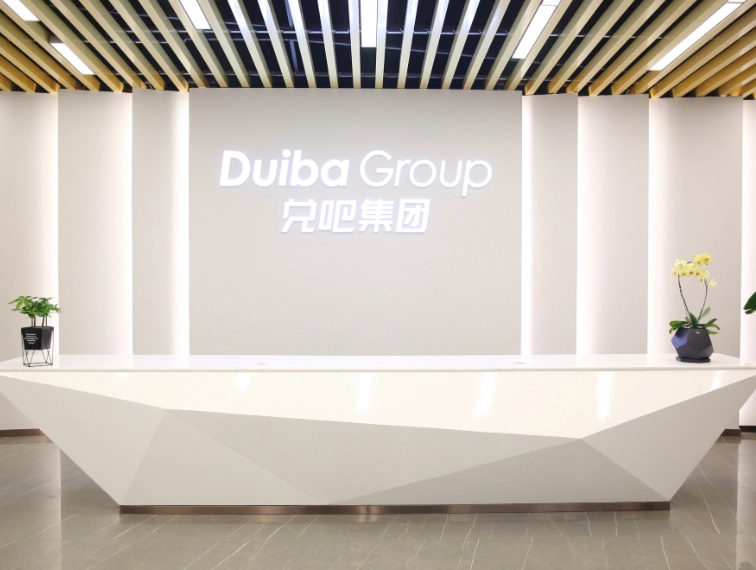
When Duiba Group, which rose to fame in the mobile internet era on the strength of its points mall and interactive advertising, published its first-half 2026 results and announced that in just six months it had raked in 223 million yuan in revenue from its newly launched AI short-drama business, vaulting it directly into the position of largest pillar with 51.2% of the total, the revelry staged in the capital markets—if divorced from scrutiny of business logic—could easily be packaged as a textbook breakout in which a traditional SaaS software company made a glamorous crossover into the generative AI content revolution.
However, one need only pull back the curtain on its overall gross margin, which rose only slightly from a low level to 17.1%, and penetrate the near-deformed user-acquisition mechanism of micro short dramas within super traffic pools such as Douyin and Kuaishou to see clearly: this seemingly spectacular switch of main business is by no means a value re-rating of high-margin technology software, but rather a perilous leap by a company mired in stagnant growth in its core user-operations SaaS business, using its original advertising-placement arbitrage DNA to retreat toward a traffic-comprador model of high revenue sharing and low retention.
Duiba's Core Business Evolution and Predicament
Looking back at Duiba's core business evolution, the cornerstone on which it originally built its fortune was "user-operations SaaS plus interactive performance advertising." During the phase when mobile apps were frantically enclosing territory and the user-time dividend was gushing freely, financial institutions, e-commerce platforms, and utility software of all kinds urgently needed Duiba's points-redemption system and check-in mini-games to sustain activity and retention. Yet as China's mobile internet as a whole sank into stock-market stagnation, major clients continuously cut IT budgets at the software-tool level, small and medium-sized apps died off in batches, and reliance on SaaS subscription fees of a few tens of thousands of yuan a year could no longer support the performance expectations of a listed company;
interactive performance advertising, meanwhile, also faced strict privacy-compliance scrutiny and a cliff-like drop in placement ROI. As the original twin drivers gradually degenerated into a slow bull—or even a bleeding wound—the company urgently needed a shot in the arm that could instantly prop up massive cash-flow revenue on the reporting side.
Domestic Operating Entity and Equity Structure
Following the paper trail at the commercial-registration level to penetrate the operating脉络 of this Hong Kong-listed entity, its domestic asset foundation is clearly presented in Tianyancha records. Tianyancha business-registration data shows that Hangzhou Duiba Network Technology Co., Ltd., which serves as the group's core domestic operating entity, was established in May 2011 with registered capital of 50 million yuan, legal representative Cheng Peng, and registered address in Xihu District, Hangzhou.
The shareholder structure penetrated by Tianyancha shows that Hangzhou Duiba is wholly owned by Duiba Group (Hong Kong) Limited within an offshore red-chip structure, forming an extremely standard offshore control chain for a China-concept company.
The 50 million yuan of paid-in capital and more than a decade of deep cultivation in Hangzhou's digital advertising sector constitute the underlying fulcrum that enabled Duiba to instantly turn its ship around in January of this year and charge into the AI short-drama track.
The Underlying Support for the Lightning Lane Change: User-Acquisition Placement and Precision Distribution DNA
Yet the underlying support for this lightning lane change is not that it possesses original computing-power algorithms in underlying video-generation large models surpassing those of OpenAI or Kuaishou, but rather the "user-acquisition placement and precision distribution DNA" deeply rooted in its bloodstream.
The commercial essence of the short-drama industry has never been pure content production, but rather an algorithm-driven traffic-resale business. In the first half of 2026, short-drama supply across the entire industry erupted in tsunami-like fashion, and the hit rate was diluted to below five per thousand. Against this backdrop, so-called AI short dramas—using image-to-video, text-to-speech, and AI screenwriting tools to reduce upfront shooting, set construction, and actor fees—at best compress the fixed sunk production cost of a few tens of thousands to a hundred-plus thousand yuan per drama;
but on the terminal monetization side, whether a drama can achieve tens of millions of views and over 100 million yuan in revenue still has more than 80% of its lifeline gripped in the information-flow advertising bidding systems of ByteDance, Tencent, and Kuaishou's Juliang Engine. Relying on the data accumulated over the past decade in performance-advertising placement, Duiba has merely converted its team of placement optimizers—originally driving traffic to e-commerce or finance—in batches into traffic-buying recharge machines for short dramas.
The Cold Reality of a Razor-Thin 17.1% Gross Margin
An even colder financial reality is directly stamped on the razor-thin 17.1% gross margin.
In traditional enterprise software and SaaS business models, a healthy gross margin is usually maintained in the high range of 60% to 80%, and extremely high marginal gross profit gives technology companies the R&D risk-resistance to weather cycles. However, behind the 223 million yuan in AI short-drama revenue Duiba captured in the first half of the year, it needs to pay extremely high traffic-purchasing channel fees to short-video platforms (channel deductions and CPM/CPC bidding consumption).
The industry-standard traffic-placement cost for short dramas often accounts for 80% to 90% of the total C-end recharge pool, and the meager residual value left to producers and distributors is extremely fragile. A comprehensive gross margin of 17.1% is not only far below the profitability standard of orthodox SaaS software, but also frankly exposes that in this round of revenue surge, Duiba is essentially working for the super traffic platforms. The massive capital flow merely passes hurriedly across Duiba's books, and after washing out enormous traffic-acquisition costs, the real gold and silver profit left deposited is negligible—this is also the deeper pathology behind why its first-half net loss could only be narrowly reduced by 5.2%.
The Lifecycle Fragility of the Short-Drama Business
A deeper tactical reef lies in the fragility of a short-drama business that relies extremely heavily on single-drama pulses and extremely short lifecycles.
In stark contrast to a SaaS business with a high contract-renewal rate and predictable annual recurring revenue (ARR), micro short dramas are a high-risk industry in which "hits do not last and lifecycles are measured in weeks." The 13 hit dramas exceeding 100 million views that Duiba produced in the first half of the year quickly entered a natural decline phase after intensive traffic-buying bombardment. To maintain daily revenue of several million yuan in the second half, the company must force its team into an endless cycle of project initiation, generation, grayscale testing, and heavy traffic-buying.
Once the algorithmic recommendation mechanism is slightly adjusted, the traffic-placement ROI breaks through the profit-and-loss line, or the regulatory red line for subject matter is further tightened, this seemingly enormous 223 million yuan of incremental revenue could face a cliff-like stall at any time.
Conclusion: Revenue Inflation Is Not the Same as a Wider Moat
This lightning switch of main business in early summer and early autumn releases the cruelest reality check to the entire pan-internet and digital economy sector: during the painful period when traditional businesses are bleeding, bowing to the traffic风口 to survive is certainly a pragmatic posture of self-rescue, but the expansion of revenue scale is not equivalent to the widening of a commercial moat. From a high-gross-margin software SaaS vendor charging by the year to a short-drama distributor bidding by the day and fighting for a share from the cracks between the teeth of major traffic platforms, Duiba may have bought short-term numerical prosperity on its books, but it has also completely lost the valuation premium of a pure tech stock in front of the capital markets.
How to break the fate of carrying the sedan chair for traffic platforms while preserving revenue scale, and how to precipitate micron-level thin traffic-placement profits into a self-owned IP and private-domain user pool with sustained hematopoietic capacity, is the life-or-death choice this veteran digital advertising player must confront head-on after its lane-change sprint.