Dreame abandons carmaking after one year, with 170 million in paid-in capital unable to fill the heavy-asset black hole of vehicle manufacturing. Stuck by both qualification and funding bottlenecks, it makes a lightning stop-loss retreat to its research institute.
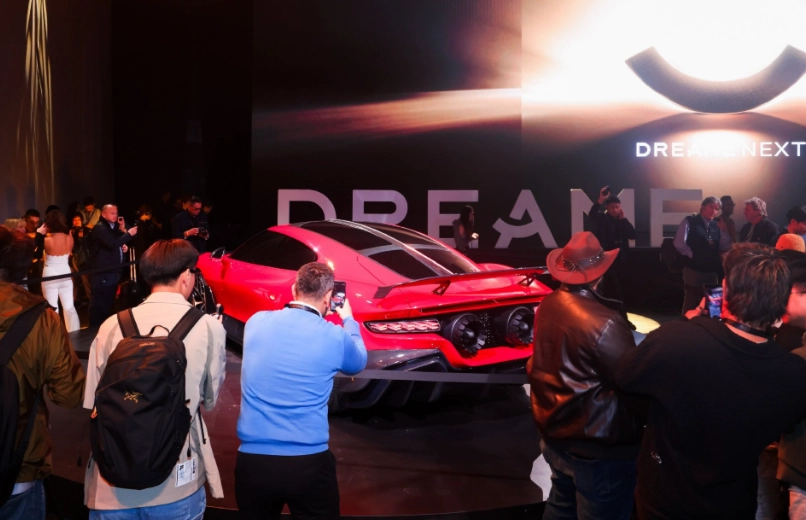
When Dreame Technology officially confirmed to the outside world on September 2 that it was abandoning its mass-production plan for the automotive business and merging the remnants of its car-making team into its Industrial Research Institute to pivot toward general-purpose technology exploration, only about a year had passed since it had initially announced the launch of the "Starry Sky Plan" with great fanfare and made the bold pledge of mass production by 2027. From ambitiously charging into the red ocean of complete vehicles to abruptly slamming on the brakes and retreating to the laboratory, the speed at which the car-making dream shattered almost matched the rotational speed of its robot vacuum motors.
On the surface, this looks like a decisive stop-loss after sensing the wind had shifted; however, when measured against the heavy traces left by its car-making entity—nearly 170 million yuan in actual paid-in capital and 388 people still enrolled in social insurance according to its annual report—it becomes clear that this was by no means a leisurely consolidation of technological exploration, but rather a harrowing retreat by a newcomer that had risen on high-speed digital motors and consumer cleaning appliances, after underestimating the massive capital black hole of the modern automotive industry and the iron law of production qualifications, and was then struck head-on by the realities of cash flow and industrial cycles.
From Consumer Hardware Dark Horse to the Automotive Illusion
During the era when smart cleaning appliances were surging forward, Dreame, with its high-speed motor replacement for Dyson, its extreme e-commerce hit-product playbook, and its aggressive penetration into overseas markets, was once the most dazzling dark horse in the consumer hardware field. However, robot vacuums, wet-dry vacuums, and high-speed hair dryers ultimately belong to the consumer electronics category with relatively fixed replacement cycles. As domestic penetration hit a ceiling and major white-label supply chains engaged in fierce price wars, the gross margins of individual hardware products were eroded step by step.
The myth of Lei Jun achieving godlike status overnight with Xiaomi SU7 injected an extremely lethal stimulant into the entire consumer hardware circle: many hardware operators developed a dangerous cognitive illusion, believing that as long as they had motor technology reserves, supply chain integration capabilities, and marketing tactics skilled at internet hype, they could seamlessly replicate the hit-product logic of two-wheelers or small home appliances onto four-wheeled electric vehicles.
The Heavy Foundation of 169 Million Yuan Paid-In Capital and 388 Employees Enrolled in Social Insurance
Tracing through the underlying commercial registration records to penetrate the organizational foundation of this car-making entity, the real money it poured in during its runaway phase is clearly documented in Tianyancha archives. Tianyancha business registration data shows that the core entity responsible for Dreame's car-making endeavor, Starry Sky Plan (Shanghai) Automotive Technology Co., Ltd., was established in January 2025 with a registered capital of as high as 1 billion yuan, paid-in capital of approximately 169.45 million yuan, and Yu Hao as its legal representative.
In the corporate annual report penetrated by Tianyancha, the company's social insurance enrollment for 2025 reached 388 people, and its industry is explicitly registered as "new energy vehicle complete vehicle manufacturing."
Moreover, Tianyancha equity information shows that the company is 100% wholly owned by Starry Sky Plan (Shanghai) Automotive Co., Ltd., and its approved business scope still fully retains heavy-asset qualification labels across the entire chain, including "automobile sales, new energy vehicle complete vehicle sales, automotive parts research and development, intelligent robot research and development, and charging infrastructure operation."
The nearly 170 million yuan in paid-in capital contributions and the social insurance footprint of nearly four hundred R&D and manufacturing personnel clearly record the real money invested by a consumer hardware manufacturer in its early cross-industry phase.
This was by no means the conceptual hype of early PPT car-making, but a genuine effort to recruit engineering teams from traditional OEMs, initiate clay model production, and conduct early pre-research on the three electric systems. However, it was precisely the rapid depletion of this 169 million yuan in paid-in funds within just a few months that made Yu Hao and Dreame's management the first to touch the coldest reality baseline of automobile manufacturing.
The Capital Furnace of Complete Vehicle Manufacturing: 170 Million Yuan Is Not Even Enough for a Ticket In
In the consumer robot vacuum field, research and development spending of two to three hundred million yuan is enough to create two to three generations of super hit products that dominate the market; but throwing the same amount of money into the furnace of complete vehicle manufacturing is not even enough to cover the cost of die-opening for the body-in-white of a brand-new model and early wind tunnel crash tests. From chassis and suspension calibration and extreme high- and low-temperature road testing to the four major processes of stamping, welding, painting, and final assembly for self-built production lines, without sustained capital expenditure in the tens of billions of yuan as a backstop, any complete vehicle manufacturing plan is nothing but a castle in the air.
The Policy Chokepoint of Qualifications and Contract Manufacturing
An even more brutal intangible barrier is directly choked off by the policy chokepoint of car-making qualifications and complete vehicle contract manufacturing.
Against the current backdrop of severe overcapacity in domestic new energy vehicle production, the approval of new complete vehicle production qualifications by the competent authorities is almost frozen. For cross-industry players like Dreame that lack a traditional complete vehicle background, the options are either to spend billions of yuan to acquire a marginal traditional automaker on the verge of bankruptcy but holding dual qualifications, or to lower its posture and seek contract manufacturing cooperation with state-owned traditional automakers such as Chery, BAIC, or JAC.
However, at a time when giants such as Geely, Huawei, and Xiaomi have already carved up contract manufacturing capacity and cooperation resources, a small home appliance company without the backing of tens of billions in cash reserves has almost no bargaining chips to stand on equal footing before traditional OEMs. Lacking qualification support, the so-called 2027 mass-production target was an empty check that could never be cashed from the very beginning.
Bleeding Backlash Against the Core Business and Emergency Financial Stop-Loss
And from the perspective of business essence, the bleeding from the automotive business had already begun to backfire on the safety cushion of the core business.
Since 2026, the global consumer cleaning appliance sector has faced the dual pressures of weak overseas consumption and rising tariff frictions. Although Dreame has achieved considerable gains in overseas markets, its core business must continuously transfuse blood into new defense lines such as robot vacuum visual obstacle avoidance, lawn-mowing robots, and outdoor smart courtyards, and each new track requires massive R&D investment and channel-building funds. If the car-making entity were allowed to continue charging ahead at a team scale of several hundred people, the rigid monthly R&D salaries, headhunter fees, and high trial-production expenses would quickly evolve into a bleeding black hole dragging down the parent group's profits.
Officially announcing the abandonment of mass production for the automotive business and "merging it into the Industrial Research Institute" was in fact an emergency financial stop-loss action taken on the eve of losing control: stripping away complete vehicle mass production, that gold-devouring beast, and retaining only pre-research on core components such as motors and electronic controls that can feed back into the core robot vacuum and embodied intelligence businesses. This both preserved dignity and cut off the capital abyss.
An Industrial Wake-Up Call: Xiaomi's Miracle Cannot Be Casually Replicated
This one-year automotive lightning finale that unfolded from midsummer to early autumn has released the calmest industrial wake-up call to the entire pan-intelligent hardware and consumer technology sector: the success of Lei Jun and Xiaomi in the automotive field was an extremely low-probability miracle built on hundreds of billions in cash reserves, a decade of deep supply chain cultivation, and an active ecosystem of hundreds of millions of software and hardware users, and is by no means a universal template that ordinary consumer hardware companies can casually imitate.
As the automotive industry enters the deep-water elimination rounds where blades are drawn and blood is seen, and per-vehicle gross margins are pushed to their limits, any attempt to cross over into complete vehicles by leveraging thin profits from the core business will ultimately shatter against the iron laws of heavy assets and heavy qualifications. Having the courage to acknowledge strategic boundaries before sinking deeper and withdrawing limited ammunition back into the moat where one truly holds dominance may look bedraggled, but it is the most rational survival instinct for a hardware company in a brutal cycle.