Dongpeng Beverage Bets $14M on Central Hub to Crack the 500-Kilometer Delivery Radius
Dongpeng Beverage is investing 100 million yuan in a new Zhengzhou subsidiary, aiming to overcome the 500-kilometer delivery radius limit and push aggressively into northern China via a central logistics hub.
In the seemingly simple fast-moving consumer goods business of soft drinks, the coldest commercial secret has never been on the ingredient label, but rather in the odometers and freight bills of heavy-duty trucks. When Dongpeng Beverages invested 100 million yuan in registered capital to establish a wholly-owned subsidiary in Zhengzhou, Henan, in one fell swoop, if the capital markets view this as just another routine capacity land grab, they have entirely underestimated this functional beverage giant's strategic calculations in the deep waters of national expansion.
Behind this 100 million yuan check lies, in essence, a heavy-asset tactical positioning aimed at breaking the beverage industry's brutal "500-kilometer transportation radius" curse and launching a full-scale assault on the core hinterland of northern China.
The beverage industry is fundamentally a "selling water" business. The heavy weight of the liquid and the relatively low value per case determine that high long-haul logistics costs are the number one killer of corporate gross margins. In the physical laws of fast-moving consumer goods, the optimal economic radius for a production base to reach its market is typically locked firmly within 300 to 500 kilometers.
Beyond that range, the freight, spoilage, and warehousing turnover costs generated by cross-regional long-distance transportation quickly eat up the product's already razor-thin profit margins.
Dongpeng's traditional stronghold, where it built its fortunes, lies in South China. But to support its ambitions of a hundred-billion-yuan market capitalization, dominating the south alone is far from sufficient. To truly capture the northern market, it must plant heavy-asset factories directly into the transportation heart of northern China.
100 Million Yuan Investment: Heavy-Asset Layout in the Central Plains Hinterland
Deconstructing this newly established entity through the corporate records archived on Tianyancha, Dongpeng's intentions in the Central Plains hinterland are extremely straightforward. Tianyancha information shows that Zhengzhou Dongpeng Vitamin Beverage Co., Ltd. is not only wholly owned by Dongpeng Beverages, but its paid-in and registered capital reaches 100 million yuan, with the business scope firmly covering a full set of production and sales licenses for beverage production, food production, and health food sales.
This indicates that Dongpeng is by no means setting up a lightweight asset sales office for trading in Zhengzhou, but rather building a true heavy-duty supply chain aircraft carrier here that integrates production, filling, and regional distribution.
Choosing Zhengzhou: Extreme Logistics and High-Value Customer Base
Choosing Zhengzhou as the fulcrum for its northern expansion is an extremely precise channel calculus.
As the core intersection of the national spoke-shaped high-speed rail and expressway networks, Zhengzhou not only offers extreme logistics efficiency radiating to populous provinces such as Henan, Hebei, Shandong, and Shanxi, but also boasts a massive base of heavy industry, logistics trucking, and blue-collar workers. Truck drivers, production line workers, and long-distance passenger transport operators—these high-value customer groups that frequently consume anti-fatigue functional beverages—form an extremely dense consumption landscape across the Central Plains.
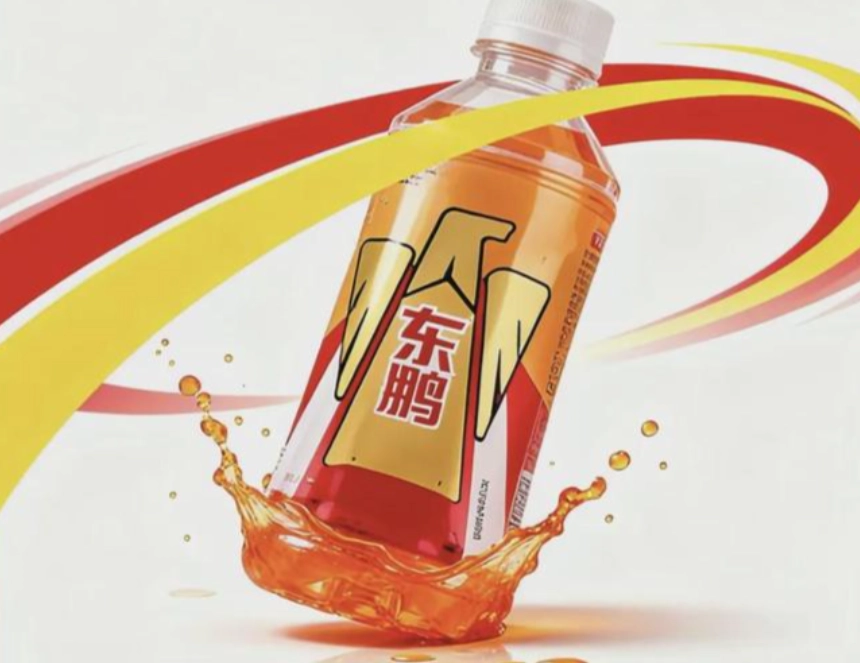
Building the factory right under the noses of these core consumer groups not only allows Dongpeng's orange bottles to fill up service areas and mom-and-pop stores along the way at the lowest logistics cost, but also enables close-range firepower suppression against competitor Red Bull's traditional stronghold in the north.
Supply Chain Decoupling: The Tactical Imperative of Multi-Category Expansion
The deeper tactical imperative lies in supply chain decoupling during multi-category expansion.
After completing the initial accumulation of capital with its flagship product, Dongpeng Te Special Drink, Dongpeng is aggressively betting on electrolyte water, tea beverages, and other second growth curves. However, different categories have vastly different requirements for aseptic cold-filling production lines and raw material blending. The vitamin beverage and health food manufacturing qualifications clearly visible on Tianyancha reveal Dongpeng's ambition to leverage the high-spec production lines at the Zhengzhou base to support its expansion into higher-margin functional water beverages.
This 100 million yuan heavy-asset investment is Dongpeng's resolute strike to tear off the "regional brand" label. In the red ocean of fast-moving consumer goods where survival is a zero-sum game, the era of relying solely on catchy advertising bombardment is thoroughly over. Future beverage hegemony belongs only to those infrastructure controllers who dare to plant factories in core hubs and use extreme supply chain radius to drive competitors into cost dead ends.