Donghua Software Invests 100 Million in Tibet, Tapping into the Computing Power Supply Chain of the 'East Data, West Computing' Strategy
Donghua Software invests 100 million yuan to establish a subsidiary in Tibet, leveraging the 'East Data, West Computing' strategy to capture computing power dividends and government and enterprise markets in western China.
100 Million Yuan Heavy Investment Positions in the Snowy Plateau: DHC Software's Tibet Move Cracks Open the Computing Power Profit Chain of "East Data, West Computing"
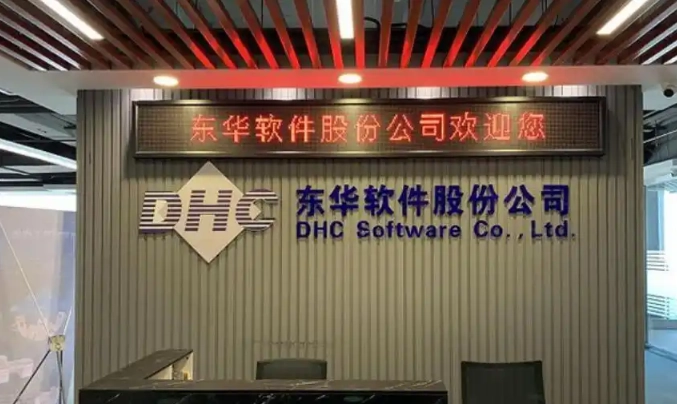
At a critical juncture when the national computing network is being restructured and western development is entering the digital deep-water zone, the capital migration of traditional IT system integration giants precisely marks the diversion path of industrial dividends. Recently, DHC Software (Tibet) Co., Ltd. was officially established through a low-key business registration change, with registered capital of 100 million yuan. The investment of over 100 million yuan on the snowy plateau not only signals that the veteran software giant DHC Software (002065) is fully embedding its long-term digital expansion into high-altitude regions, but also marks the beginning of traditional IT forces—centered on data centers, system integration, and computing power infrastructure—conducting deep government-enterprise resource consolidation and market dominance in the west. Most industry observers, accustomed to viewing the digital economy through the lens of smart cities and healthcare IT in first- and second-tier cities, tend to dismiss this cross-province establishment as a routine regional expansion. Such a simplistic reading severely underestimates the deep strategic planning the IT giant has undertaken to forcibly seize geographic computing power dividends amid the national "East Data, West Computing" initiative's deepening rollout and the full release of clean energy in the west.
To understand the underlying drivers and causality behind this 100 million yuan investment, one must use Tianyancha to penetrate the capital structure of this new company. This newly established entity in Tibet is jointly controlled by A-share listed company DHC Software and Beijing Donghua Hechuang Technology Co., Ltd., with legal representative Zhu Weihua. According to its business scope registered on Tianyancha, information system integration services, computer system services, software development, and technology development and transfer form its core business matrix.
Why would an IT giant long headquartered in Beijing, with deep roots in mature markets across North China and the southeast coast, suddenly inject a billion-yuan foundation onto the plateau? The core driver lies in the extremely unforgiving "scenario and resource conversion" rule of the current B2B and government IT markets. Tibet boasts naturally low temperatures, abundant clean energy (hydropower, solar), and strategic policy preferences, giving it inherent cost advantages and industrial siphon effects for building green data centers and accommodating large-scale computing power dispatch from the east. By choosing this moment to establish an independent capital entity and stake its claim, DHC Software has clearly signaled its shrewd calculation to shift from "piecemeal project bidding" to "localized deep cultivation" in the western market.
This capital will be directly converted into localized R&D support, outright acquisition of government-enterprise IT projects, and supply chain restructuring around plateau-specific scenarios (such as smart tourism, ecological monitoring, and plateau healthcare IT). At a time when traditional government-enterprise IT budgets in the east are shrinking and industry competition has become fiercely saturated, DHC Software's counter-cyclical push westward is essentially an attempt to leverage its strong capital moat and system integration qualifications to forcibly absorb the vast untapped share emerging from the west's digital transformation.
As the digital economy bubble fades, what tests the vitality of a system integration veteran is no longer the illusory AI concepts in PowerPoint decks, but its ability to execute cross-regional heavy-asset projects and penetrate localized relationships. The 100 million yuan capital foundation of DHC Software Tibet is a clear industry shift signal: the second-half battle in computing power and system integration has fully evolved into a contest for geographic and policy dividends, and industry oligarchs wielding massive capital and mature delivery experience are using high-frequency counter-cyclical expansion to rebuild their market moats in the plateau's deep-water zone.